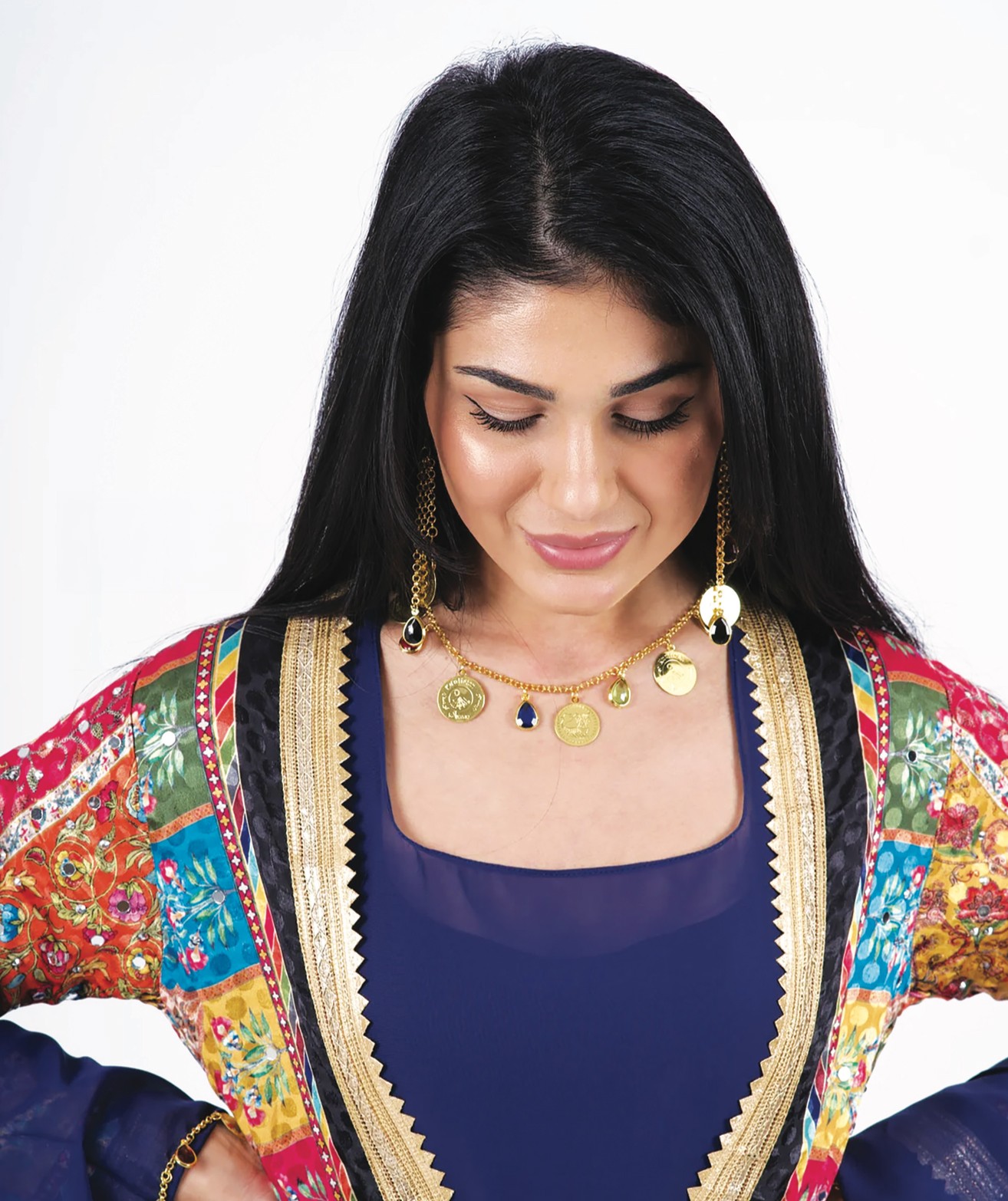
When Kewsan Amini looked for accessories to pair with her Kurdish dresses, she realized something essential was missing – not beauty, but meaning.
Kurdish women are known for their resilience and their vital role in cultural preservation. Even in displacement, they have worked tirelessly to preserve and promote their identity. This spirit is what Kewsan had in mind when she established her textile and accessory brand in Sweden.
Kewsan, 46, is a Kurdish woman from Marivan, in Eastern Kurdistan (northwestern Iran). Thanks to her father, who worked in textiles, she was exposed to the industry from a very young age. However, economic hardship and the systematic marginalization of Kurds in Iran delayed her ability to turn those early dreams into reality.
In 2011, Kewsan emigrated to Sweden. After seven years of adaptation and integration, she founded her brand, Kewsan Textile & More, which promotes traditional Kurdish fabrics and attire. In an exclusive interview with Kurdistan Chronicle, she spoke about her newly founded accessory line named after the well-known Kurdish myth of Shamaran.
The Shamaran myth
For Kewsan, the journey that led to the creation of the Shamaran Collection was deeply personal. Having grown up in a patriotic Kurdish family, she wanted accessories that truly matched the soul of her Kurdish dresses, pieces that could tell the story of her people.
“When I looked around, I realized something was missing. We have such rich symbols, yet our jewelry often doesn’t speak our language,” Kewsan told Kurdistan Chronicle.
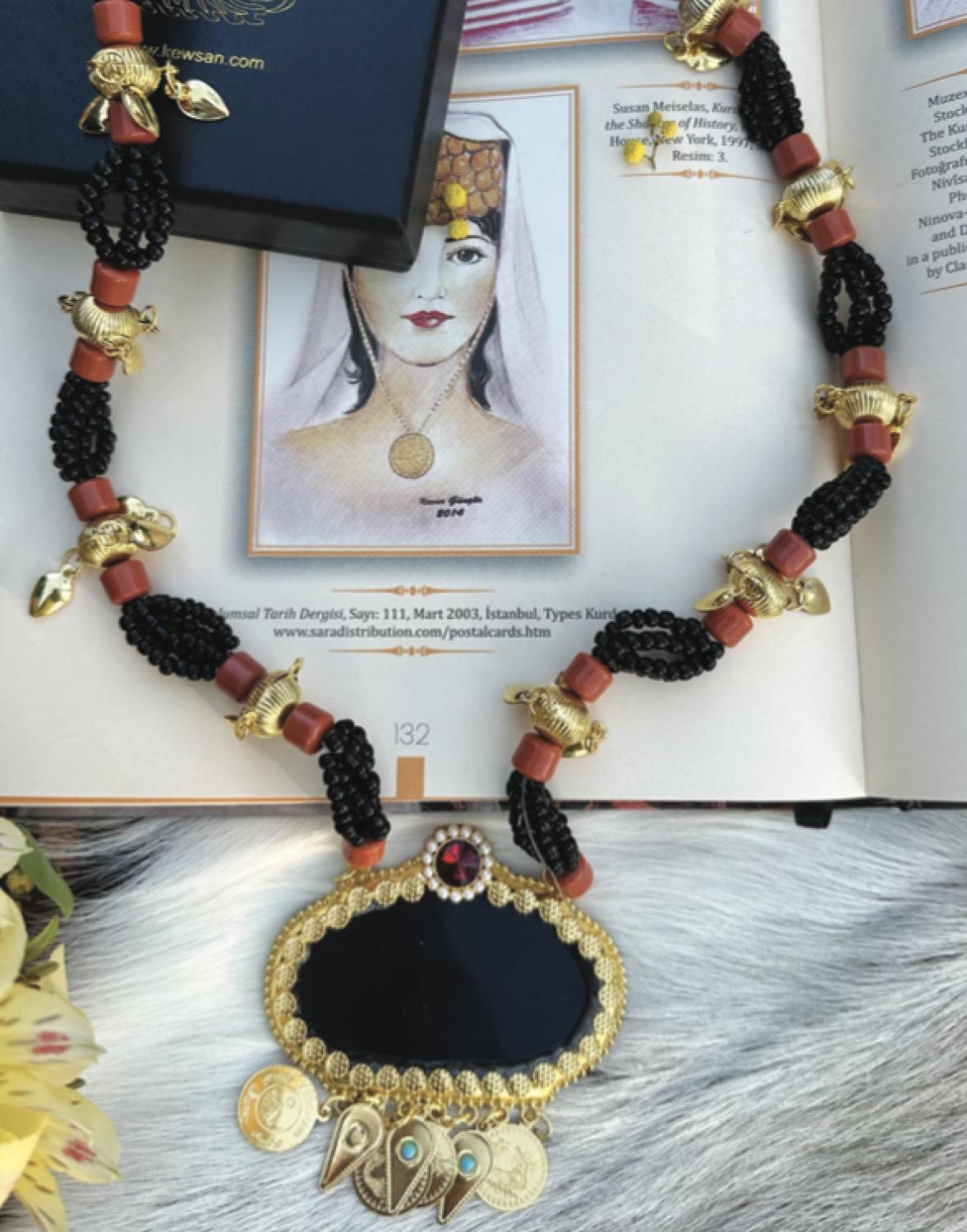
She explained that the Kurdish traditional dresses she brought to the market already told stories of Kurdish resilience and identity, and she wanted accessories that could do the same. “I wanted accessories to be more than decoration, to be a statement of pride and belonging. And this vision became the heart of the Shamaran Collection.”
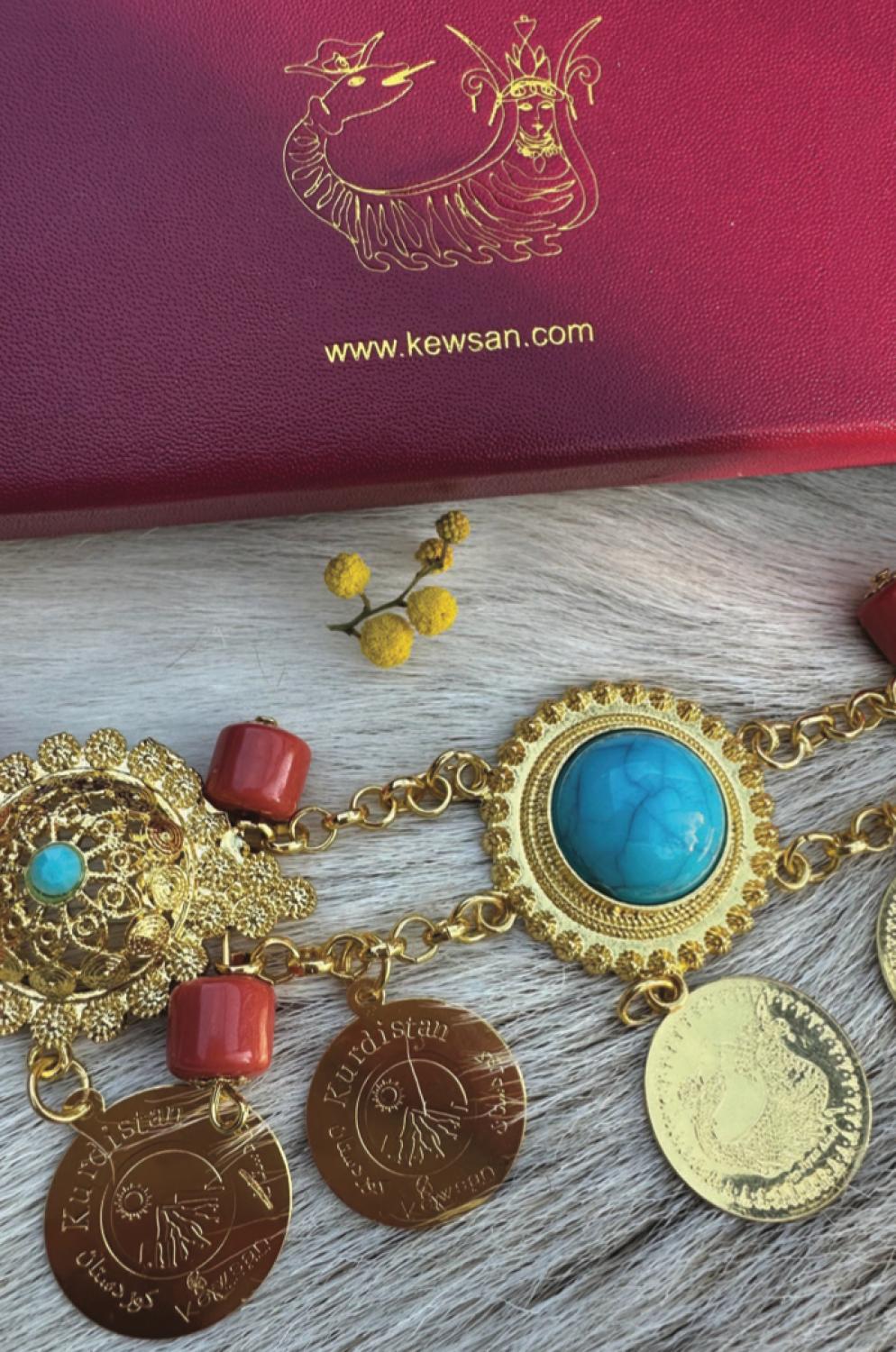
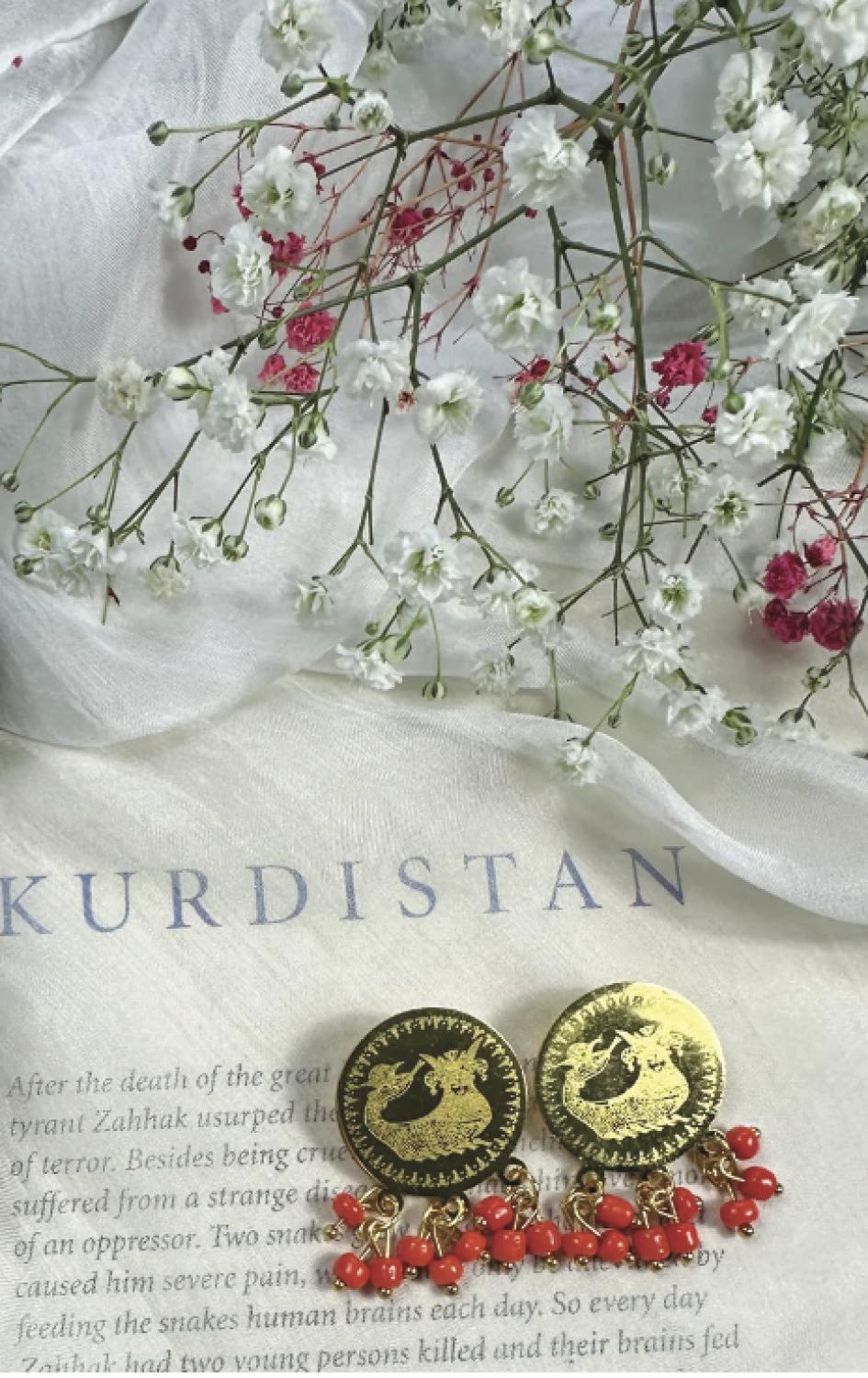
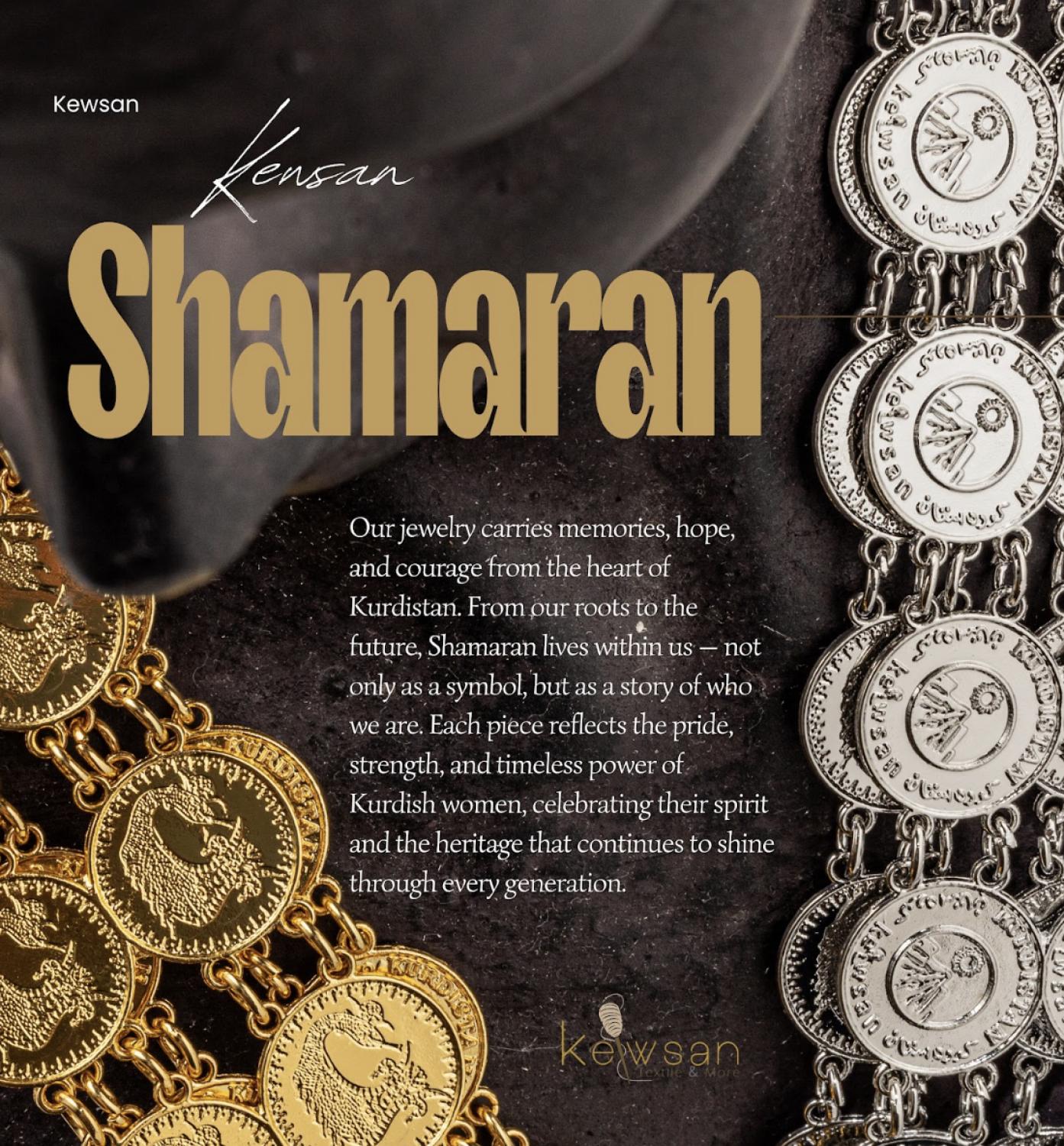
The Kurdish name Shamaran literally translates to “King of Snakes.” This mythical creature is half-woman and half-snake, symbolizing knowledge, harmony, and the unbreakable strength of women. In Kewsan’s designs, these values are reflected in coin-like forms: one side showing Shamaran with her serpent’s body and woman’s face, and the other depicting four mountains beneath a radiant sun.
According to legend, Shamaran sheltered a young man named Tahmasp in her hidden realm, teaching him the secrets of the natural world after he vowed to keep her existence a secret. Tahmasp later betrayed his oath under pressure and revealed Shamaran’s realm. Rather than resist, Shamaran chose sacrifice, hoping her wisdom would survive so justice could prevail and her knowledge be passed on to future generations.
Born out of responsibility
Kewsan argues that the accessories from the Shamaran Collection are meant to be worn anywhere, anytime, whether paired with traditional dress or modern clothing.
“They’re quiet but powerful reminders of where we come from and who we are,” she said. “Whether in Sulaymaniyah or Stockholm, Van or Vienna, Kermanshah or Berlin, Kurdish women can carry a piece of their heritage close to their hearts.”
She noted, however, that Kurds are not the only clients drawn to her accessories.
“People understand that this is not fast fashion. They recognize the care, values, and responsibility behind each piece. That shared respect connects our customers – not nationality, but a genuine appreciation for Kurdish culture and the stories it carries.”
As Kewsan puts it, Shamaran was born out of responsibility, not passing trends. It is there because it must.
Giving back through education and work
Having worked as a teacher for nearly ten years before emigrating, Kewsan understands the importance of education in the growth of individuals and, ultimately, the progress of societies. She calls herself “a teacher at heart,” which is why part of her brand’s revenue supports education initiatives in Kurdistan.
“For me, it is essential that my work is not only a business, but also a way of giving back to my people,” she said, pointing out that many children in Eastern Kurdistan still struggle to attend school due to economic hardship.
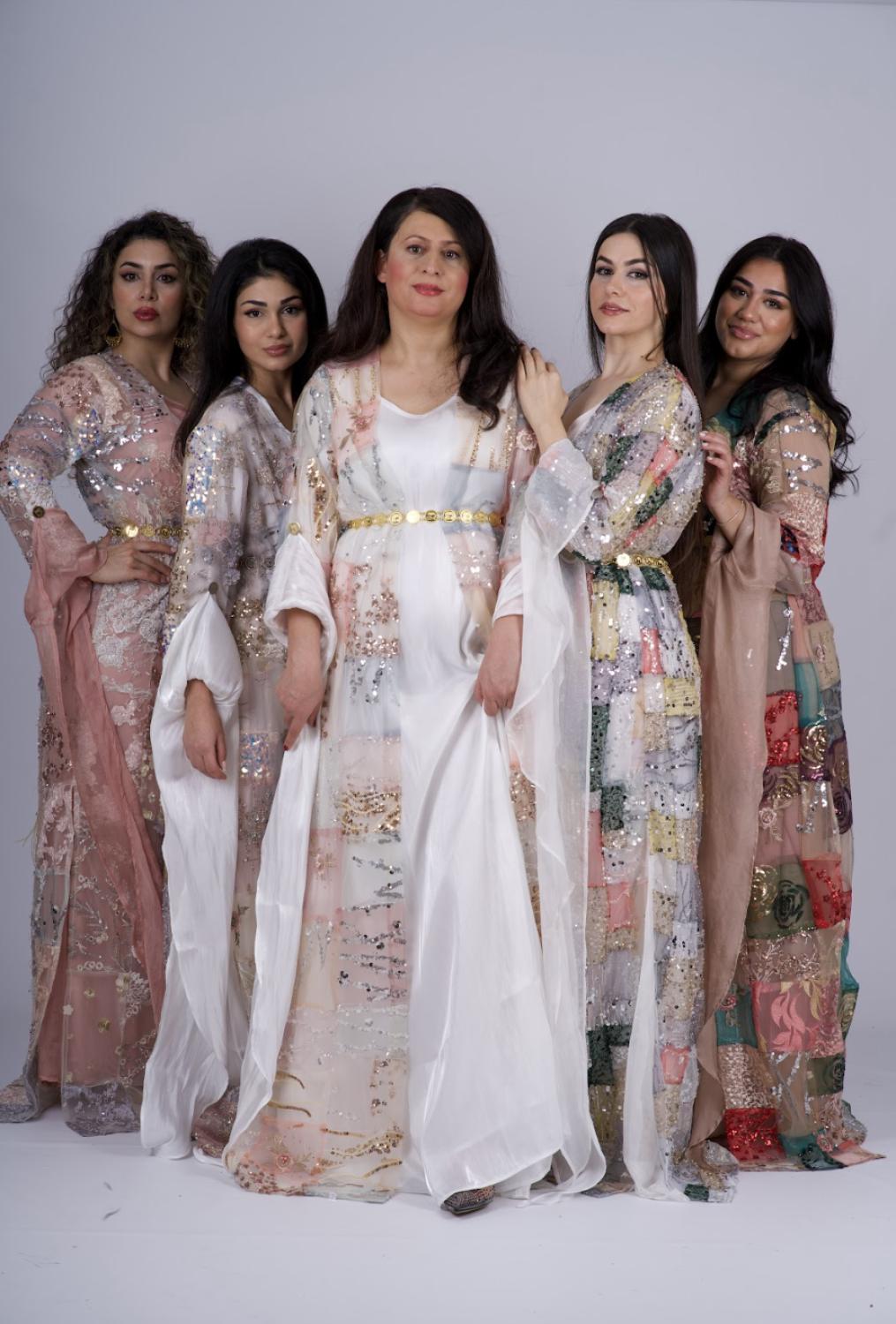
But that’s not all. Kewsan has also created a handful of job opportunities for women in Kurdish cities in Iran. Through a conscious production strategy, all garments under the Kewsan Textile brand are sewn by Kurdish women in Kurdistan, helping them survive the economic crisis while strengthening their role within their communities.
Believing in women
As a successful Kurdish entrepreneur, Kewsan places women’s empowerment at the core of her personal and professional mission. She believes that Kurdish women have always played a decisive role in their societies, one that must now expand in an increasingly globalized world.
“As women – whether we are mothers today or future mothers – we carry a deep responsibility to stand on our own feet,” she said. “Independence is never easy. The first step can feel as fragile as a child learning to walk, but every step matters.”
Encouraging Kurdish women to shoot for the stars, she urged them to take that first step, because only then, she believes, will doors open that they never knew existed.
“Believe in yourself, dare to try, and do not be afraid,” Kewsan said. “Hope often begins with one small, brave step.”
is a Kurdish journalist based in Slemani, the Kurdistan Region.