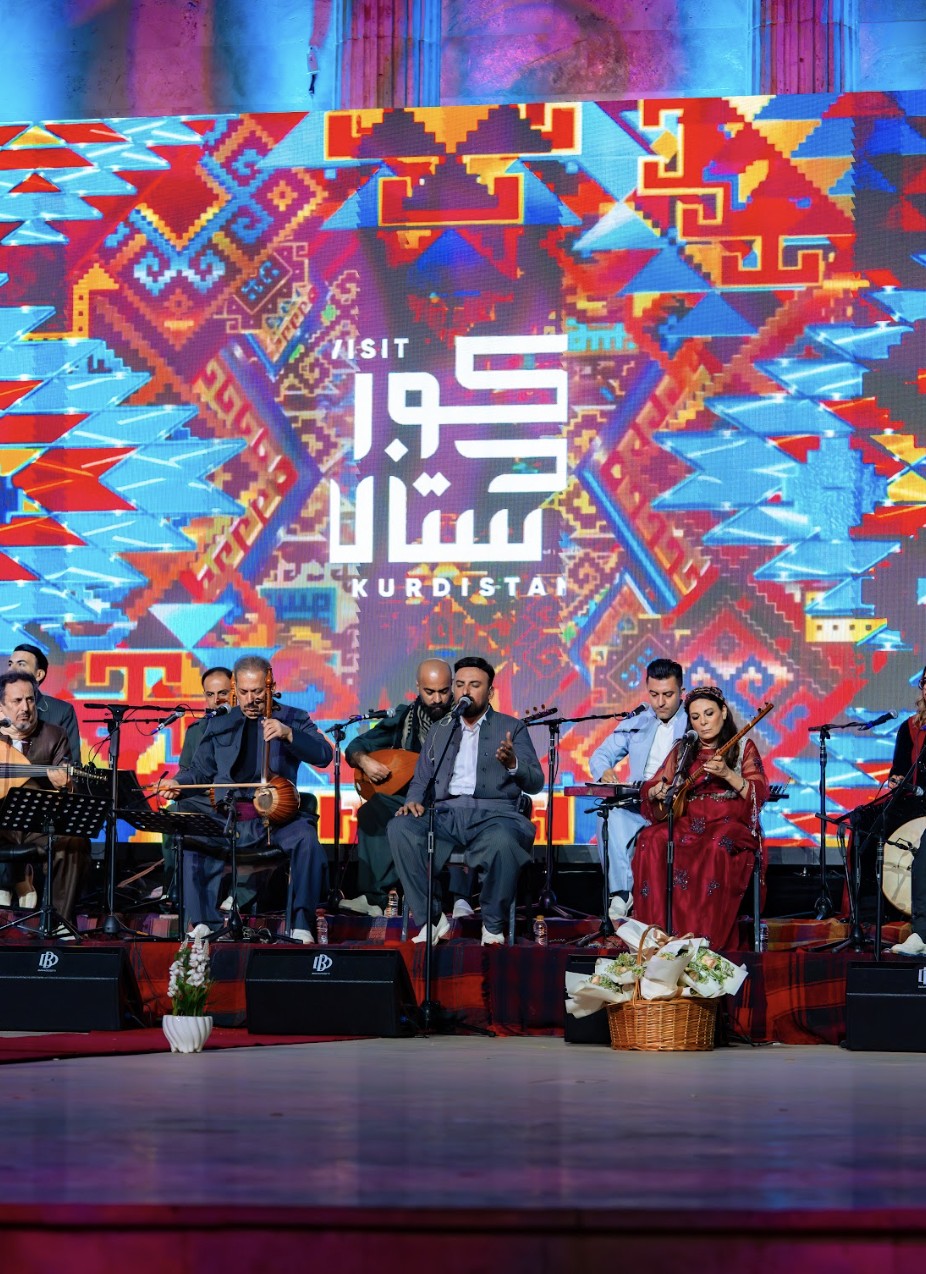
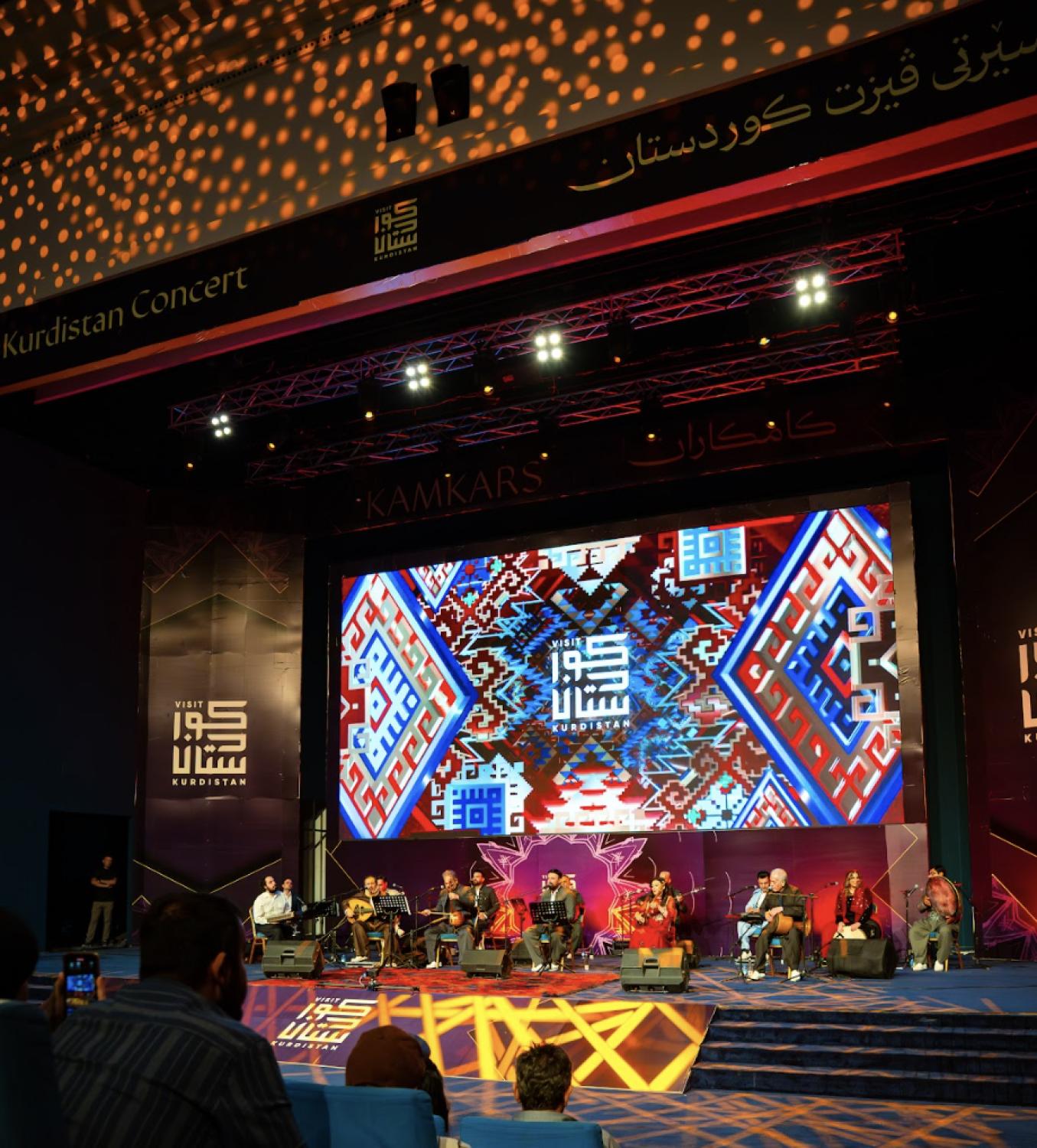
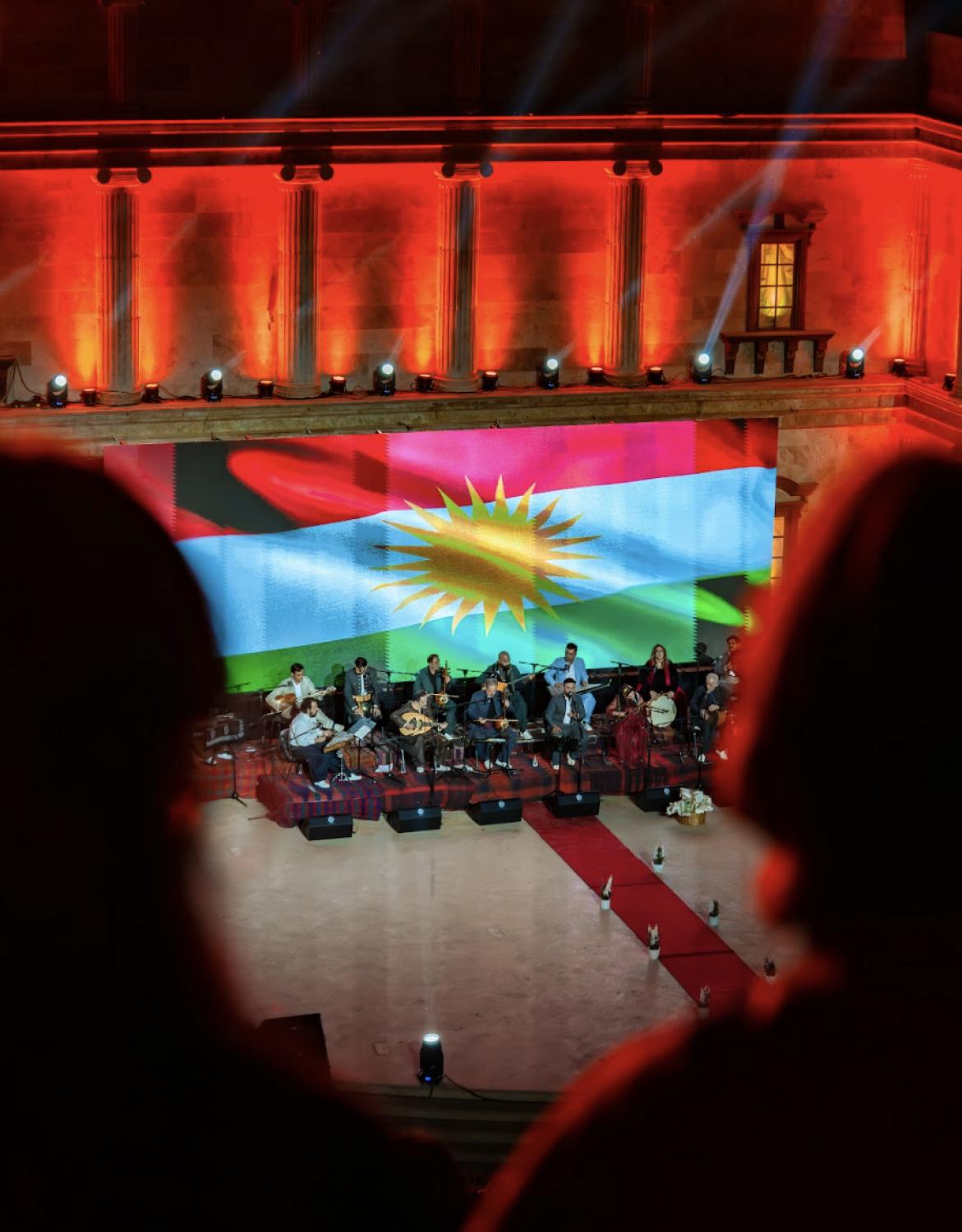
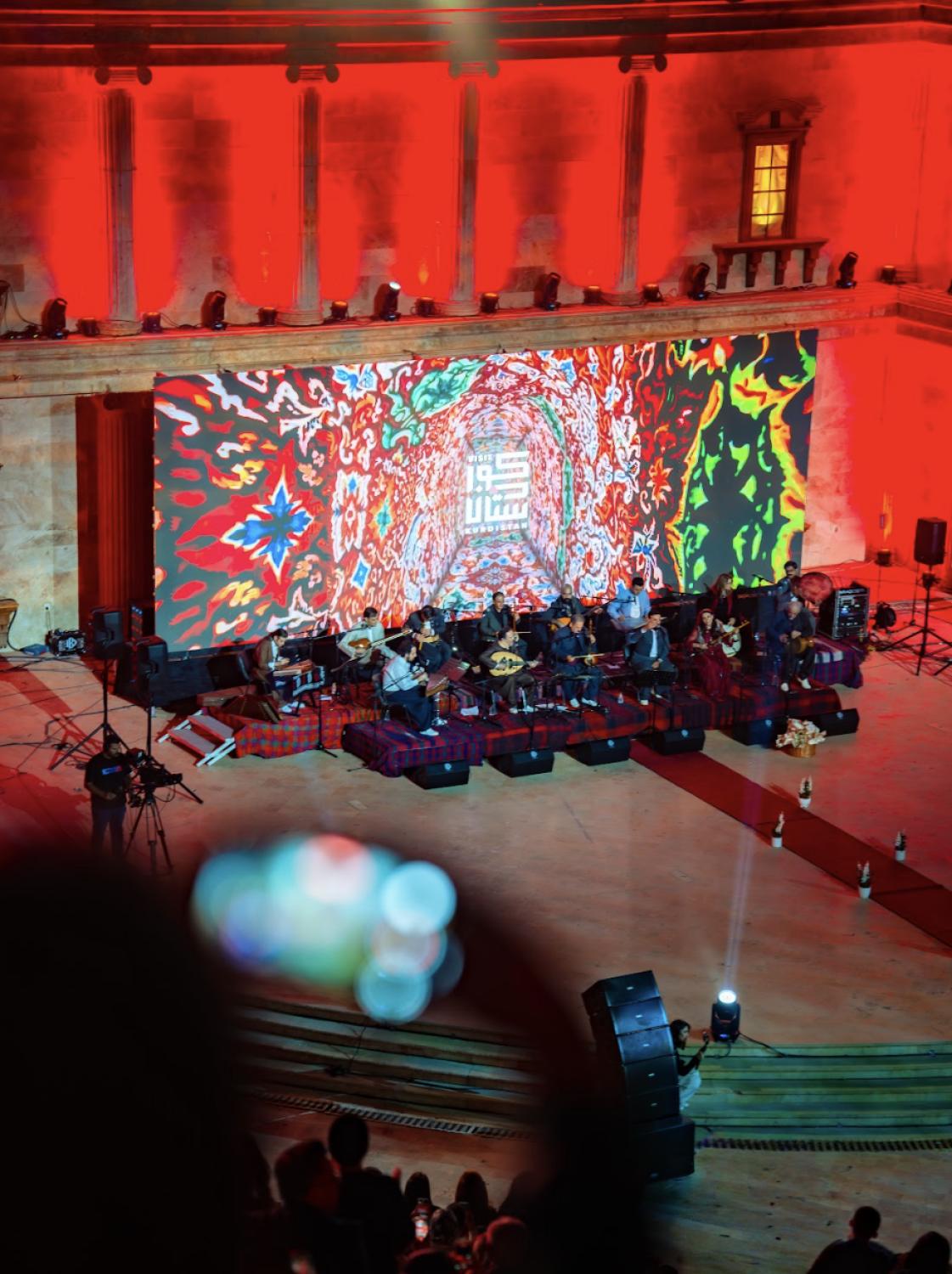
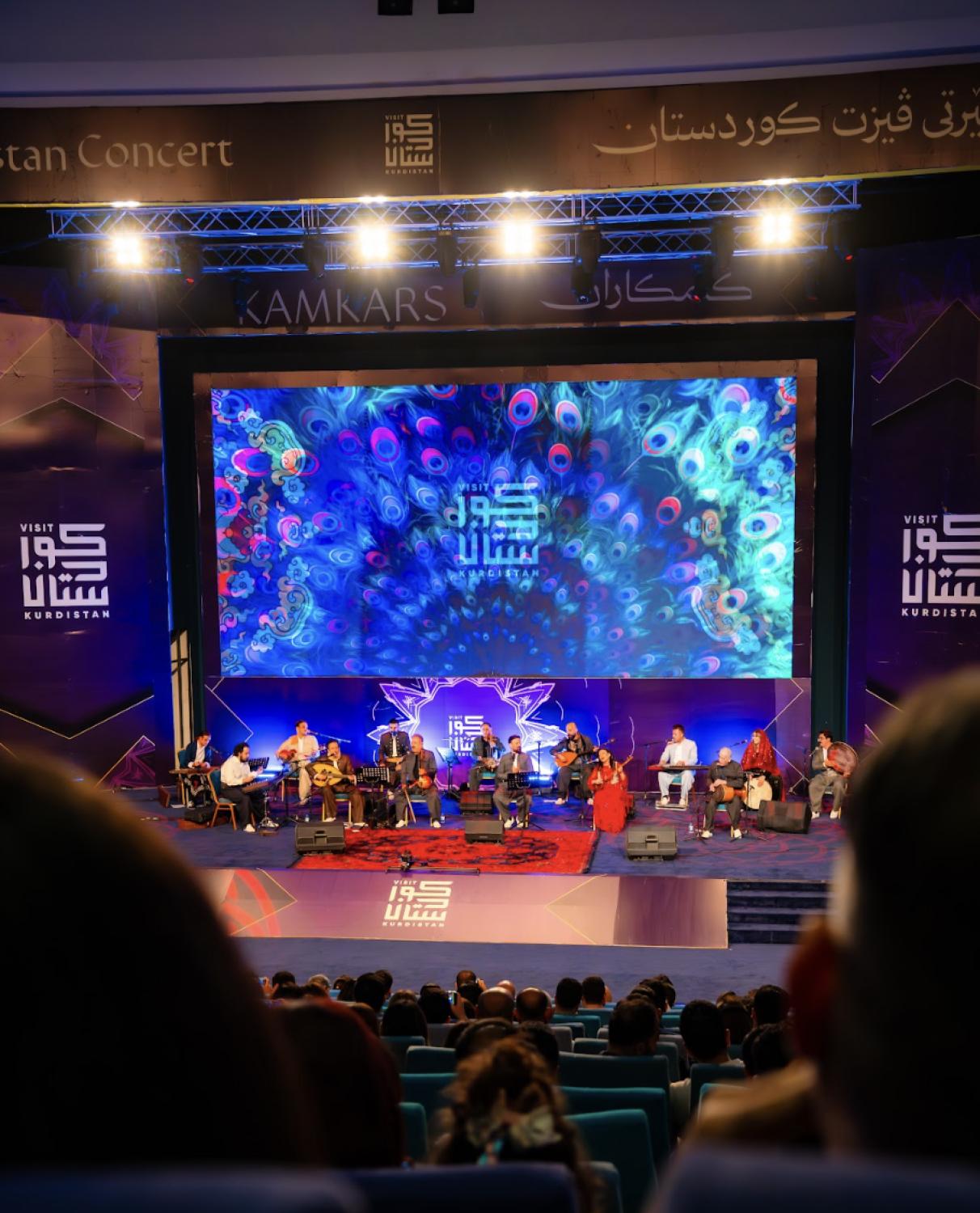
In early October, the legendary Kurdish musical family group Kamkaran – also known as The Kamkars – performed in Sulaymaniyah and Erbil. Active since the 1960s, the Kamkars have become synonymous with preserving Kurdish culture and heritage, including a performance at the 2003 Nobel Peace Prize ceremony honoring Iranian lawyer and writer Shirin Ebadi.
“Kamkaran was established in 1965; at the moment, the group consists of seven brothers and their sister. Surely, there are more members now, as there are the children of the family, and their friends and students,” Shahrokh Hedayati, who sings with the group and is also involved in its management, told Kurdistan Chronicle.
“I can say that we have more than 20 band members in total. Most of us come from the city of Sanandaj.”
Sanandaj, also known as Sine in Kurdish, is a center of Kurdish culture in Eastern Kurdistan (northwestern Iran).
“We also have members who are not from Sanandaj but rather are from Saqqez. Still, the majority of the students come from Sanandaj, and over time they have developed their skills working with Kamkaran,” he added.
“Sanandaj is known to be a hotspot for Kurdish art, culture, and music. Soon, we will have three concerts there, and tickets have already sold out,” he said.
The group’s aim is to promote Kurdish music, train the next generation of musicians, and preserve the cultural heritage of Kurdish art to ensure it remains well represented.
Hedayati added that Kamkaran has had a great effect on the Kurdish language and music, “especially for those of my generation.”
“In Iran, Kurdish language was not allowed, and we were raised reading and writing in Farsi. Kurdish literature, however, has been preserved through the art and music of Kamkaran. Therefore, the influence of Kamkaran’s work has not been limited to music – it has also touched on Kurdish literature.”
Popularity in Kurdistan and beyond
The group has many fans in Southern Kurdistan (the Kurdistan Region of Iraq), and the concerts in both Erbil and Sulaymaniyah were packed with fans. “This was our second performance in Erbil in five months,” Hedayati said. The group is also planning concerts in Europe and Canada.
“This was our second concert in the Kurdistan Region. We will be back in Sanandaj soon for a concert, and then on Thursday, we’ll perform in Kermanshah,” he added.
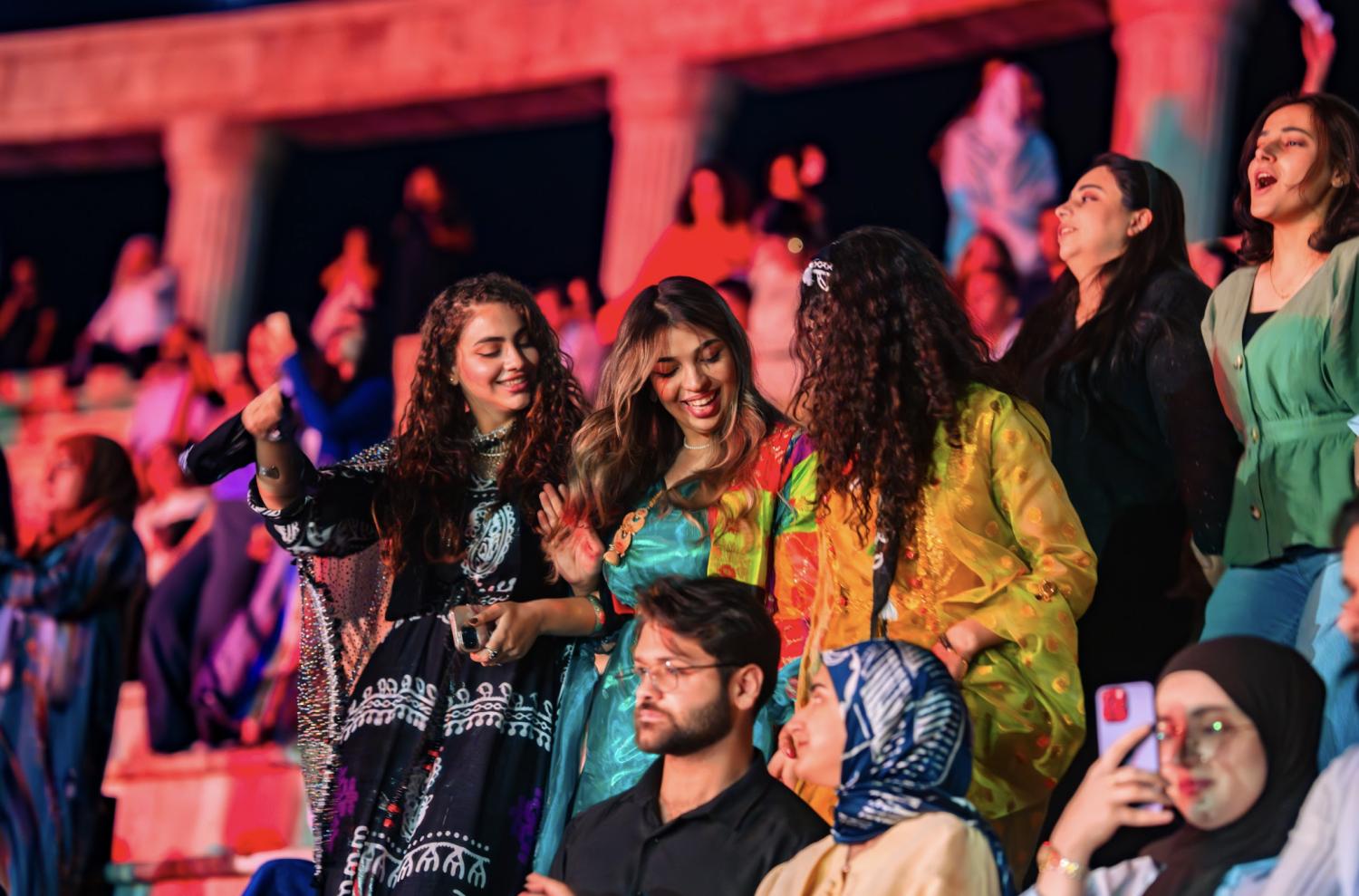
“Erbil is a beautiful city; it’s one of the Kurdish capitals,” Hedayati noted. “We often travel here, and I also live here part-time! It is a special place for me. Similarly, Sulaymaniyah is a nice environment. The hall was full today in Erbil; overall it has been a pleasure!
“It is very pleasant to see other Kurds in the neighboring countries coming to and enjoying our concerts,” he added. “The same goes for Tehran. Last year we had eight consecutive concerts attended by more than 24,000 people. It was a joy to perform there, the heart of Iran. It was a moment of pride and love.”
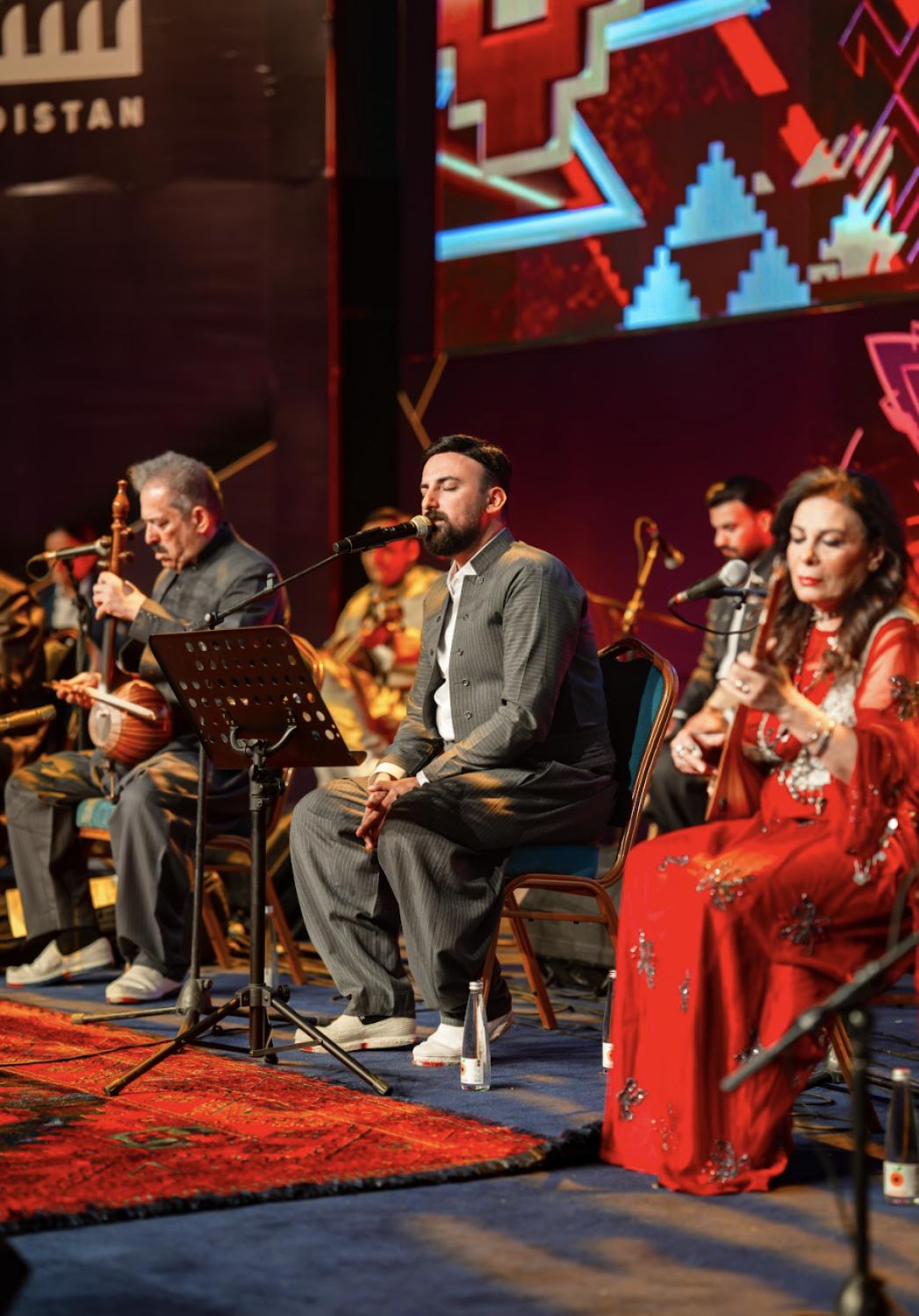
Hedayati also expressed appreciation for Visit Kurdistan, which was founded to promote tourism and Kurdish heritage in Kurdistan. “I appreciate what Visit Kurdistan is doing by focusing on Kurdish culture and not only focusing on bringing tourists to Kurdistan. We met briefly to organize our concerts here, and they were supportive of the process, and we extend our heartfelt thanks to them.
“For now, we will take a short break and then continue the concert tour in Tehran and elsewhere in Iran. During my time in Kamkaran, all our performances have been in Kurdish – it’s the only language I sing in. After the tour across Iran, we will be holding seven concerts in Northern Kurdistan (southeastern Turkey) as well.”
Hawraman
One of Kamkaran’s most famous songs is “Beautiful Hawraman” (Khosha Hawreman), which focuses on the Hawraman region in Eastern Kurdistan, which was added to UNESCO’s World Heritage List in 2021.
“Hawraman is the oldest Kurdish site, or even one of the world’s oldest places. Hawraman as a word includes the word Ahura, God in the Zoroastrian religion, and Man, which refers to staying; that being said, Hawraman is meant to be a place where Ahura is present,” Hedayati said. “It is ancient in many ways, especially in terms of its musical tradition. Kurds everywhere have a very special place in their heart for Hawraman. It is among the lands where civilization began.”
Soon, Kamkaran will release a new album with the famous Kurdish singer Adnan Karim. The group has also collaborated with Nasser Razazi. “I have known Razazi for a long time, since I was a kid; he was a friend of my father,” Hedayati explains. “I meet him quite often; he supports and guides me.”
The group also performs songs in other Kurdish dialects, such as the Kurmanji dialect, which is the main Kurdish dialect spoken in Syria and Turkey. “We also have about ten songs that are in Kurmanji that we will be performing in Northern Kurdistan.”
Although Hedayati is familiar with Iran’s non-Kurdish songs and music, he says he has always performed in Kurdish. “I am also fluent in Arabic and versed in the Arabic musical tone system. In addition, I am well trained in Farsi and Iranian music and various musical frameworks. Yet, I’ve performed almost exclusively in Kurdish.
“Let us respect and preserve Kurdish music in all its forms, popular or traditional, in all its genres,” he concluded. “Let us all support Kurdish musicians and singers, so they can preserve this cultural heritage for the next generations.”
A seasoned reporter and analyst who specializes in Kurdish affairs.