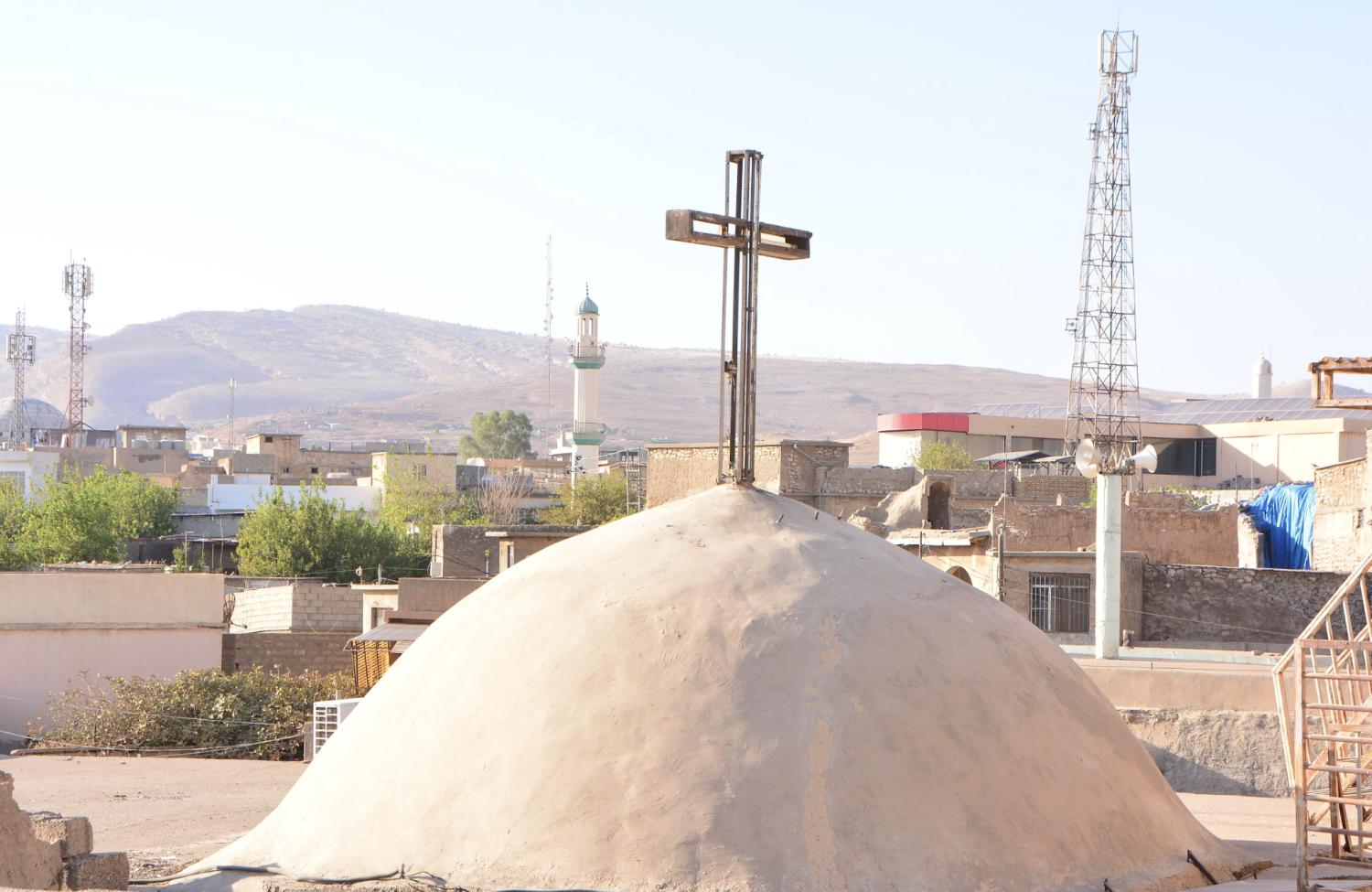
In Koya city and its nearby village Armota, life is shared between Muslims and Christians in a way that feels natural, calm, and deeply rooted. The sound of the mosque blends softly with the bell of the church. The people of both faiths walk the same streets, trade in the same markets, and celebrate each other’s moments of joy and sorrow.
Coexistence has long been a deeply important Kurdish value. It keeps different religious and ethnic groups living in harmony and cultivates the esteemed treatment of the ‘other’. By actively supporting and monitoring it, the Kurdistan Regional Government (KRG) has fostered an environment in which people of different faiths have flourished. The presence of religious minorities in the Kurdistan Region has also increased compared to the rest of Iraq and the Middle East.
Roots of tolerance
The religious tolerance underpinning coexistence in the Kurdistan Region is also deeply rooted in local traditions. Jamal Kweikha Abdullah, a preacher since 1976 and Imam of Koy Sanjaq’s Grand Mosque since 1983, highlights this trend as well as the enduring spirit of coexistence that was promoted by the Prophet Muhammad. After migrating from Mecca to Medina in 622 CE, he established the agreement known as the Charter of Medina, which became the foundation of mutual protection, coexistence, and justice for all Muslims.
Abdullah emphasizes how the region’s governmental policies and community practices together sustain a society where diverse religious and ethnic groups coexist harmoniously, each recognized as an essential and equal part of Kurdistan’s social fabric.
“The coexistence we have in Koy Sanjaq does not exist anywhere else,” he said with a smile, recalling decades of shared life. “We’ve never had a conflict with our Christian brothers. We live as one family, we visit each other’s homes, attend each other’s weddings and funerals. Our friendship is real, and our respect is mutual.”
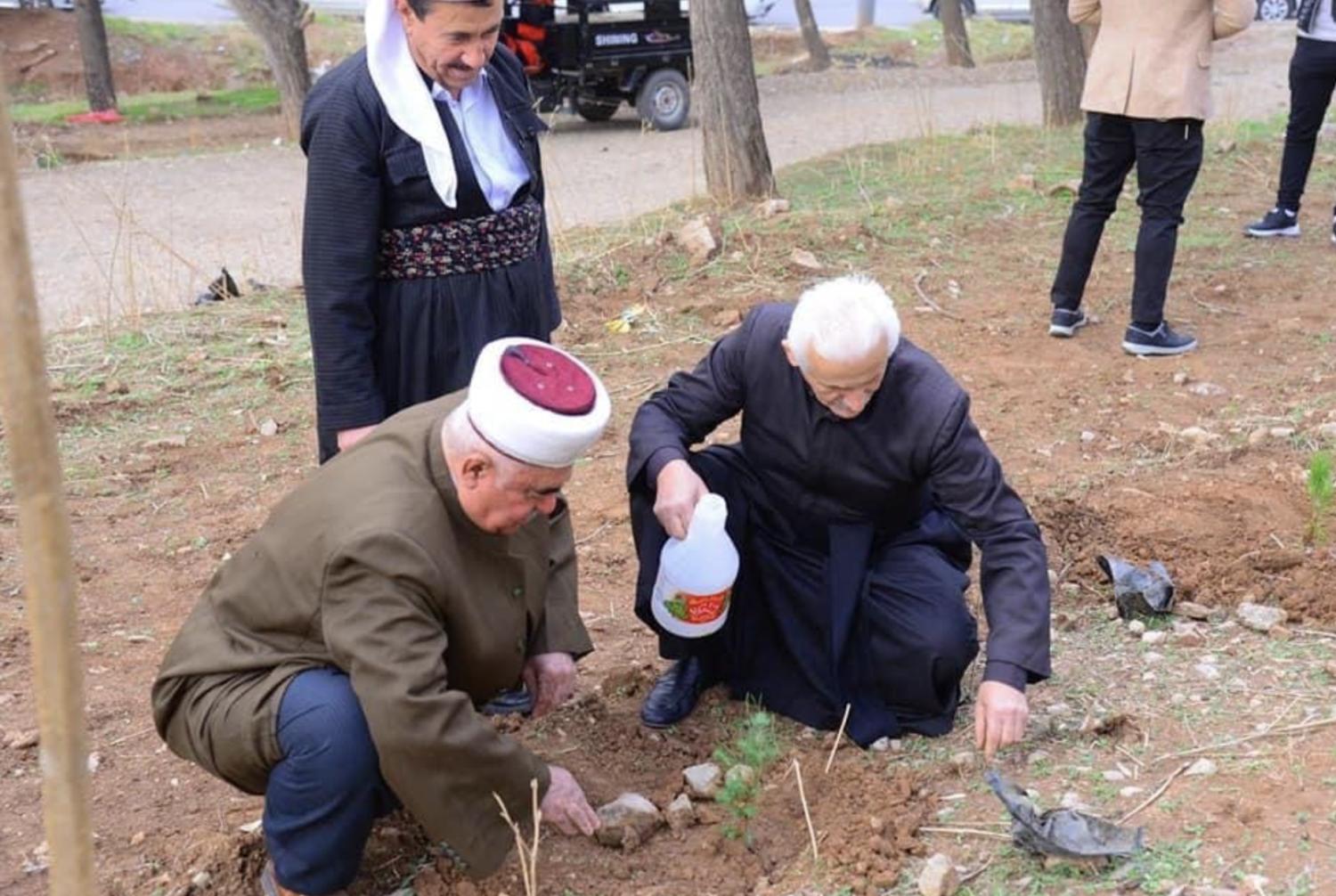
Abdullah’s relationship with the local priest, Father Zia Shaba, symbolizes that spirit. “Priests and imams are like one team,” he says. “We visit each other during religious occasions, join together at public ceremonies, and stand side by side in moments of happiness or grief. Father Zia is a respected man, and we’ve planted trees together on Environment Day, taken pictures, and shared them with others so people can see that we truly believe in living together.”
Abdullah highlighted that the Prophet taught “Do not harm others,” so harming anyone is like harming the Prophet himself. “That’s why we share food, visit their homes, and invite them to ours,” he continued. “There’s no difference between us, especially the Christian families who have lived here for generations, grew up with us, and work with us in the same markets. They are part of Koy Sanjaq’s heart.”
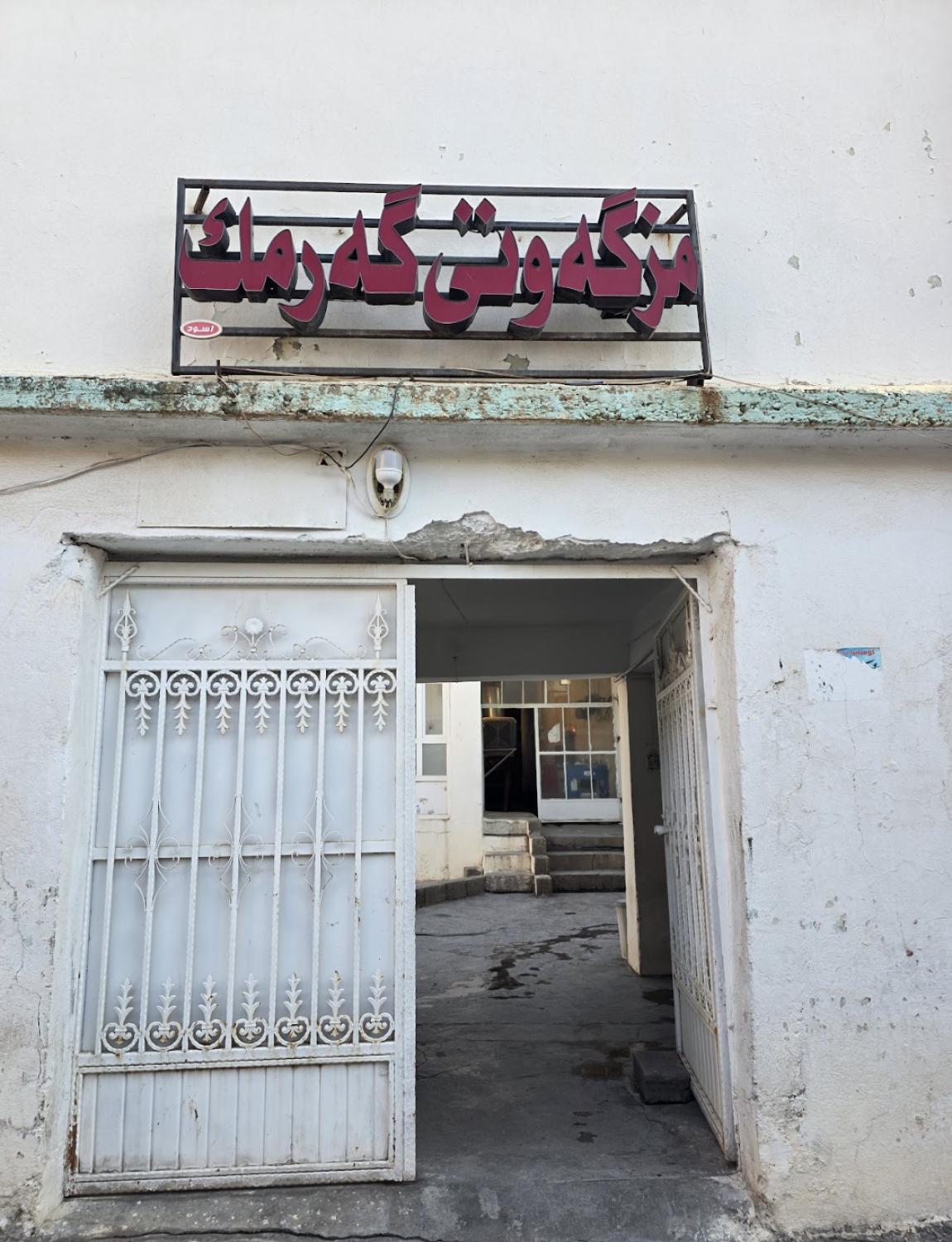
In the center of Koy Sanjaq, a mosque and church – the Garmak Mosque and Mar Yousef Church – stand side by side, separated by barely 20 meters. Every Friday, Muslims walk to the mosque for prayers, and at the same time, Christians enter the church for worship. No one questions the other. It is simply life as it should be.
Sometimes, small disputes happen, as in any community, but, as Abdullah explains, “They’re never religious in nature. When they do happen, Father Zia and I sit together and resolve them peacefully. The bond we have is stronger than any disagreement.”
The name and spirit of Armota
Shaba, priest of both the Church of the Virgin Mary in Armota and Mar Yousef Church in Koy Sanjaq, says the village’s name comes from the ancient Assyrian-Syriac term harmota, meaning ‘the land of rest’ or ‘soil of peace’.
He describes his village gently and proudly: “Today, Armota has about 115 Christian families. Many are farmers who work their own land. Here, coexistence isn’t a slogan, it’s a lifestyle. When you walk through the village or Koy Sanjaq’s streets, you cannot tell who is Christian, Muslim, Kurd, or Assyrian. People are educated, kind, and raised to respect others. This culture of coexistence comes from our ancestors.
“We share in each other’s celebrations and funerals,” he adds. “We live like one family. During Newroz, the Kurdish New Year, you’ll see Christians even happier than Kurds themselves, because we love joy, peace, and harmony.”
He recalls his friendship with Abdullah: “He’s a kind man, a respected leader. When our former priest, Father Denha, passed away, Imam Jamal came to Armota and joined us for three days of mourning. Everyone appreciated his presence; it meant a lot to us.”
Father Zia smiled as he described daily life: “When I walk through the market, everyone greets me with respect. We all know each other. People from every religion show kindness, and we do the same. I hope this continues forever.”
He pauses and adds something thoughtful: “Sometimes, individuals act wrongly, but that’s just people being people, not religion. A man once told me he couldn’t help with building the church because it was haram. I laughed and said, ‘That’s okay.’ It’s normal, because Kurdistan is the source of coexistence. We have eight religions living together here: Muslims, Christians, Jews, Sufis, Mandaeans, Baha’is, Yezidis, Kaka’i, and Zoroastrians, all with their own space, all respected.
“Just last week,” he continued, “I was invited to lunch at a mosque in Erbil. Before that, I visited Jalil Khayat Mosque, where they welcomed me warmly. That’s Kurdistan, a place of peace, without discrimination.”
 A troubled neighborhood
In Koy Sanjaq and Armota, coexistence is not a policy or a project; it’s daily life. It’s in the way people greet each other, the way they share food, and the way their prayers rise from two neighboring buildings, 20 meters apart, reaching one sky.
Unfortunately, ethnic and religious groups in post-colonial Iraq have endured severe atrocities. These began with the 1940s Farhud pogrom against Jews and continued with the Kurdish genocide during the notorious Anfal campaign of the 1980s.
Iraqi Christians have also been victims of repeated attacks, forcing many to seek refuge in the Kurdistan Region or emigrate entirely. Consequently, their population in Iraq has sharply declined, decreasing by more than 80% since 2003.
Unlike the rest of Iraq, religious coexistence and tolerance remain deeply rooted in the Kurdistan Region today. The KRG actively encourages religious diversity and harmony, avoiding the term “minority” and instead describing ethnic and religious communities as “components” of integral and equal parts of society.
In 2015, the Kurdistan Region Parliament approved legislation guaranteeing the political and cultural rights of these communities. There are about 1 million registered displaced Iraqis in the Kurdistan Region, of whom about 40% are Yezidis, Christians, or other religious and ethnic minorities, representing roughly a 20% population increase.
is a Kurdish journalist and photographer based in Koya, the Kurdistan Region.