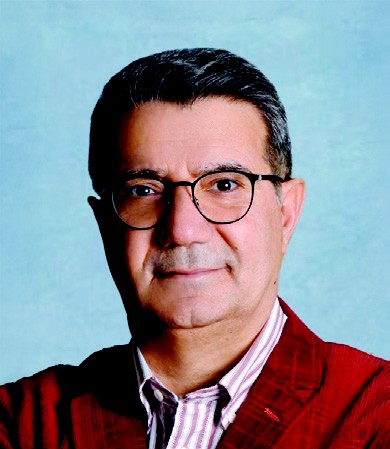
At the age of 17, while still a high school student in Damascus, Ismet Cherif Vanly would tell his friends, “I will go to Lausanne to study law and change the treaty that divided Kurdistan.” The remark foreshadowed the legal and diplomatic struggle that would define his life.
His father, Muhammed Cherif Vanly, was born in Ottoman-ruled Syria. Educated in imperial schools, he was fluent in Arabic, Persian, French, and Turkish, and served as a colonel in the Ottoman army. His mother, Khayriye Hanım, was the daughter of the well-known tribal leader of the Ala Rech tribe in the Deir ez-Zor region.
Raised in a disciplined household shaped by Ottoman state traditions, Vanly received a rigorous education from an early age. However, it was in the “Kurdish Quarter” of Damascus, while playing football in the streets, that he became conscious of his Kurdish identity. During those same years, he attended gatherings of exiled Kurdish intellectuals and politicians, listening to figures such as Memduh Selim, Ekrem and Kadri Cemilpasa, Osman Sebri, and Kamuran Bedirxan. Accounts of the Dersim and Agri massacres left indelible marks on his young mind. Although his father opposed his involvement with Kurdish nationalist circles, those conversations had already shaped his path.
Choosing the struggle
In 1944, he graduated from the mathematics department of his high school. His father wanted him to become an engineer. As Vanly would later recount, “He wanted me to build roads, bridges, and water canals for the dry lands of Syria.” Instead, he went to Beirut and enrolled in both engineering at the American University of Beirut and political science at Saint Joseph University. Soon, he abandoned engineering and turned decisively toward politics and law.
On November 29, 1948, he arrived in Lausanne, the city where he had long dreamed of studying law. In his view, the greatest deficiency of the Kurds was their weakness in diplomacy and international law: “We fight well. We give our blood and our lives, but we struggle to explain our cause in two lines.”
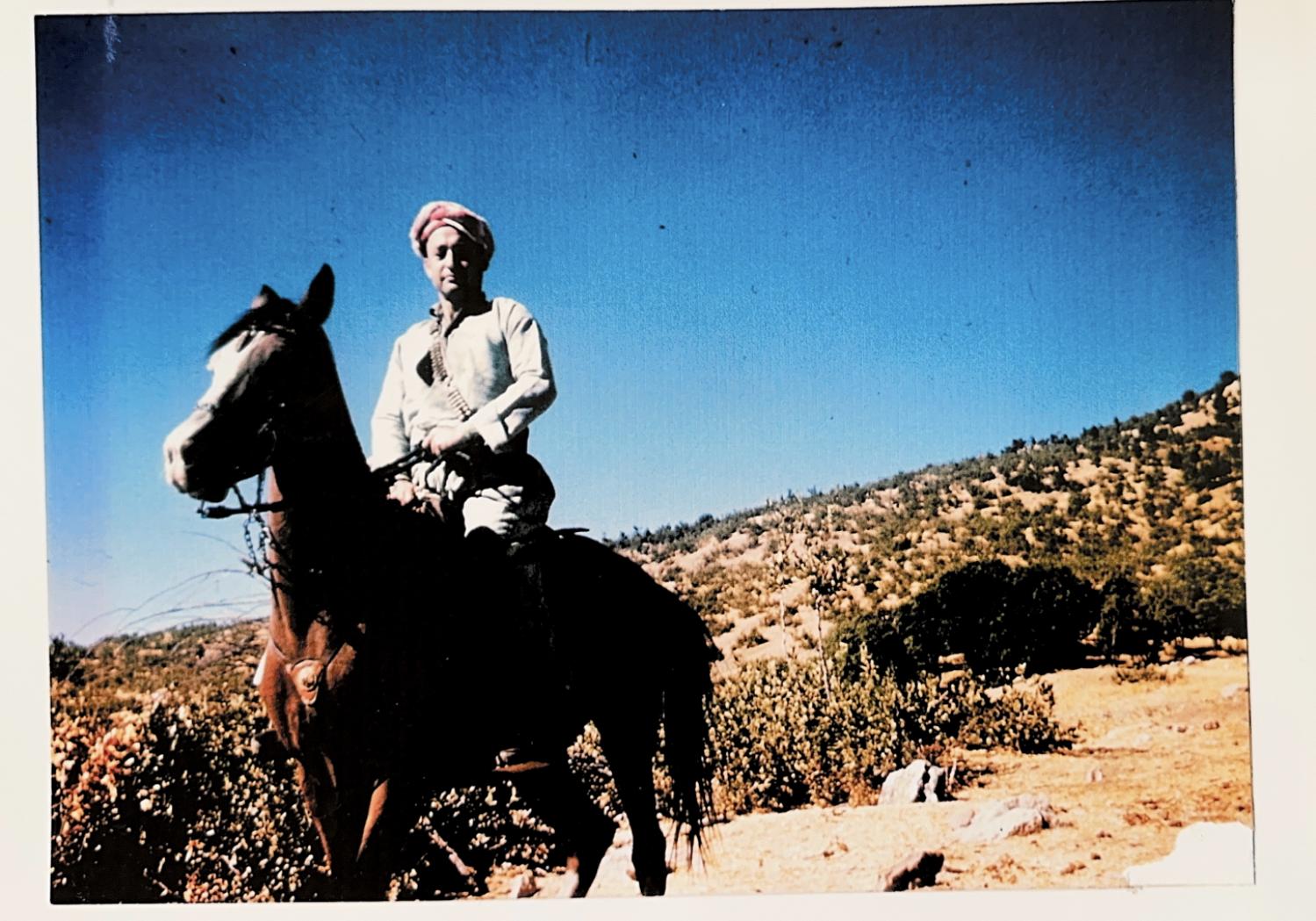
After completing his education in Lausanne, he began working as a clerk at the Family Court, a position he held for 19 years. He had the opportunity to become a judge but did not find it appealing. “I would either become a judge or continue the struggle; I chose the struggle,” he said, making clear the direction of his life. He turned his face toward the mountains of Kurdistan.
At the time, there was no organized Kurdish diaspora in Lausanne. Even so, he reached out to Kurdish students studying in different European cities. In 1956, together with Nureddin Zaza, he founded the European Kurdish Students Society. Their aim was to establish a democratic civil organization independent of the Iraqi and Syrian Communist Parties. The first congress was attended by 16 people; two years later, 40 intellectuals gathered at a congress in London, and Vanly was elected president.
When General Abd al-Karim Qasim overthrew the Iraqi monarchy on July 14, 1958, and Mustafa Barzani returned from exile, it created great hope among Kurdish intellectuals abroad. That same year, speaking at the International Student Congress in Baghdad, Vanly sharply criticized the new constitution for failing to recognize the Kurdish language and culture. For this speech, he was accused of “nationalism” and ordered to leave Iraq within 24 hours.
He considered staying in Iraq and crossing into Kurdistan, but after a warning from Jalal Talabani he abandoned the idea. He returned to Europe and continued his struggle in the field of diplomacy.
A solitary diplomatic life
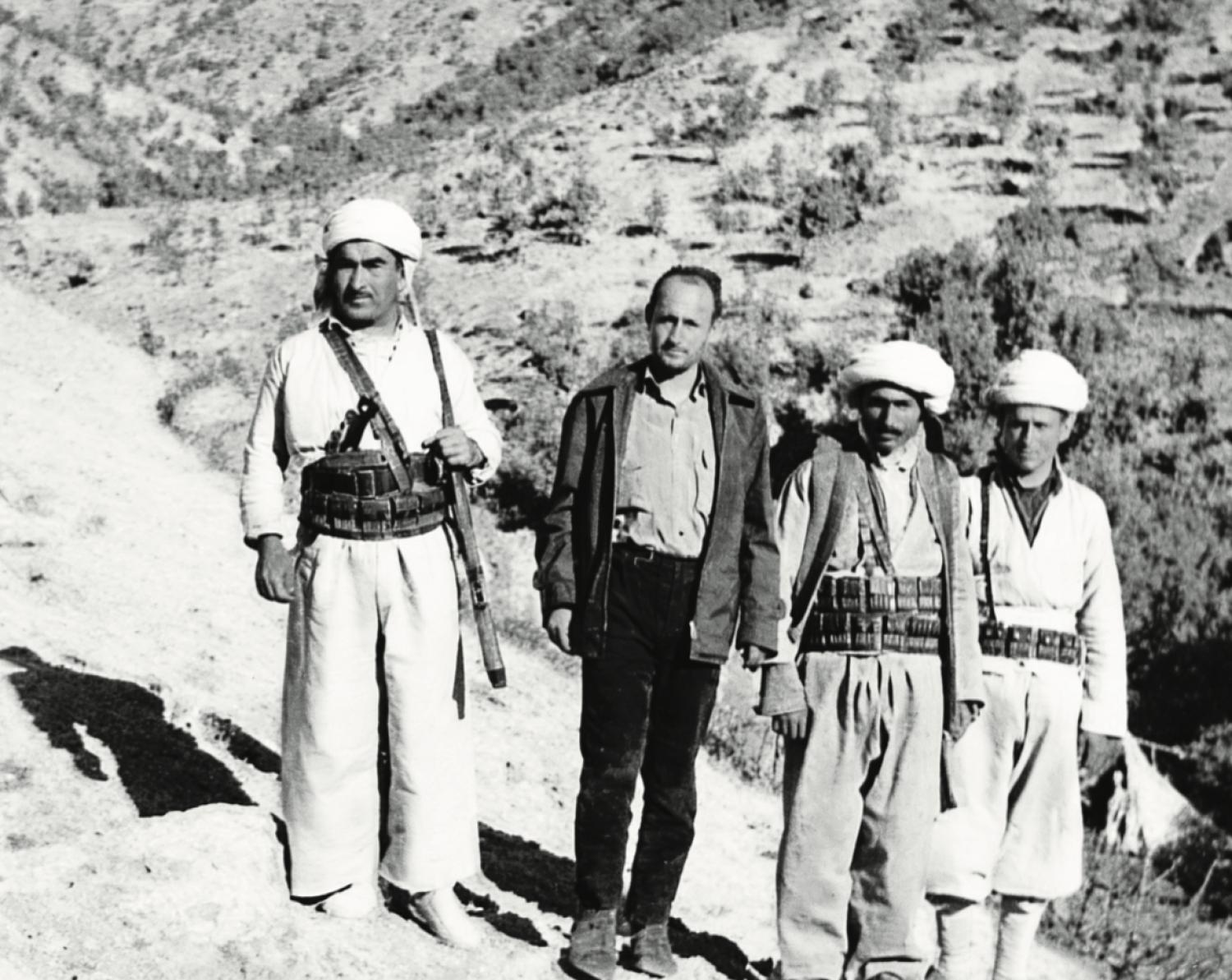
He first met Mustafa Barzani in Baghdad in 1960, and the meeting changed the course of his life. From 1964 to 1975, he served as Barzani’s spokesperson in Europe. However, after the Algiers Agreement of March 6, 1975, between Iran and Iraq, Vanly’s remark that the Shah had “stabbed the Kurds in the back” caused a rupture between the two men. Barzani announced that he no longer had relations with Vanly. For Vanly, this was both political and personal disappointment.
Earlier, in 1963, after publishing a booklet criticizing the Syrian Ba’ath regime’s policies toward the Kurds, he was sentenced to death in absentia. For many years, he could not return to his country. In 1975, he traveled to Iraqi Kurdistan with a Geneva-based delegation and met with the Baghdad authorities; on his return, he published a report exposing the regime’s repression. Shortly afterward, he was attacked at his home in Lausanne. Shot in the neck and jaw, he spent two months in the hospital but survived and resumed his work.
Two weeks after the Iranian Islamic Revolution, he went to Tehran at Ruhollah Khomeini’s invitation. When Vanly argued that the Kurds should be treated fairly, Khomeini’s response was brief and clear: “The Kurds must follow the line of the Islamic Republic.” With great disappointment, he returned to Lausanne.
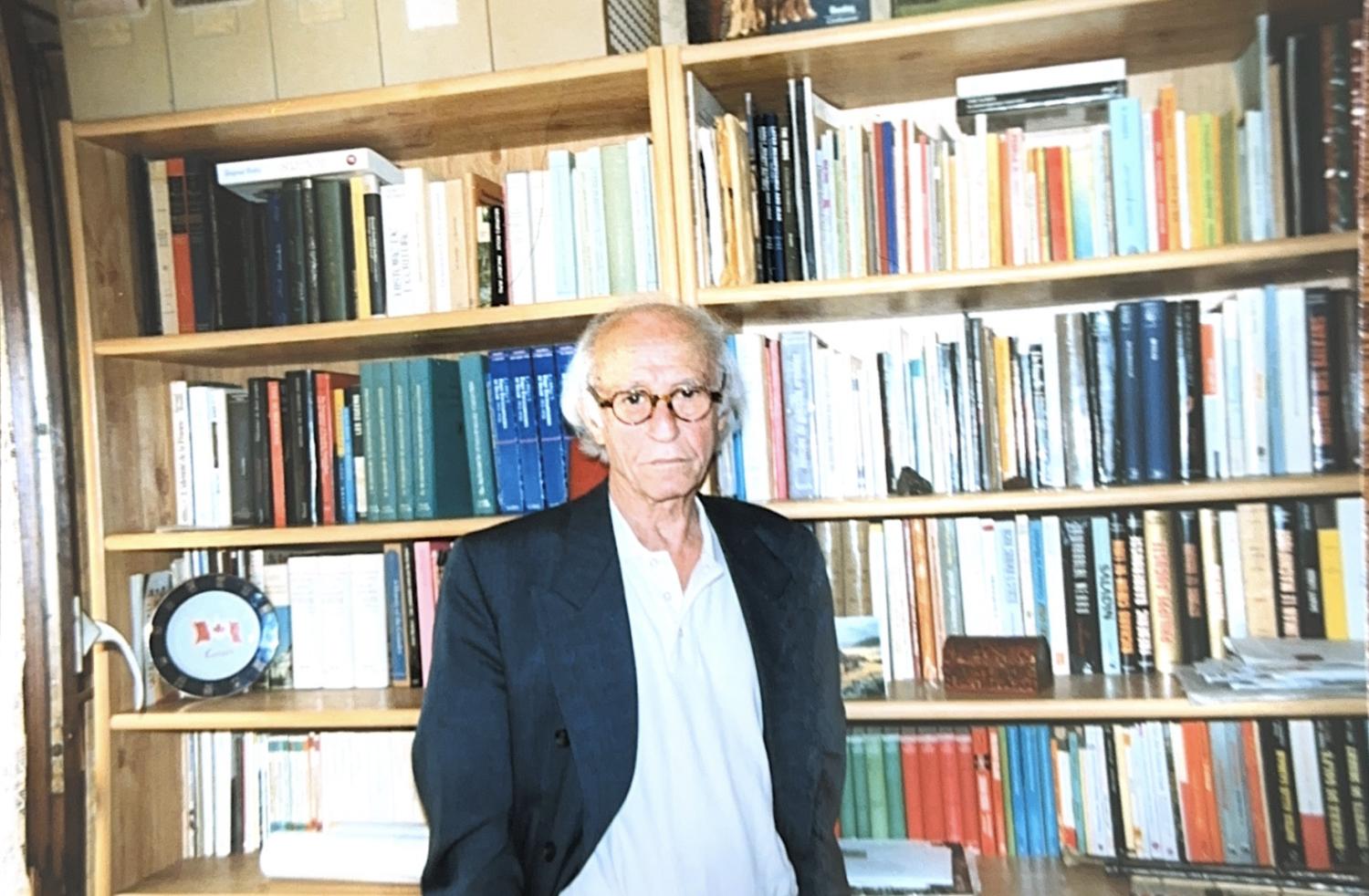
Vanly conducted intense, largely solitary diplomatic efforts in Europe, particularly centered in Paris and Geneva. He wrote letters to numerous world leaders. In 1983, he took part in the founding of the Kurdish Institute of Paris. A year later, he contributed to the establishment of the Kurdish Lawyers’ League and played a role in publishing the “Kurdish Declaration of Human Rights.” After the Halabja Massacre, he appealed to the five permanent members of the UN Security Council, demanding the Kurds’ right to self-determination, and received written replies from France’s President Francois Mitterrand and UK Prime Minister John Major.
A dream of independence
He played an active role in the Kurdish freedom struggle but never joined any political party, maintaining a critical distance from party affiliations. He was in contact with many Kurdish leaders – from Ihsan Nuri Pasha to Jalal Talabani and Abdullah Ocalan – voicing his criticisms in diplomatic language and avoiding personal polemics.
After the 1980 coup in Turkey, he followed developments there closely. He particularly emphasized that he did not know Turkish, describing this as a symbolic stance against Ankara’s assimilation policies. “Saddam Hussein committed genocide in Anfal but did not ban the Kurdish language; the Turks banned it, so I do not speak their language either.” And with a half-serious, half-ironic smile, he would say, “Praise be to God, I do not know Turkish.”
In 1991, he traveled to Van and visited his ancestral lands; he saw the tomb of Ehmede Xani. In 1993, he attended the opening of the Kurdish Institute in Istanbul. In later years, he served as president of the Kurdish Parliament in Exile and the Kurdistan National Congress. He continued writing about Kurdish language and culture until he was hospitalized in September 2011.
“My dream is the independence of Kurdistan,” he would say. But he defended that dream not through the strength of arms, but through the claims of law, diplomacy, and international legitimacy.
He passed away in Lausanne on November 9, 2011.
Legacy
Vanly’s life also reflects the difficulties faced by Kurdish intellectuals, as well as by independent and pro-independence thought within Kurdish politics. He rendered great service to many Kurdish parties and political figures, devoting much of his effort to them. He also fell into disagreement with some of them; yet he never abandoned either his ideals or his free and independent conception of the intellectual.
This stance and way of life also contributed to his spending the final years of his life in relative solitude. However, his steadfastness and his diplomatic, investigative, and critical approach to politics remain an important lesson for younger generations.
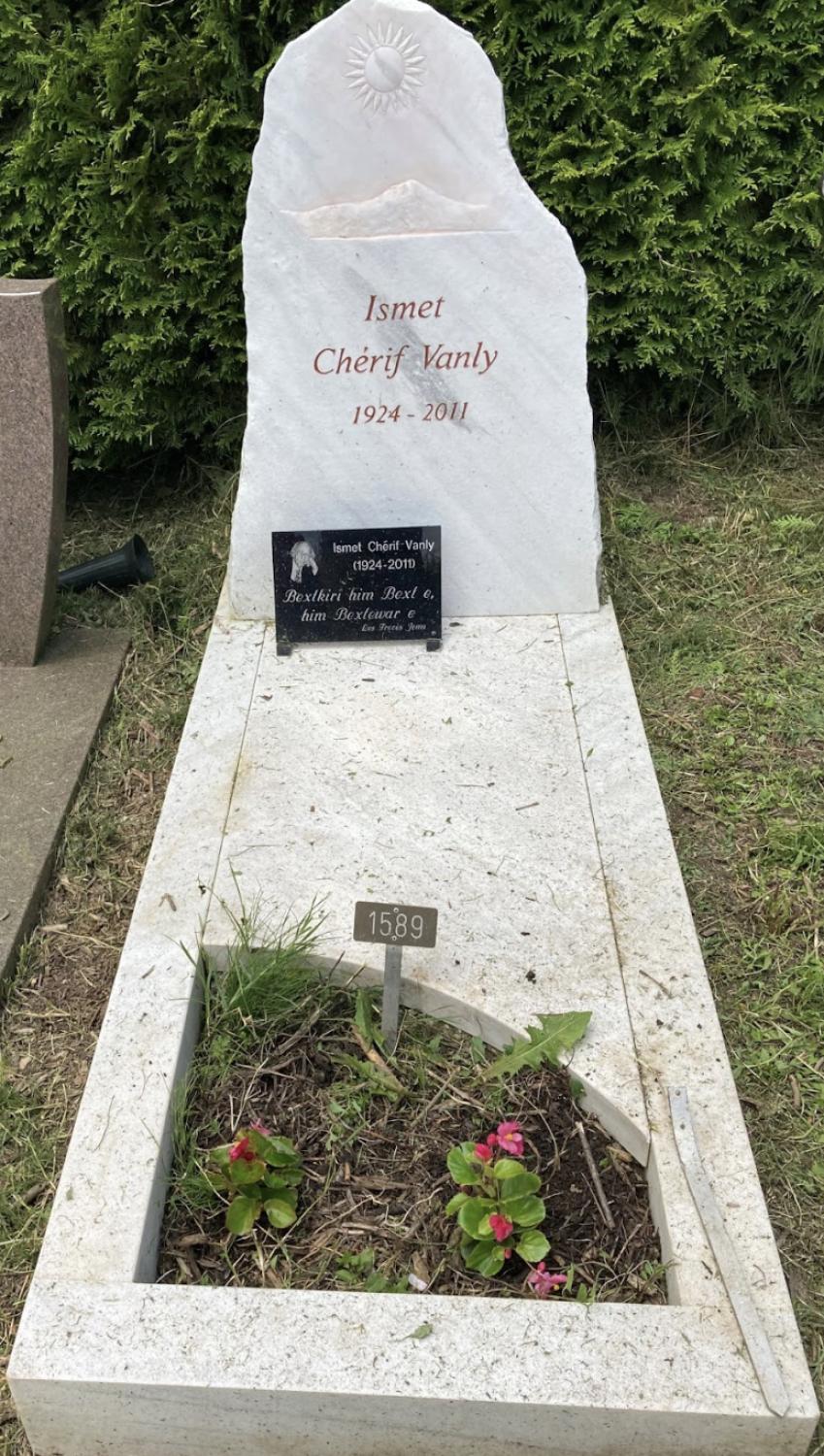
His final wish was to be buried in Kurdistan. That wish could not be fulfilled, and he was laid to rest in Switzerland. Lying in the Bois-de-Vaux Cemetery in Lausanne, Ismet Cherif Vanly was like a great plane tree whose roots were in Kurdistan and whose trunk grew in Europe. The land to which he devoted his life was not yet free. Yet he left behind a powerful political and intellectual legacy – one forged by the pen, sustained through diplomacy, and carried by an unbroken will.
is a journalist and sociologist. He is a Member of the Executive Board of the city of Prilly, Switzerland, and President of AFKIV.