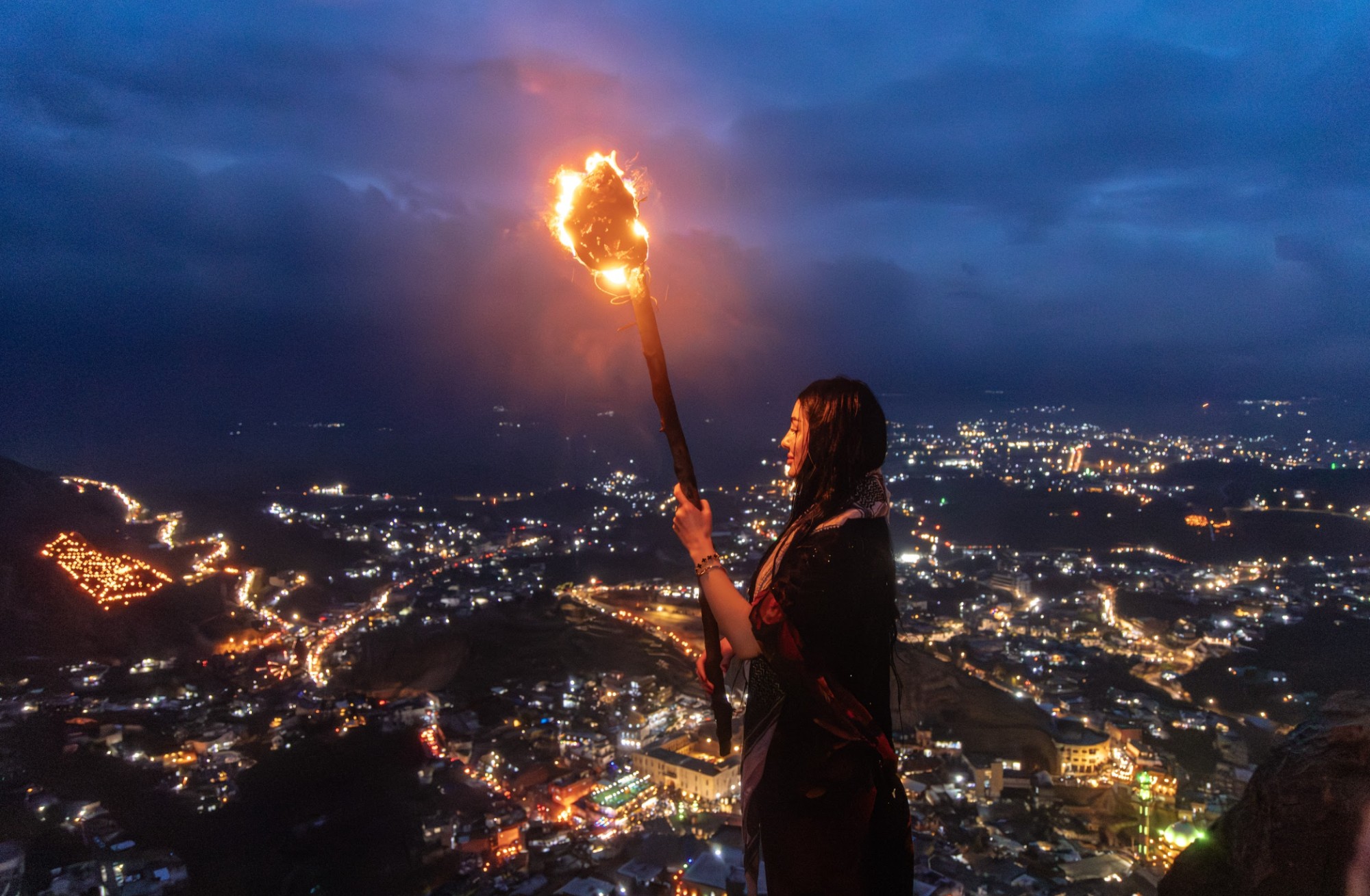
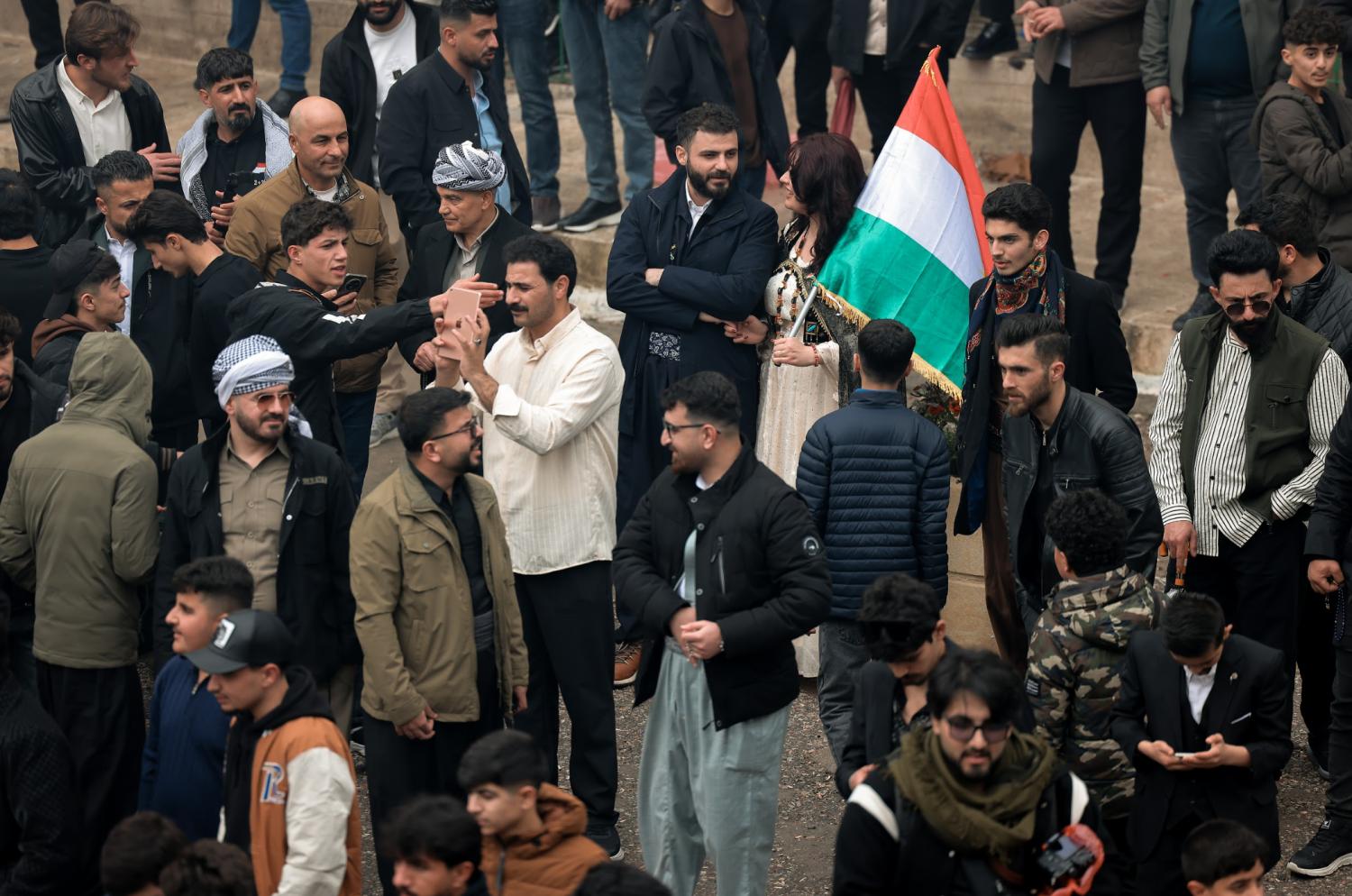
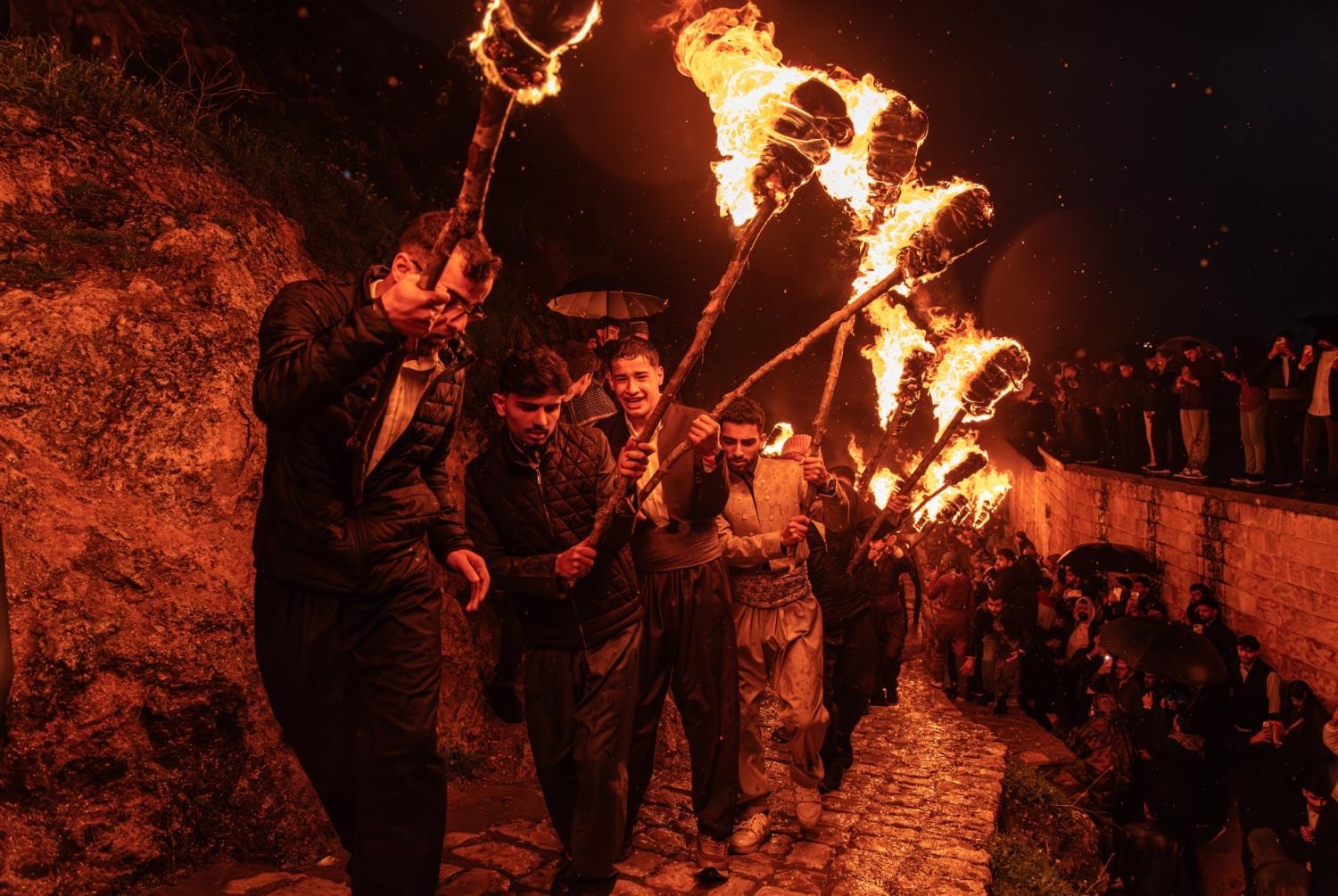
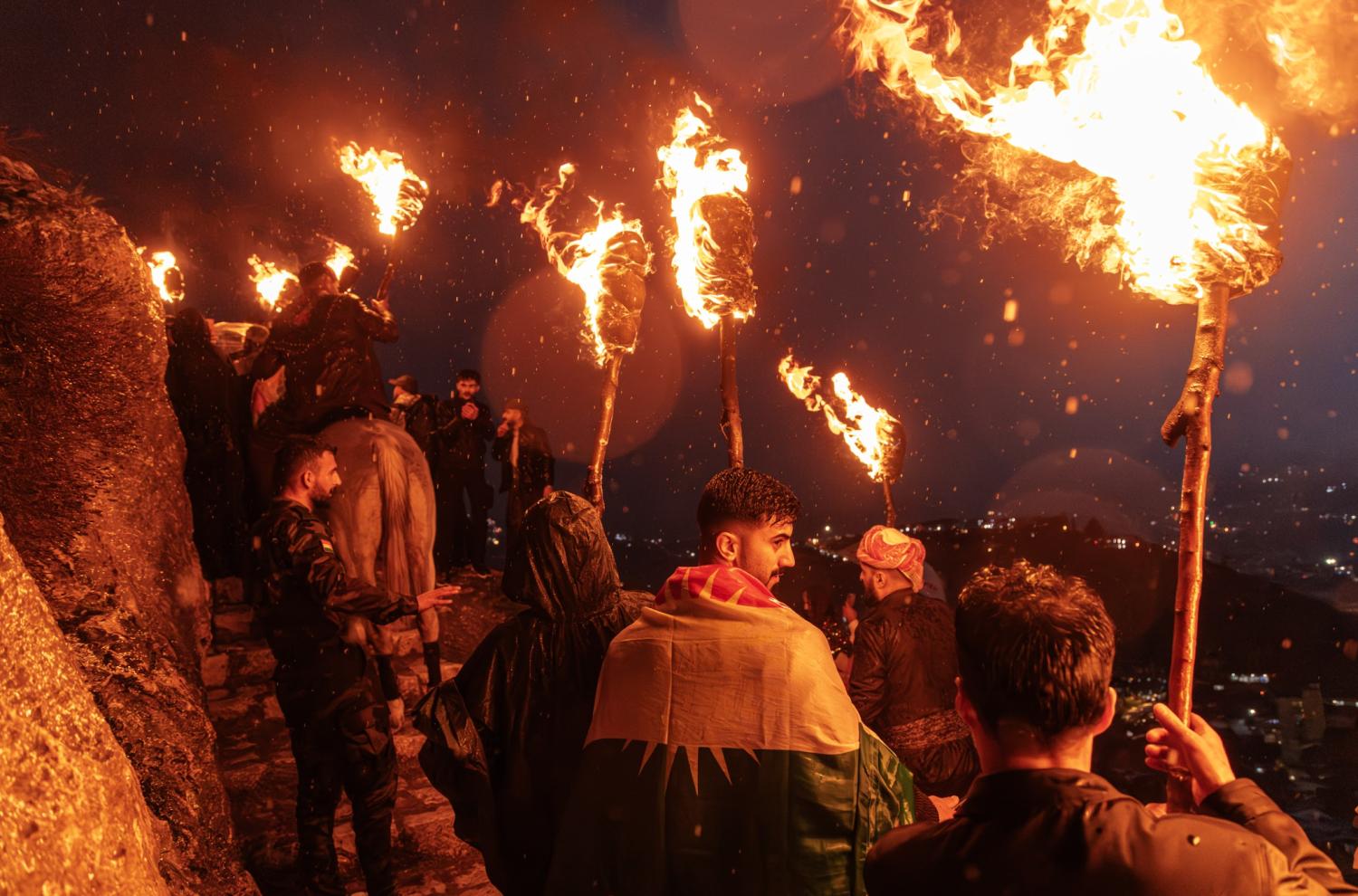
The torches were raised. The procession wound up the mountain. Families gathered in anticipation, children looked upward, and once again the region moved toward one of the oldest and most cherished rituals in Kurdish life. From a distance, the scene retained its familiar beauty: flame against darkness, movement against stone, hope against the coming night.
Yet this year, beneath the spectacle, something had changed. Newroz celebrations were not cancelled. They were not erased. But they were touched by the mood of a region living too close to the war between Israel and the United States and Iran.
Defying the shadow of war
In the weeks leading up to the celebration, the Kurdistan Region had endured the consequences of a conflict it had neither chosen nor joined. Drone attacks and regional hostilities cast a heavy shadow over public life. Kurdistan was neither a party to the war nor a factor in the strategic calculations of those waging it. Yet, as has happened too often in this part of the world, distance from war does not shield people from its effects. Kurdish families buried their loved ones. The word ‘martyr’ returned to lips already too familiar with mourning.
For Kurds and Kurdistan, Newroz is more than a marker of the beginning of spring. It is one of those rare traditions that combines season, memory, myth, and identity. Across Kurdistan, the holiday marks renewal, but it also recalls endurance. Its most enduring image – the lighting of fire – goes back to the mythical figure of Kawa the Blacksmith, who rose against tyranny and lit fires in the mountains to announce the fall of oppression. From then on, the symbol entered political imagination, cultural life, poetry, and public ritual. Fire came to stand not simply for celebration, but for survival. Today, it still holds a potent symbolic message: darkness does not last forever.
The capital of Newroz
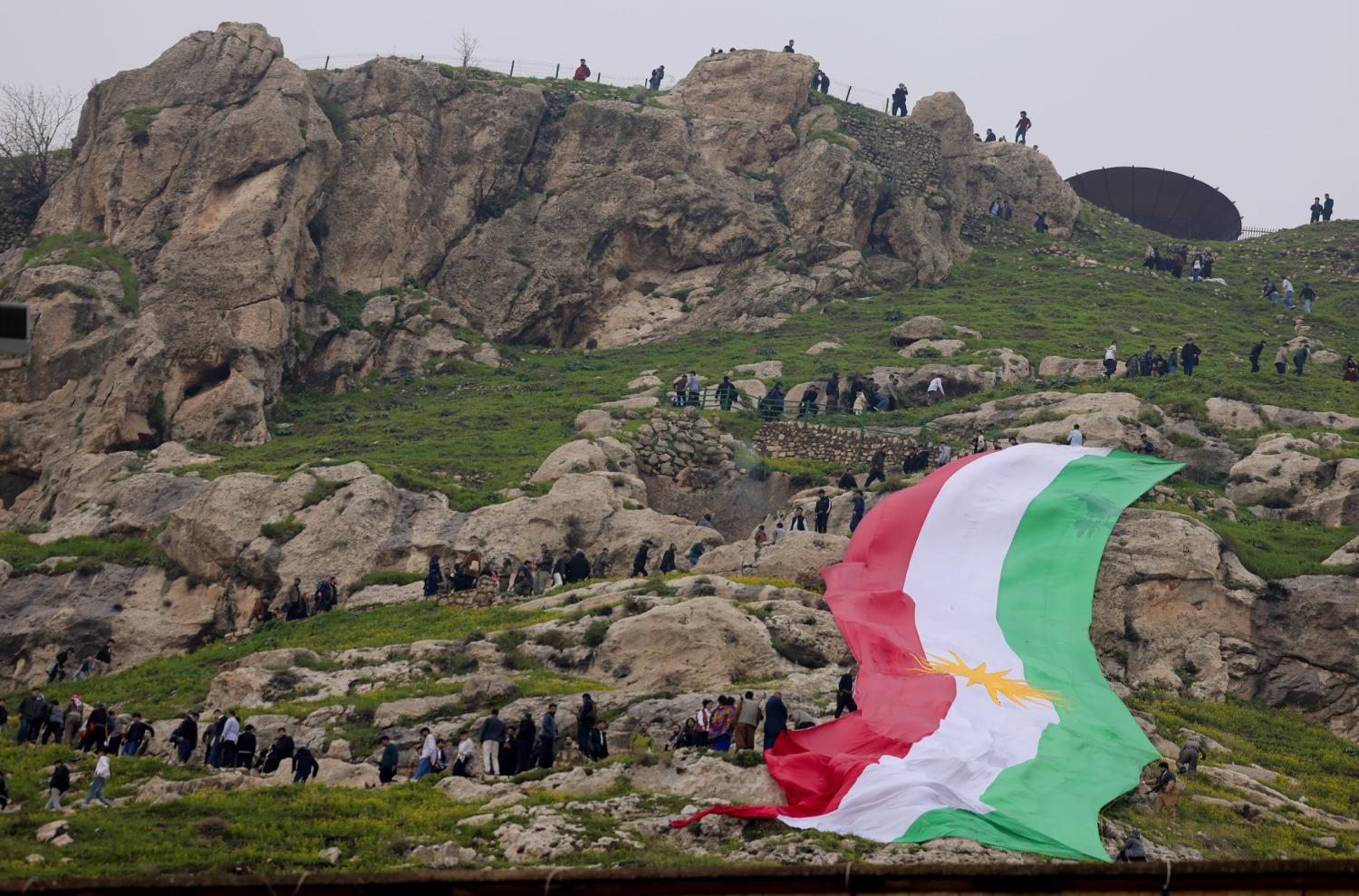
Few places embody the visual and symbolic importance of Newroz as powerfully as Akre in Duhok Governorate. Akre’s steep topography and the choreography of torches moving across the mountains have turned it into an iconic site of Kurdish public culture. Each year, the celebration is watched not only by attendees but by many others who recognize in it a condensed image of Kurdish continuity itself. The city is thus the stage for a collective memory of Newroz.
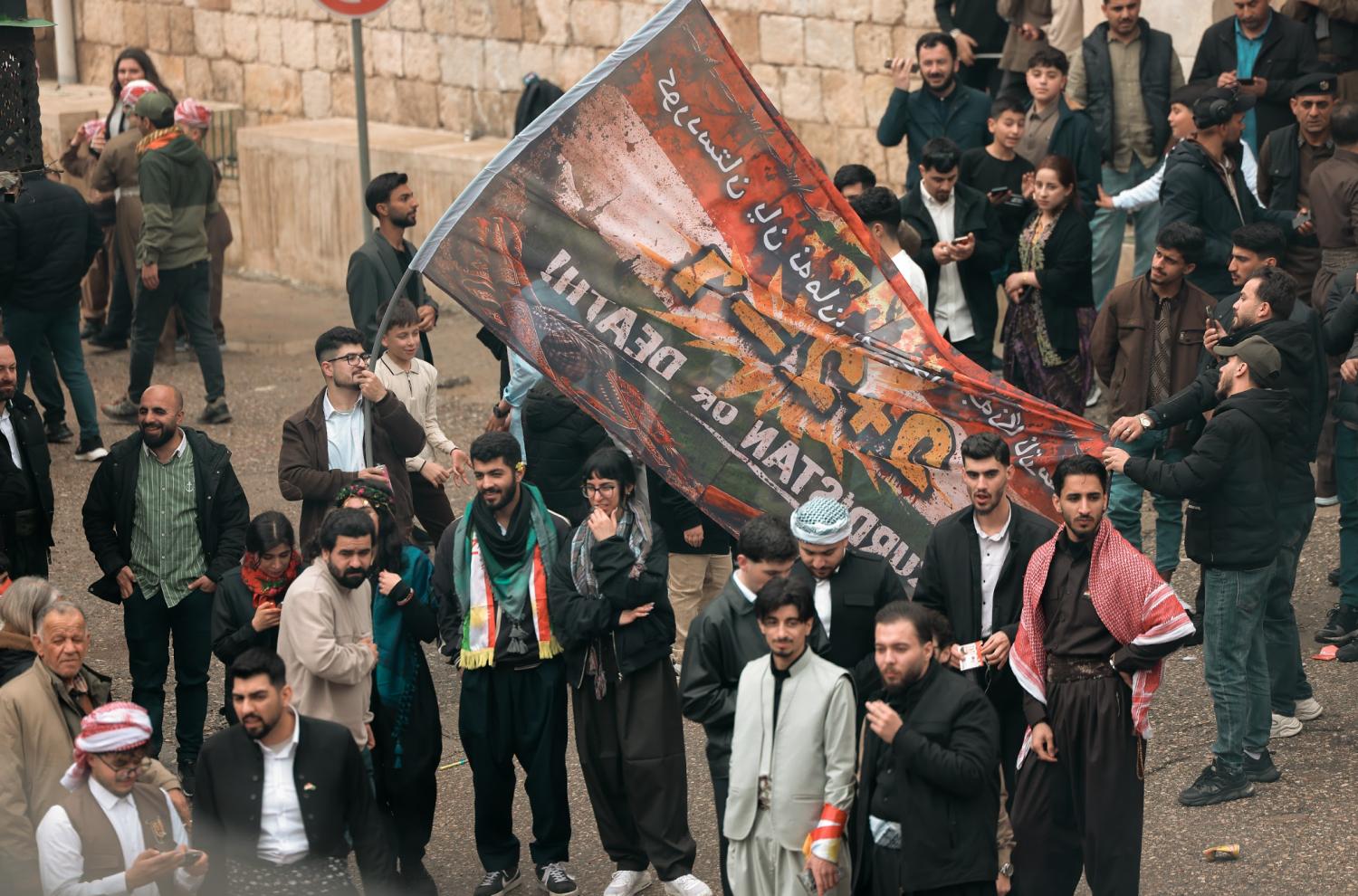
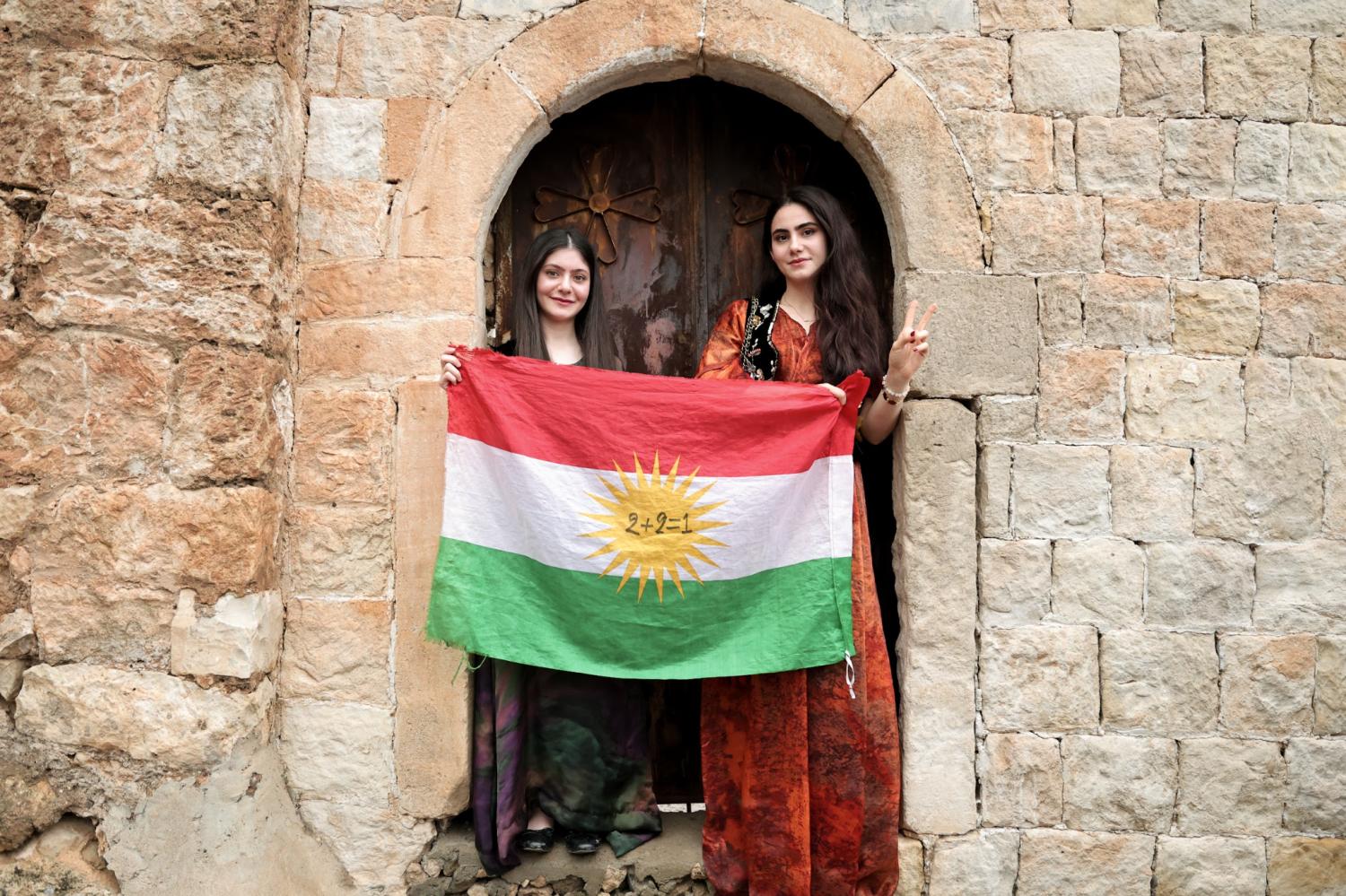
This year, however, the memory unfolded under pressure. The celebration still went ahead, and that fact mattered. In a time of anxiety, the act of gathering retained a quiet defiance. People came not because the moment was easy, but because traditions like this are often most needed when life feels unsettled. Fire still climbed the mountain. Music still moved through the city. Kurdish dress, song, and presence still gave the evening its unmistakable character.
Public festivals and rituals depend on more than logistics. They depend on atmosphere, on how a society feels in the days before it gathers. This year, many arrived carrying that altered mood of concern, mourning, unease, and the fragile determination to continue. The flames in Akre seemed to carry two meanings at once. They were still the flames of Newroz, still linked to spring, memory, and defiance in the face of darkness. But they also seemed to answer the present tense of the region, insisting on continuity in a moment shaped by loss.
“It’s not our war”
For years, the Kurdistan Region has sought to defend a model of political life rooted in relative calm, internal order, and coexistence. In a region frequently consumed by terrorism, proxy wars, militias, collapsing states, and shifting fronts, Kurdistan has tried to maintain a different vocabulary: one of stability, security, and civic space. Although this has not meant complete isolation from danger, it has reflected a strategic and moral refusal to become yet another arena for reckless confrontation.
Kurdistan Regional Government Prime Minister Masrour Barzani articulated this position one month before Newroz, in an interview with The National on February 4: “We will definitely try to stay out of this conflict. It’s not our war; we are not going to be part of it.”
The same line of thinking was communicated by President Masoud Barzani in his message marking the 35th anniversary of the Kurdish uprising, when he warned that Kurdistan was passing through “a very complex and sensitive situation,” before adding: “We will do whatever is in our power to ensure that Kurdistan remains far from war, misery, and hardship.” The president returned to that position on March 9, reaffirming that “the Kurdistan Region is not a party in the war and always desires dialogue and peaceful solutions.”
Freedom from fear
This is what made the recent attacks feel especially bitter. Kurdistan was not part of the war, yet it still paid for it. It sought peace and tried to remain outside the escalation, yet it still buried martyrs. Since the war began on February 28, the Kurdistan Region has been targeted by over 700 drones and missiles fired by different groups, killing 17 people and wounding 92 others as of April 8.
To light the Newroz fire this year was not simply to honor tradition. It was also to protect that meaning from being diminished by fear. The cultural life of Kurdistan would continue, despite the dangerous security and political environment, but it would not be cost-free.
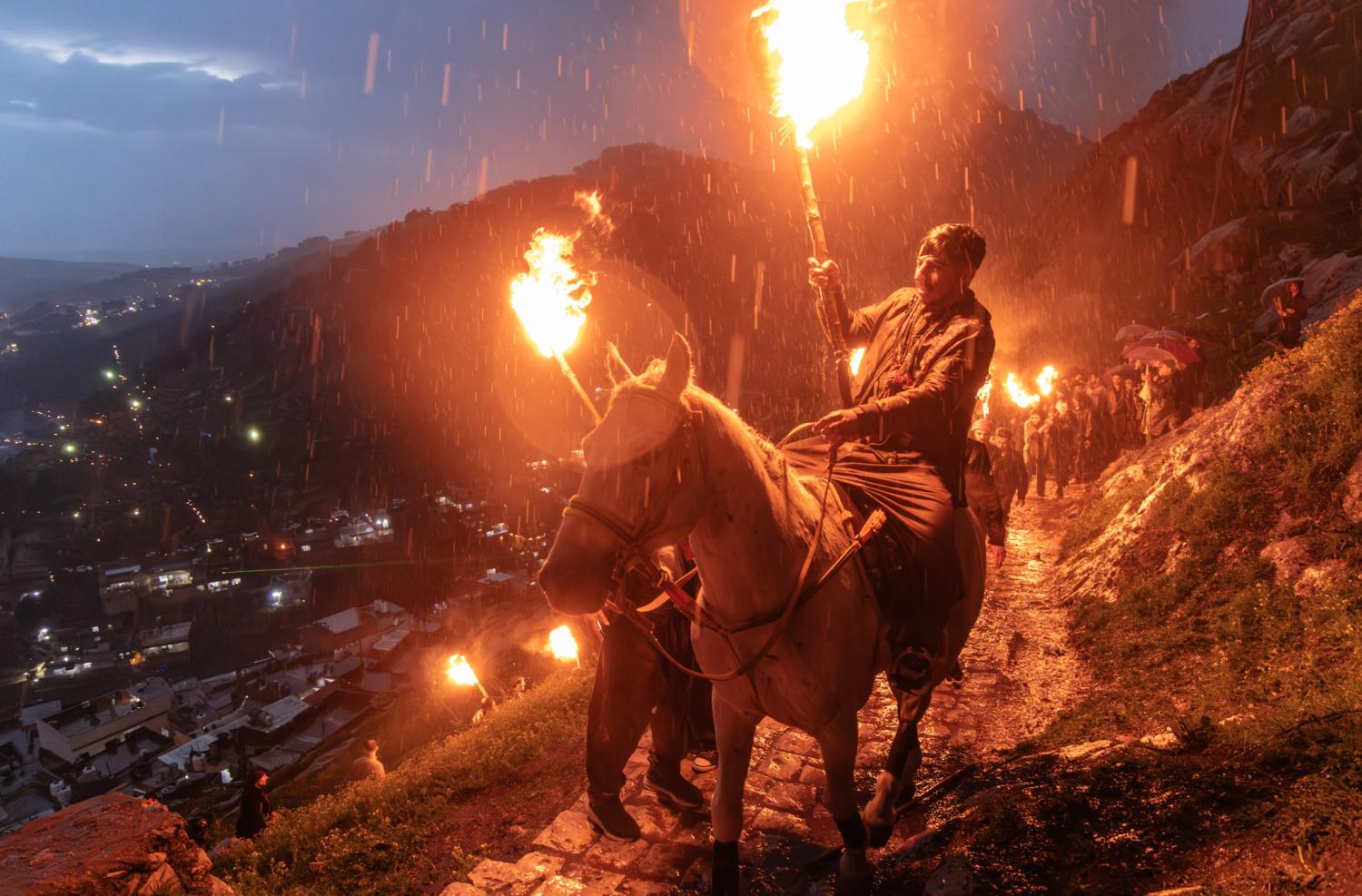
Perhaps that is the truest way to understand this year’s Newroz celebration in Akre. It was neither the political environment the Kurds hoped for, nor a celebration untouched by events. It was more complex, and in many ways more distinctly Kurdish: a moment in which beauty, grief, memory, history, identity, and the fire of Newroz stood together on that same mountain.
Researcher in Security and Strategic Studies