“In the end, we will remember not the words of our enemies, but the silence of our friends.”
- Martin Luther King Jr.
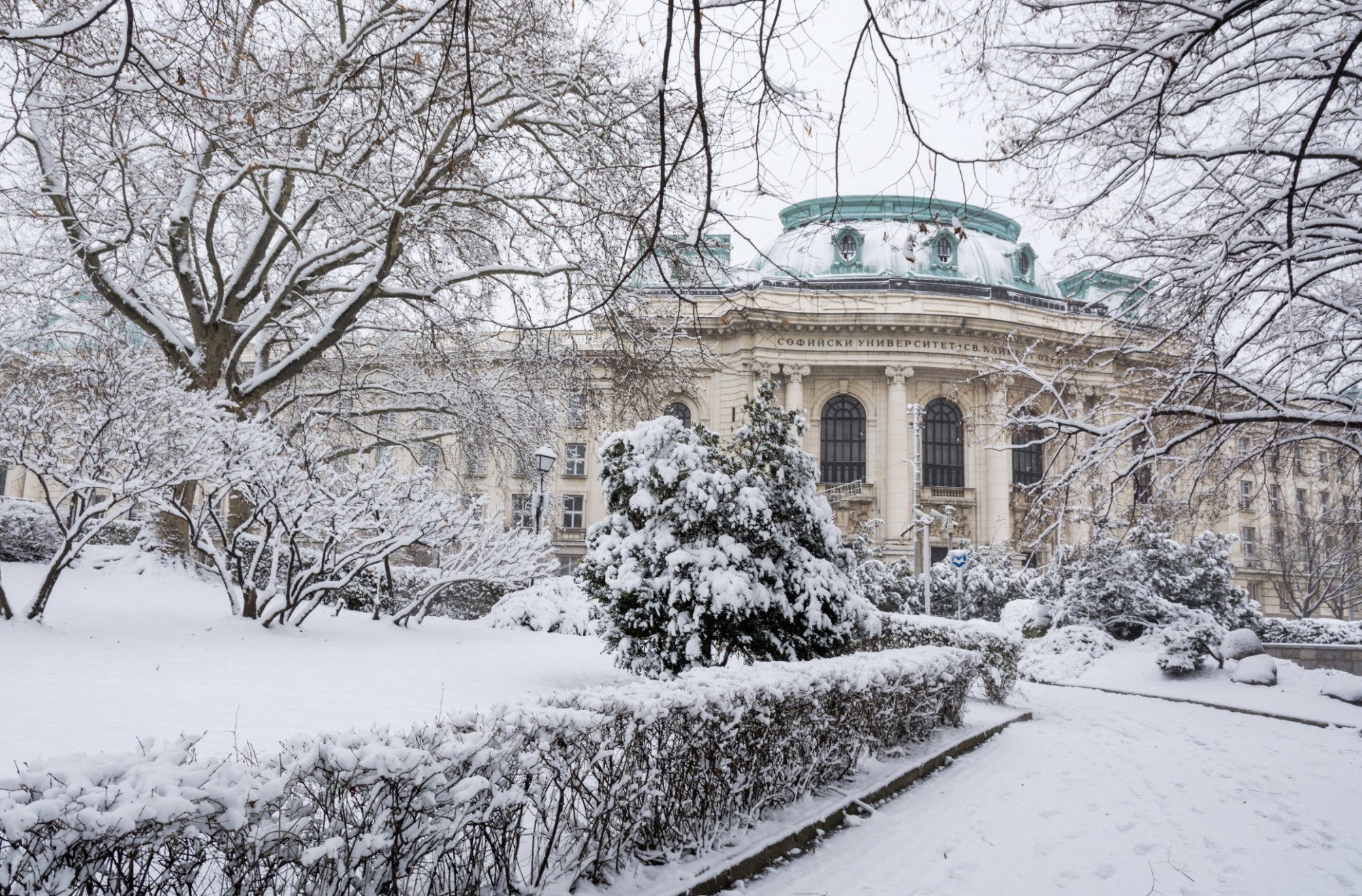
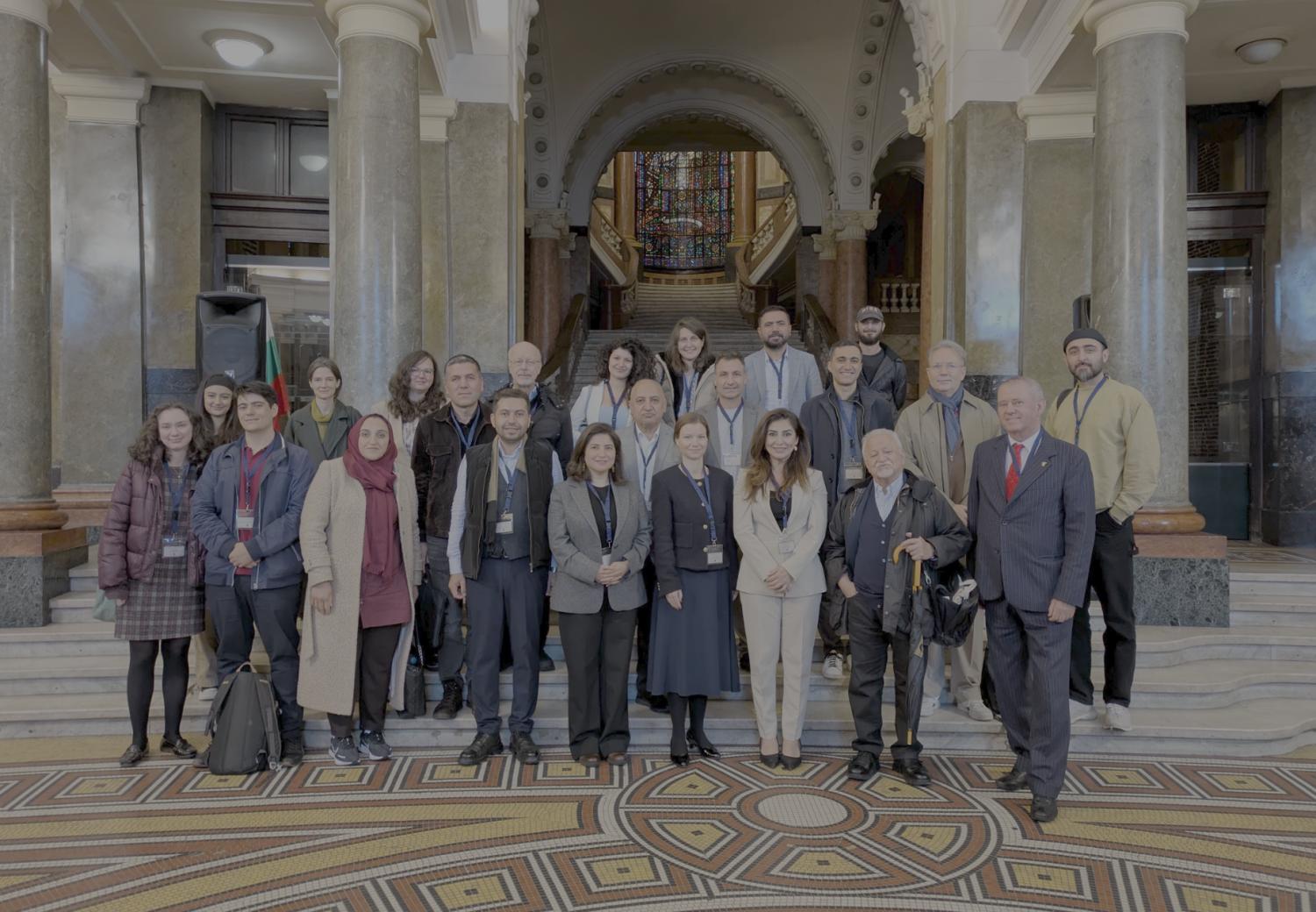
The International Scientific Conference on Kurdish Studies, held at Sofia University in Bulgaria in October 2025, marked a milestone by recognizing Kurdish as an official language for presentations at a major European university. Bringing together scholars from 15 countries, the conference provided valuable insights into Kurdish language, culture, history, and society. Discussions, conducted in Kurdish, Bulgarian, and English, spanned topics such as history, sociology, literature, politics, modern theories, artificial intelligence, comparative and oral literature, folklore, gender, identity, language, memory, mythology, and art. By assembling a global cohort and enabling rich academic exchange, the event contributed methodological perspectives and paved the way for the expansion of Kurdish studies, deepening understanding of its linguistic, cultural, social, and political contexts.
The need to expand Kurdish studies
Kurdish studies have representation at only a few universities and academies worldwide and are predominantly housed in departments related to Eastern languages. Yet, given the geographic and demographic scope of Kurdistan, its cultural heritage, and the significance of its political borders, there is a clear need for establishing it as a distinct academic discipline with dedicated resources and institutions. The creation of academic chairs and the expansion of Kurdish studies at major universities, institutes, and research centers globally are imperative, both theoretically and practically.
However, many think tanks and research centers developing Middle Eastern and global policies in Europe and the transatlantic world rarely consider Kurdish perspectives directly. Often, these institutions rely on information provided by groups displaying anti-Kurdish rhetoric, creating a disconnect between research and real-world policy, and leaving major issues unaddressed. Therefore, expanding Kurdish studies is essential, and the recent conference stands as a significant step in this process.
Yashar Abdulselyamoglu, who dedicated significant effort to organizing the conference and was also one of the speakers, discussed the historical foundations of Kurdish studies in his presentation and the epistemological break within the field. A brief excerpt from his speech is transcribed below:
“The development of Kurdish studies as an academic discipline is directly linked to the colonial and nation-state formation of modern scientific frameworks. This field began to take shape within the epistemological framework of Western Orientalism from the late 19th century onward. At that time, texts written by European travelers, missionaries, and military intelligence officers often portrayed the Kurds as a mountain people, a tribal society, or a group living on the edge of civilization. These descriptions were not only ethnographic but also influenced how Kurds were represented through the relationship that science established with power. The Kurds were constructed as a group on the border, between borders, within both the Ottoman and Persian political spheres, but with a structure not entirely tied to either. This border position created a structural fracture.”
Overcoming epistemological traditions
An important point Abdulselyamoglu made in his speech was that “Kurdish sociological fragmentarism, which is formed through epistemological repression, can be found in the hidden Kurdish ontology.” Abdulselyamoglu continued his speech by providing insightful assessments of the methodology and epistemological challenges in Kurdish studies. He also emphasized the importance of having independent chairs in Kurdish studies at leading universities worldwide.
Another attendee at the conference was the respected Kurdish professor Abbas Vali. Vali – a modern social and political theorist who has shared innovative ideas not only at this conference, but also in many areas of Kurdish studies – said the following at the conference: “The conditions that are prevailing in southern Kurdistan, or Iraqi Kurdistan, tell us that it is the time has come for bringing in these kind of questions into Kurdish studies. Clearly, if it has been politically posed, it should be the task of Kurdish academics, writers, and so on, to start thinking about this, whether there is this almost intrinsic argument, relationship, between the nation-state, which is sovereignty and the ideal nationhood, or national identity and sovereignty. For instance, in Western Kurdistan (northern Syria), in southern Kurdistan, and in Iraq, there are other things that have come up lately, and particularly in the revolution of Jin, Jiyan, Azadi (Women, Life, Freedom) in Iran. That revolution was important and put Kurdish identity in a different context, with important implications for its political expression. This was a context of intersectionalism with other identities … We’re not talking about just a methodological issue. We are also talking about an ontological issue…”*
Recently emerging movements such as Jin, Jiyan, Azadi highlight that Kurdish identity cannot be viewed as a single, homogenous entity. Kurdish political identity now intersects with feminist, youth, class, and other social demands, forming a complex network. This ontological dimension necessitates an evaluation of the national struggle from a broader perspective.
A central challenge in Kurdish politics is linking the national struggle with recent social and political transformations. Developments such as those in Western Kurdistan (northern Syria), the peace process in Northern Kurdistan (southeastern Turkey), the pluralistic, women-centered uprising in Iran, and new opportunities arising from state-building in the Kurdistan Region of Iraq demand a comprehensive reevaluation of concepts such as nation, power, and social freedom. In this context, the task of Kurdish academia is not only to observe these transformations, but also to develop new conceptual tools. The issue is no longer simply about a nation’s right to self-determination; it also involves social subjectivities, understandings of freedom, and visions of the future through which this right is realized.
At the conference, Kurdish academic Farangis Ghaderi gave a presentation titled “Unearthing Erased Kurdish Women’s Voices in the Archives.” Academic Michiel Leezenberg presented “Mem u Zin as Subaltern World Literature.” Sirma Kostadinova from Sofia University presented “Narrating the Unconscious: Dreams as Cultural Phenomena in Kurdish Literature.” Kostadinova, who also served on the conference scientific committee, put significant effort into making the event happen. I also want to thank the many academic participants, too numerous to mention here, for their invaluable and inspiring presentations. In particular, I want to thank the Faculty of Classical and Modern Philology at Sofia University St. Kliment Ohridski and Dean Gergana Petkova for hosting this meaningful and historically significant event.
Brief review of other presentations
My presentation, titled “Voicing the Nation: Kurdish Identity and the ‘We/Them’ Discourse in the Dengbeji Songs of Şakiro,” explored discourse analysis in dengbej artist Sakiro’s Kilams to trace the development of Kurdish national identity throughout the 20th century. As the author of this article, I also spoke at this conference. Other presentations at the conference clearly showcased the broad scope of Kurdology studies. Presentations on cinema, language policies, and identity highlighted the efforts of Joanna Bochenska, Fatma Edemen, and Cem Koc in revitalizing Kurdish cinema; Haidar Khezri’s overview of the development of Kurdish studies in the United States; and analyses of Soviet-era language policies by Angelika Pobedonostseva and Siarhei Bohdan.
In panels on literature and culture, Ebrahim Barzegar, Atefeh Mahmoudi, Jalil Karimi, Yaser Hassan Ali, and Abdulkhaliq Sultan Mahmood discussed issues related to identity, invisibility, and linguistic preservation in modern Kurdish literature. Rizan Nouraldin Hassani’s womanist reading also made a significant contribution to this discussion.
In presentations on cultural performances and rituals, Dilman Mohammed-Sarko Jabbar, Aydin Unesi, Sinan Cakar, Mehmet Nur Yavuzer, and Besir Guçlu examined dengbej, folk dances, and religious-musical practices from various perspectives.
Among presentations on history and social change, Jelle Verheij’s analysis of the Moks Emirate, Javad Rezaei-Massoumeh Khodaei Moghaddam’s Khorasan oral history study, and Dilshad Oumar Abdul Aziz’s exploration of the oil-demography relationship in Kirkuk were prominent topics. Presentations on women’s social status, cultural festivals, visual arts, and mythology by Kurda Ahmed Mahmood, Hiwa Massih, Erika Gonzalez Flores, Hemen Heidari, Shanya Akram Ari, Mohammed Ahmed Hasan, and Mehrdad Izady further added to the conference’s diversity.
In the linguistics panels, pedagogical, morphological, and historical studies on Kurmanji and Sorani by Tereza Amryan, Chenoor Zagros, Hiwa Asadpour, Manijeh Mirmokri, Agnes Grond, Hewa Ahmed Assaf, Ahmet Seyari, and Yana Hristova enriched discussions on both the challenges facing Kurdish in the digital age and its historical roots.
The conference highlighted that the efforts of universities in Kurdish cities to develop a unique Kurdish epistemology are still insufficient. Academics noted ongoing gaps in establishing a clear methodological foundation and in developing theoretical frameworks grounded in Kurdish communities’ experiences, histories, and cultures. Another major issue was the fragmented state of archival infrastructure: materials on Kurdish history, language, and culture are still scattered worldwide with limited access, and efforts to centralize them are just beginning. The absence of unified research platforms and ongoing knowledge production was identified as a significant challenge. However, the conference also sparked a future-oriented debate focused on improving methodologies, enhancing archival strategies, and strengthening institutional dedication.
holds an MA in Sociology and an MA in Kurdish Language and Culture.