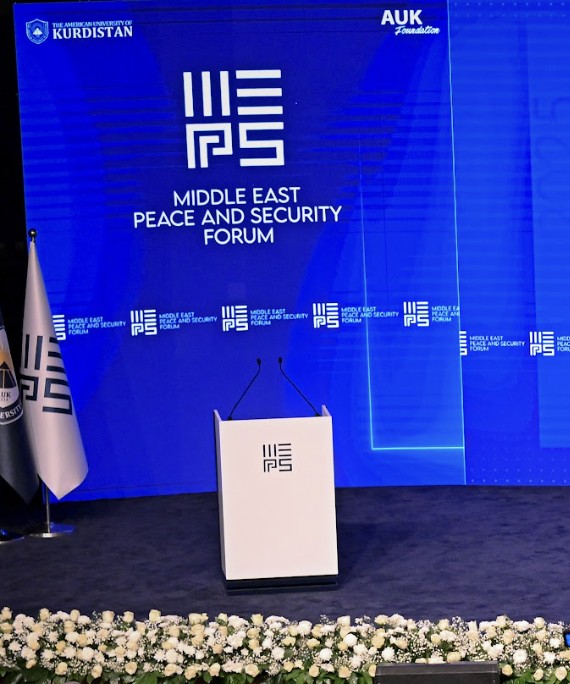
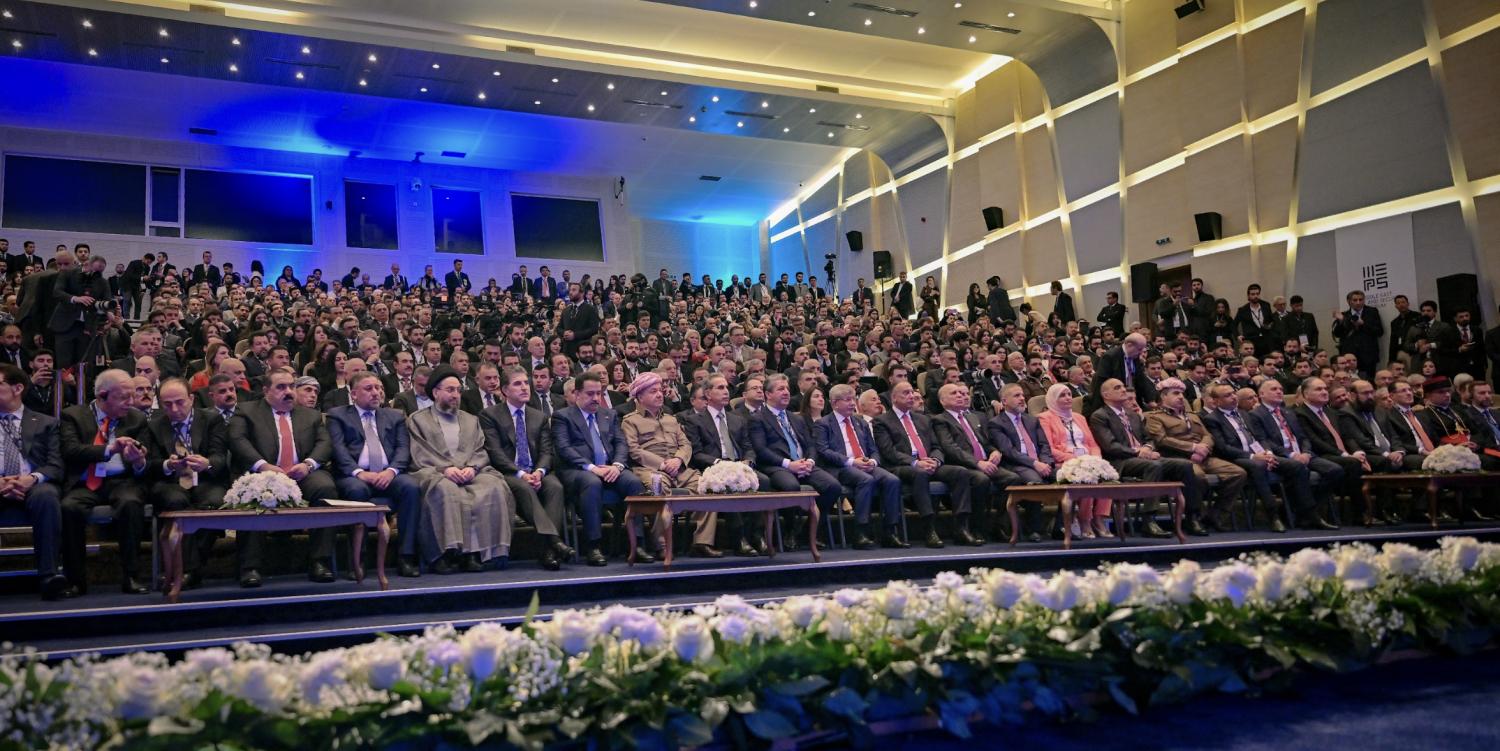
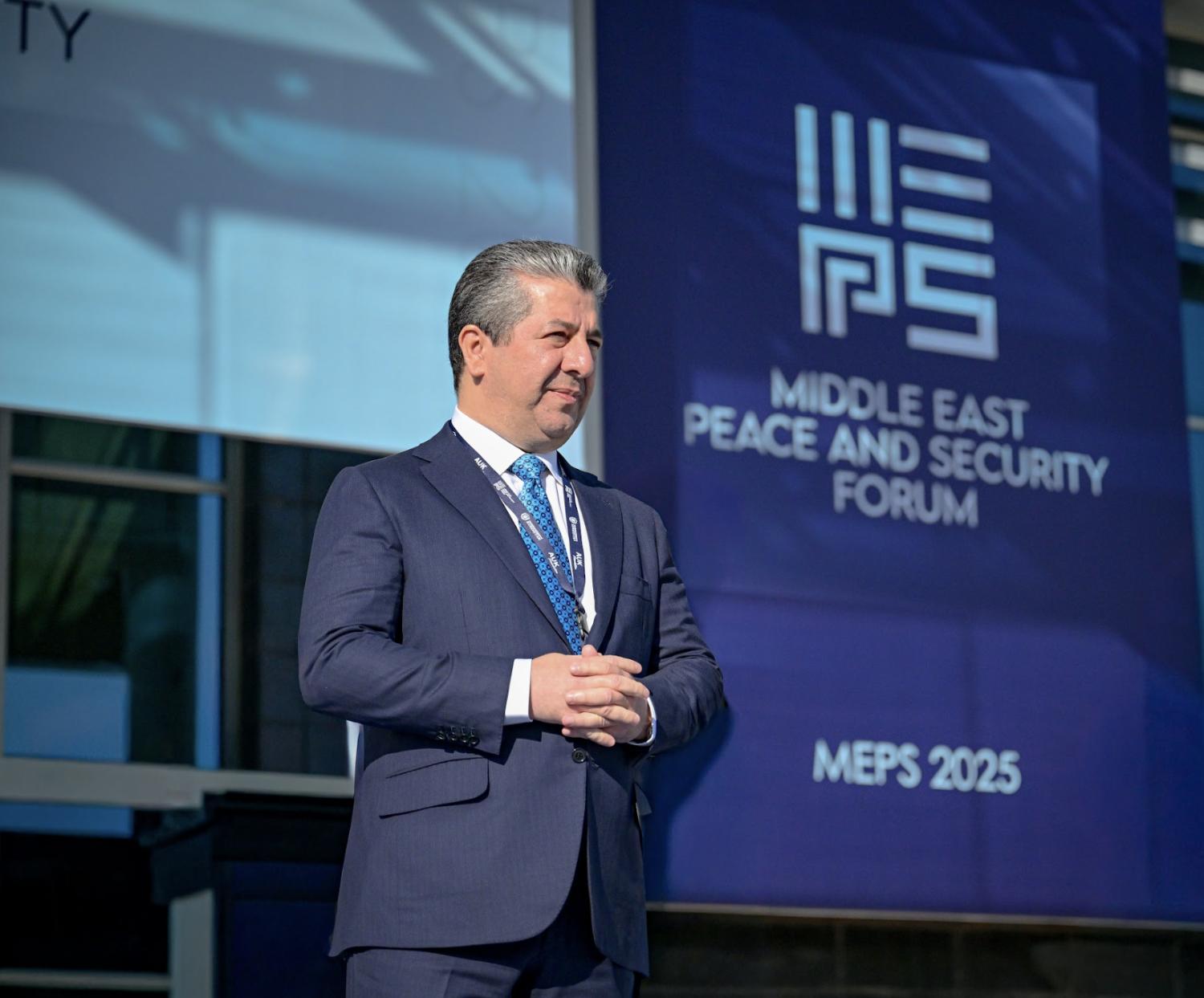
The Sixth Annual Middle East Peace and Security (MEPS) Forum, with the theme “Managed Chaos: The New Middle East?”, was held on November 18-19, 2025, at the American University of Kurdistan in Duhok, bringing together regional leaders, policymakers, and scholars at a moment of heightened regional uncertainty.
Discussions focused on pathways out of regional crises, while underscoring Kurdistan’s growing role as a platform for dialogue, mediation, and stability in the Middle East.
“This forum takes place at a very sensitive time. Crises are widespread across the world, but especially in our region. We hope that forums like this will help find solutions to these crises,” stated President Masoud Barzani at the opening of the MEPS Forum.
Echoing these sentiments, Kurdistan Regional Government (KRG) Prime Minister Masrour Barzani said the forum was focused on concrete problem-solving. “We are here to look at the pressing issues and the challenges that we face and to propose solutions to these problems in the Middle East and beyond.”
Peace processes and elections
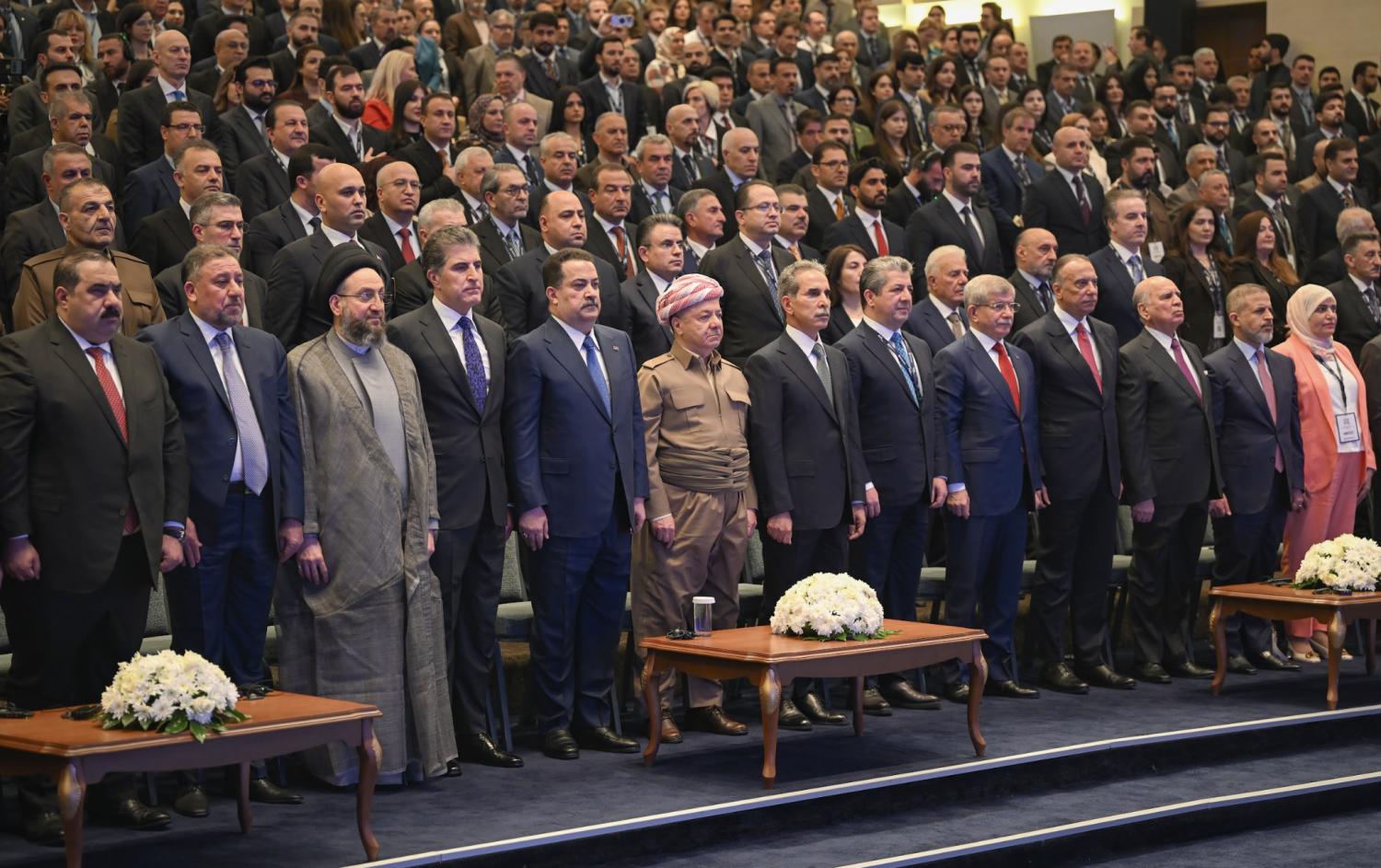
The forum featured senior regional leaders, including Iraqi Prime Minister Mohammed Shia al-Sudani, President of the Iraqi Federal Supreme Judicial Council, Faiq Zaidan, Kurdistan Region President Nechirvan Barzani, and KRG Prime Minister Barzani.The forum took place shortly after Iraq’s parliamentary elections on November 11, and amid ongoing discussions between Damascus and the Kurdish-led Syrian Democratic Forces (SDF) on implementing the March 10 agreement to integrate the SDF into Syria’s state forces.
It also coincided with continued peace talks between the Kurdistan Workers’ Party (PKK) and the Turkish state.
“I am also pleased about the peace process that began in Turkey,” President Masoud Barzani remarked. “We have warmly supported it and continue to do so, hoping it will achieve the best outcomes for all parties.”
Turning to Syria, he added that “a golden opportunity has arisen,” expressing hope that Kurds and all Syrian communities would resolve their disputes peacefully and democratically with the current government.
“Regarding the November 11 elections in Iraq, I congratulate the people of Iraq on a successful vote,” he said. “This time everything was conducted properly, unlike previous elections that were sometimes uncertain or flawed.”
MEPS Director Ranj Alaaldin said the forum “reaffirmed Kurdistan’s position as a regional center of gravity,” calling this year’s gathering historic.
He noted that, coming in the aftermath of Iraq’s elections and amid unprecedented regional escalation, the forum brought together leaders “as the contours of Iraq, Syria, and the wider regional order take new shape.”
“The forum has reminded us that Kurdistan’s role as an enabler of dialogue, reconciliation, and stability is essential if the Middle East is to secure a durable peace. This role is underpinned by the efforts of the Kurdish leadership, particularly Prime Minister Barzani,” he concluded.
Not only talk, but action
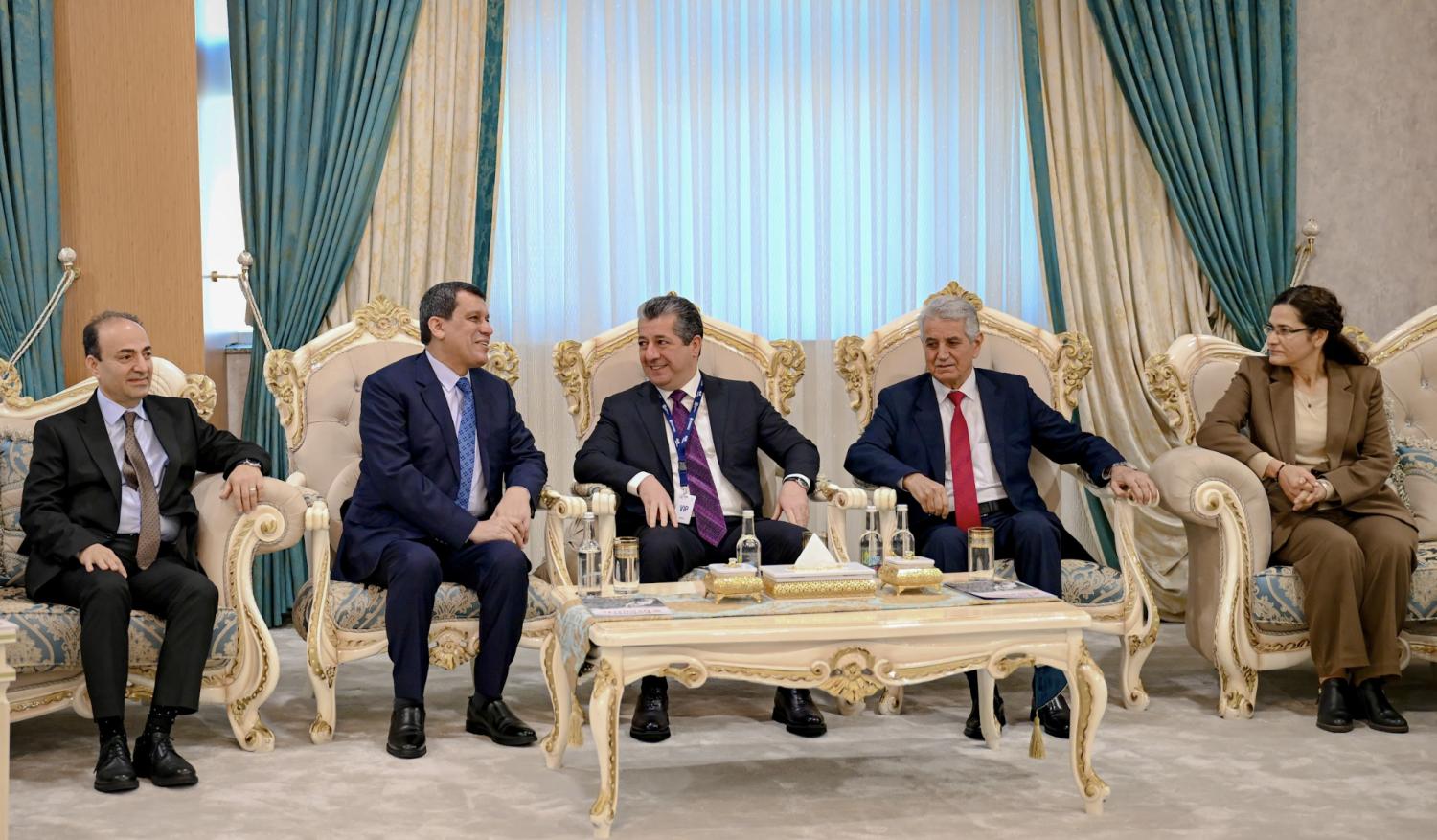
On the last day of the forum, Prime Minister Barzani said he was pleased to host rival Kurdish factions, including representatives from the Kurdish National Council (KNC) and the SDF in Syria, such as SDF Commander-in-Chief Mazloum Abdi and KNC leader Mohammed Ismail.“This is what this forum is about,” Prime Minister Barzani underlined at MEPS. “We’re not only talking – we’re acting. We’re trying to build peace through action. Bringing everyone together is the key, and I believe that is the secret to success.”
In response to a question on the future of Kurdistan, Prime Minister Barzani underlined that the Kurdistan Region is progressing. “We are on the rise. Kurdistan is on the right track. We are moving forward, and no one can stop us.”
International partners
The MEPS Forum partners with a wide range of international academic and policy institutions, underscoring its global reach. These include Harvard University, Wilton Park, the London School of Economics, the University of Cambridge, the Muscat Policy Council, Doha Forum, the Anwar Gargash Diplomatic Academy, the Gulf International Forum, the Diwan in Kuwait, the Atlantic Council, the Royal United Services Institute, the Crisis Response Council and Italy’s Institute for International Political Studies.
“The role of the entire MEPS Forum community is to help shape [progress] with ideas, expertise, and meaningful collaborations that will reverberate throughout the region,” Alaaldin added.
Fabrice Balanche, an associate professor and research director at the University of Lyon 2, added that the MEPS Forum is one of the “few places in the Middle East where you can think freely about the regional geopolitical process. This year, they even started the political discussions for the Iraqi government here.”Cengiz Candar, a member of the Turkish parliament, agreed with this assessment. “At this junction of history, under such titles, in nowhere apart from the Kurdistan Region of Iraq could there be such gatherings. We couldn’t do them in Damascus, Baghdad, Amman, Cairo, Riyadh, and not even in Istanbul or Ankara in the way that it is done here, with the participation of so many dignitaries and scholars from all around the world. There are open-minded people, experts, and more, different nationalities who are very much involved with Middle East issues. “It is very remarkable that Kurds are playing an interesting constructive role in the region; it is still not as visible as it deserves to be,” Candar added.
Soft power
David Romano, Thomas G. Strong Chair in Middle East Politics at Missouri State University, told Kurdistan Chronicle that the MEPS Forum plays a role that is not always immediately visible.
“It’s not just a conference to explore current issues of importance to the region,” he said. “When MEPS brings political leaders from different parties and countries to Kurdistan, as well as academics, media personalities, diplomats, and others, it helps them to see Kurdistan in a more favorable light. The conference helps the KRG exert soft power and improve its public relations internationally, hosting increasing numbers of guests from the Arab world, Turkey, and Iran.”Honar Issa, Secretary of the Board of Trustees at the American University of Kurdistan and Chair of the MEPS Forum, also announced in his closing remarks the launch of the Future Leaders of Kurdistan program in 2026, an initiative that will empower the next generation of scholars and analysts.
He concluded that the MEPS Forum – by bringing together decision makers, emerging leaders, practitioners, and scholars – creates “a platform where ideas and candid discussions are encouraged … where assumptions are challenged, and where conventional wisdom on Kurdistan, Iraq, and the wider Middle East [is] tested.”He added that this year’s forum “reaffirmed its role as a bridge between decision makers and the broader community of experts and practitioners. These exchanges and collaborations are not merely academic; they shape the policies and perspectives that will guide the future of Iraq, Kurdistan, and the wider Middle East.”
A seasoned reporter and analyst who specializes in Kurdish affairs.