British explorer Claudius Rich’s observations of Kurdish society and the distinctive role of women in the 1820s
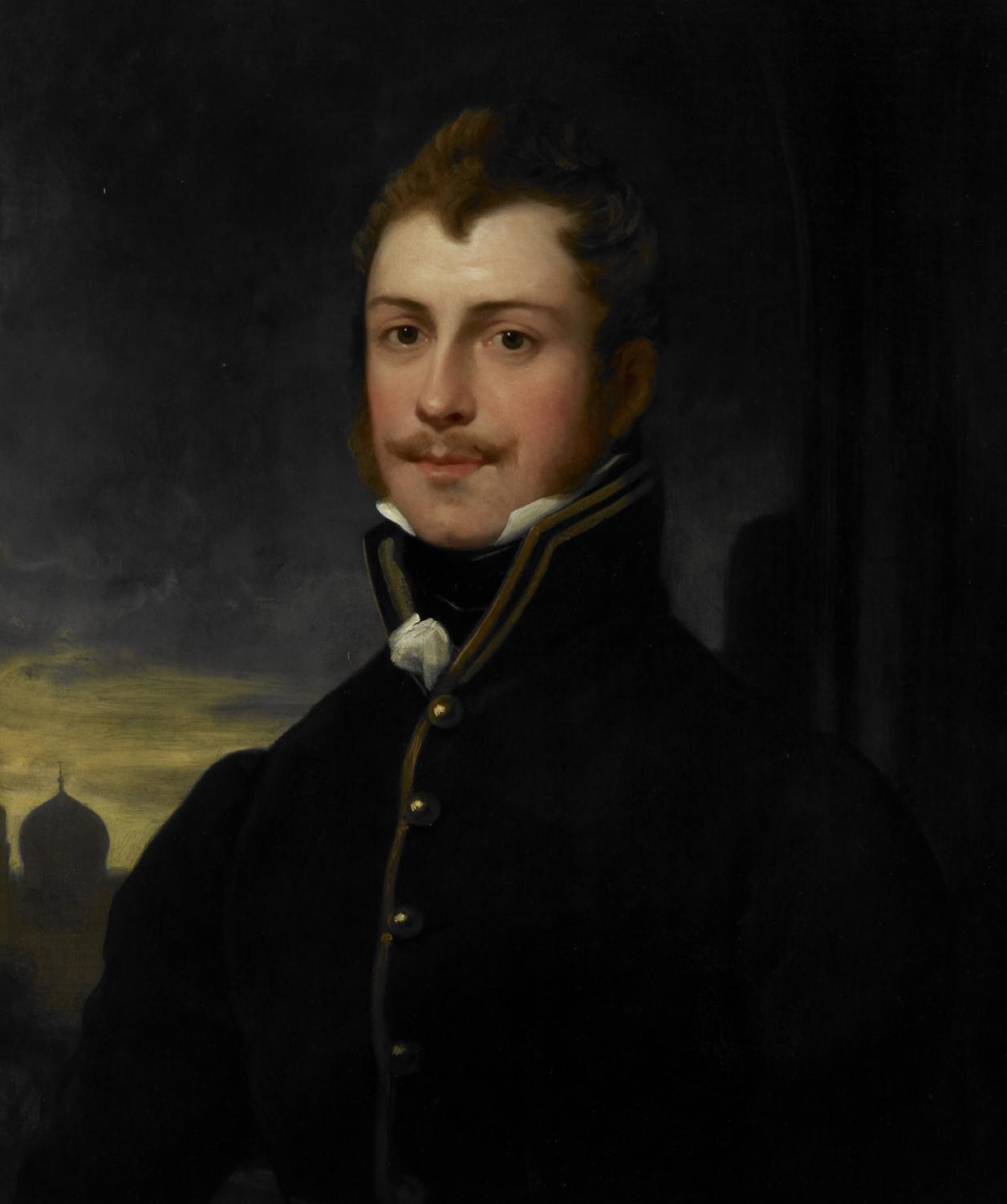
One bright spot in the travel literature of the 19th century written by foreigners exploring Kurdistan is the work of Claudius James Rich (1787-1821), whose linguistic brilliance, cultural empathy, and detailed observations distinguished him from his contemporaries.
Deeply fascinated by Arabic manuscripts, Rich taught himself to read and speak several Eastern languages, including Hebrew, Syriac, Kurdish, Persian, Turkish, and Arabic. His linguistic talent and deep curiosity about different cultures ultimately led him to the Middle East, where he accepted a position in the British East India Company, eventually rising to become British Resident at Baghdad in the early 1800s.
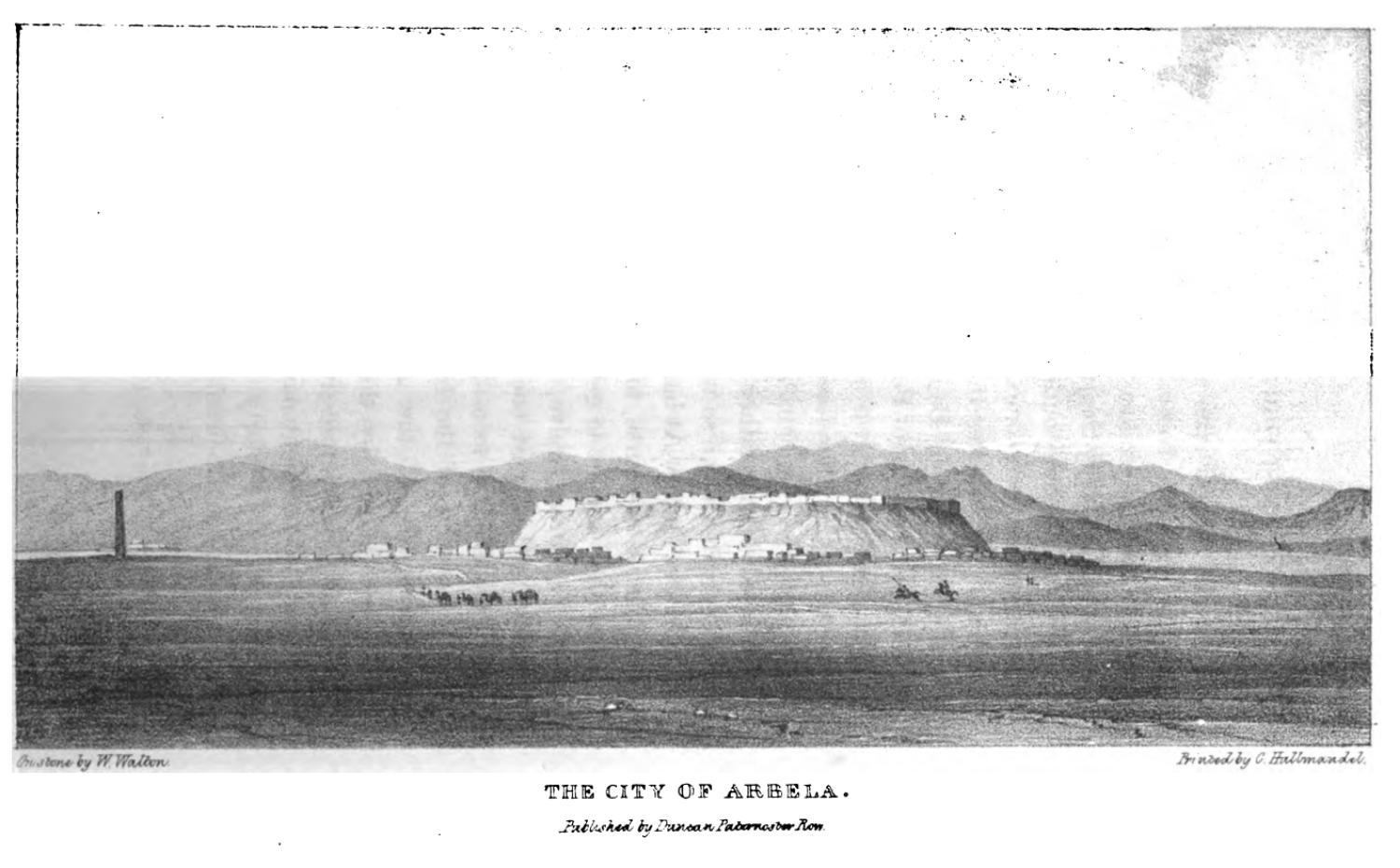
It was during his time in Baghdad that Rich found the chance to embark on a journey to Kurdistan, which he spelled in his notes as “Koordistan”. In the beginning, the journey was intended as a way to escape the scorching summer in the Arabian plains; however, while in Kurdistan, he penned one of his most detailed accounts, a book titled “Narrative of a Residence in Koordistan, and on the Site of Ancient Nineveh.”
After more than two centuries, Rich’s candid observations still offer a rare and unmediated glimpse into the social fabric of the Kurds. For modern readers, his account of Kurdish culture, architecture, and especially the freedom and social role of Kurdish women reveal a society strikingly different from its Arab, Turkish, and Persian neighbors.
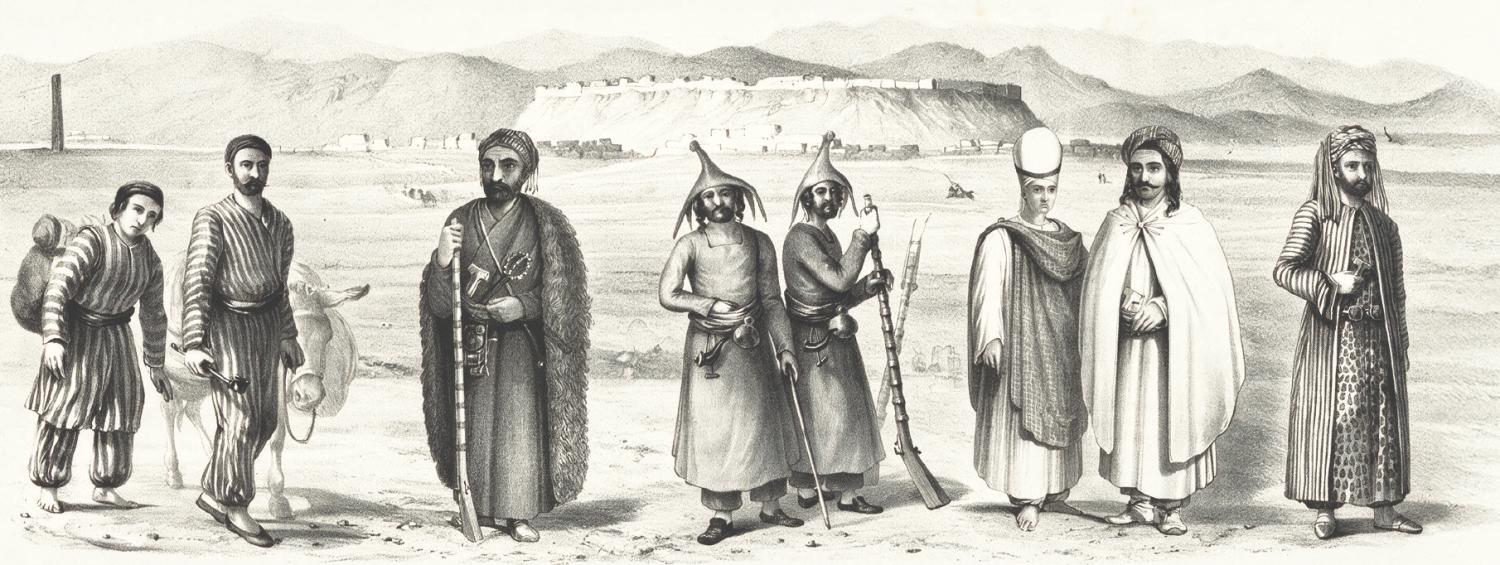
Freedom in the Mountains
In order to understand Kurdish society in the early 19th century, one must first understand the conservative social conventions of the surrounding societies that Rich encountered before arriving in Kurdistan. When Rich departed Baghdad, he was obliged by public business and official protocol to travel with a large group of helpers. During this trip, his wife also accompanied him, but because of the strict customs of the Arab and Turkish societies, she was subjected to the “disagreeable restraint” of traveling in a covered litter known as a takht-revan, accompanied by female attendants in swinging cradles known as kajavahs.
Rich notes that the Turks held a “horror of women being seen or heard” and they would try hard to exclude them. Often, they would even avoid uttering their wives’ names or directly referring to them in casual conversations.
“The Turks are so scrupulous to avoid speaking personally of their female relations, that they will sometimes, when obliged to refer to them, say ‘My house is sick,’ or ‘My house sends compliments to your house’.”
Rich respected these local practices and avoided any reaction that could be interpreted as offensive by the host communities. However, the moment he crossed the deserts of Iraq into the mountains of Kurdistan, the cultural landscape shifted as dramatically as the terrain.
Women with No Veils
Sulaymaniyah was his first destination in Kurdistan. Upon his arrival, Rich observed a society that was surprisingly open and relaxed in its daily life. He notes the freedom of Kurdish women and their bold engagement in the public and domestic spheres, which was not seen among the Turks, Arabs, or even Persians.
Rich believed that this openness was also reflected in Kurdish architecture. He points out that ordinary houses in Kurdistan were “mere mud hovels,” leaving the daily lives of inhabitants perfectly exposed to the outside world. He further stresses that women went about their days openly and without a veil, with no one regarding this as improper or a cultural taboo.
During another excursion in Kurdistan, Rich and his wife joined a local family to celebrate a rural wedding. His detailed observations of the costumes, rituals, dances, and music reveal a cultural continuity, showing that the core elements of these celebrations remain largely unchanged in modern Kurdish weddings.
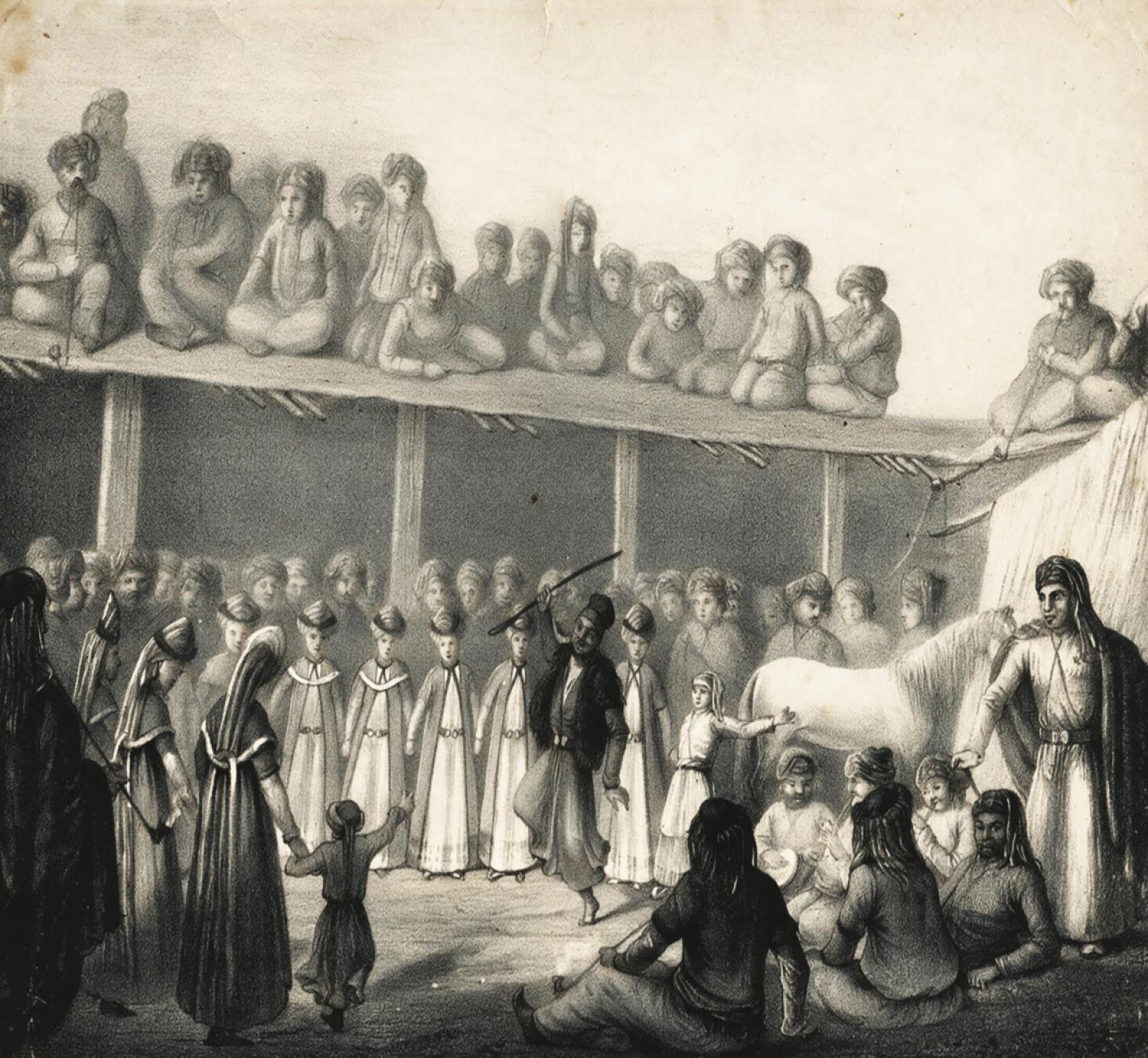
Describing the festivities as both “novel” and “a beautiful sight,” Rich noted that the women mixed freely with the men without the slightest affectation of concealment. He highlighted this social integration as unique within Eastern cultures, observing that even the women of Arab tribes were “more scrupulous.”
Rich’s first impression of the Kurds in Sulaymaniyah pushed him to explore other Kurdish areas as well. He later visited Jwanro, a town on the border between the Ottoman and Persian empires. During this visit, he was struck by an even greater degree of political and social engagement.
“The women have great power among them, and will often appease furious disputes between the men, which would otherwise be terminated in bloodshed,” Rich writes about the tribal Kurdish societies in the rural areas. “Men and women live together without the slightest affectation of concealment.”
The cultural divide between the urban societies under the rule of the Ottoman Empire and the Kurdish tribal communities is illustrated by an anecdote Rich shared about a merchant from Baghdad. The merchant, brought up in a culture of female invisibility, traveled to Kurdistan for business. He was left “extremely scandalized” by the local men casually asking him questions about his wife. While these questions were considered part of a normal conversation among the Kurds, elsewhere they were considered highly inappropriate, if not offensive.
With all that said, it comes as no surprise that the Kurds of the 21st century still maintain the reputation of the most secular and free societies in the Middle East, especially regarding the rights and societal power of women. Rich’s accounts offer further evidence of a people who continue to preserve their cultural identity to this day.
is a Kurdish journalist based in Erbil, Kurdistan Region.