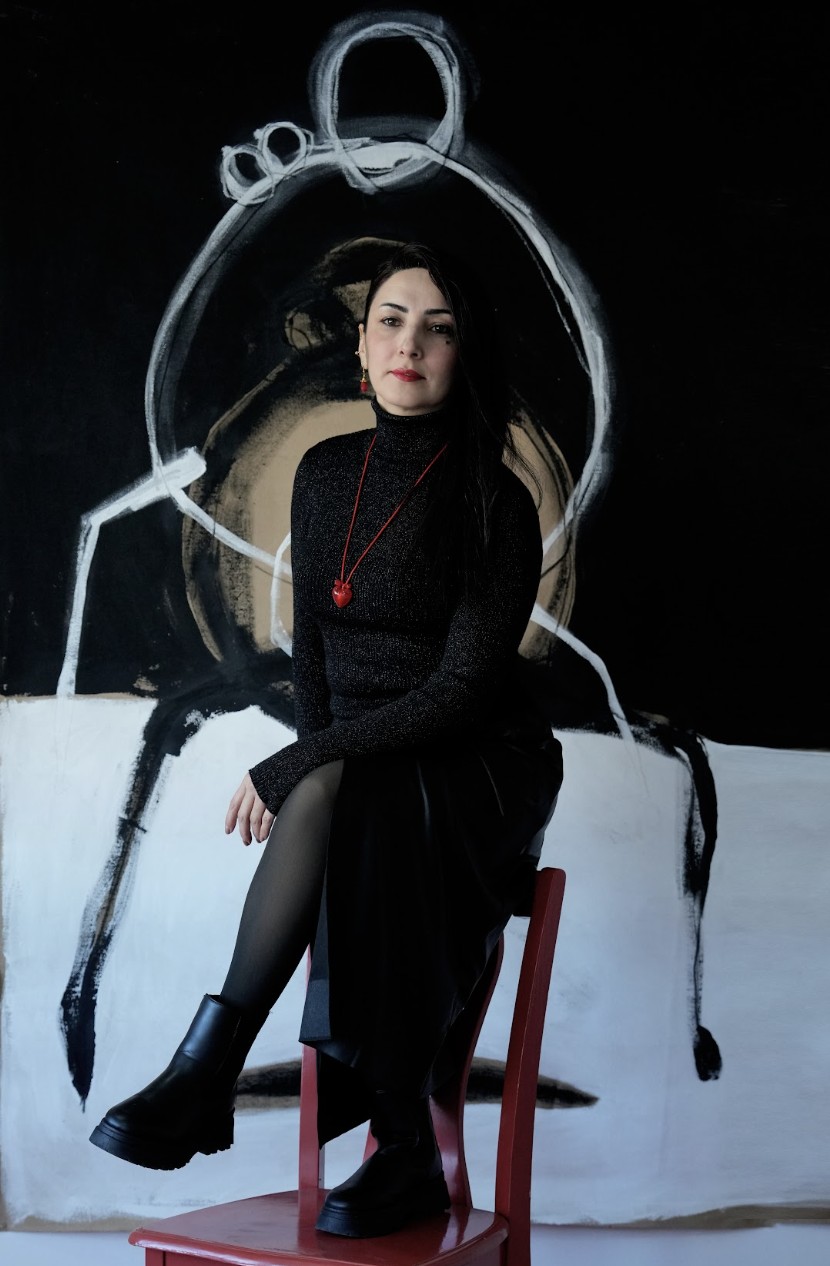
How childbirth shaped Sakar Sleman's artistic language
In 2006, while pregnant with her first child, Kurdish artist Sakar Sleman found herself experiencing the world differently. Questions about creation, pain, transformation, and the female body began to occupy her thoughts. What began as a personal experience would eventually shape a body of work centered on motherhood, birth, and women’s experiences.
“The experience was transformative. I would say creativity kicked in while I was pregnant in 2006 and later underwent the painful experience of natural childbirth,” Sleman tells Kurdistan Chronicle.
Motherhood
When speaking about her work, Sleman describes motherhood as an artistic language through which she explores persistence, creativity, and womanhood.
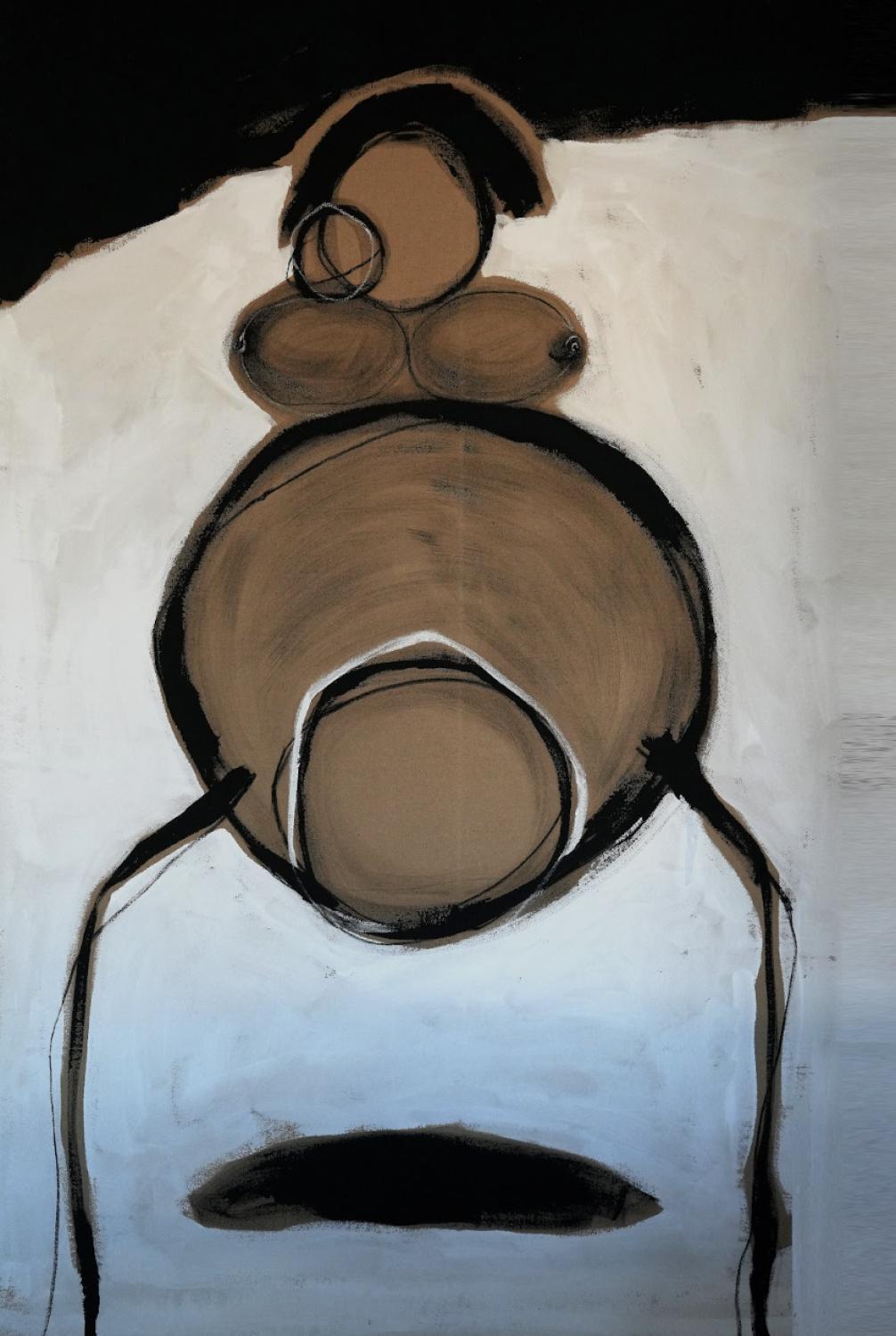
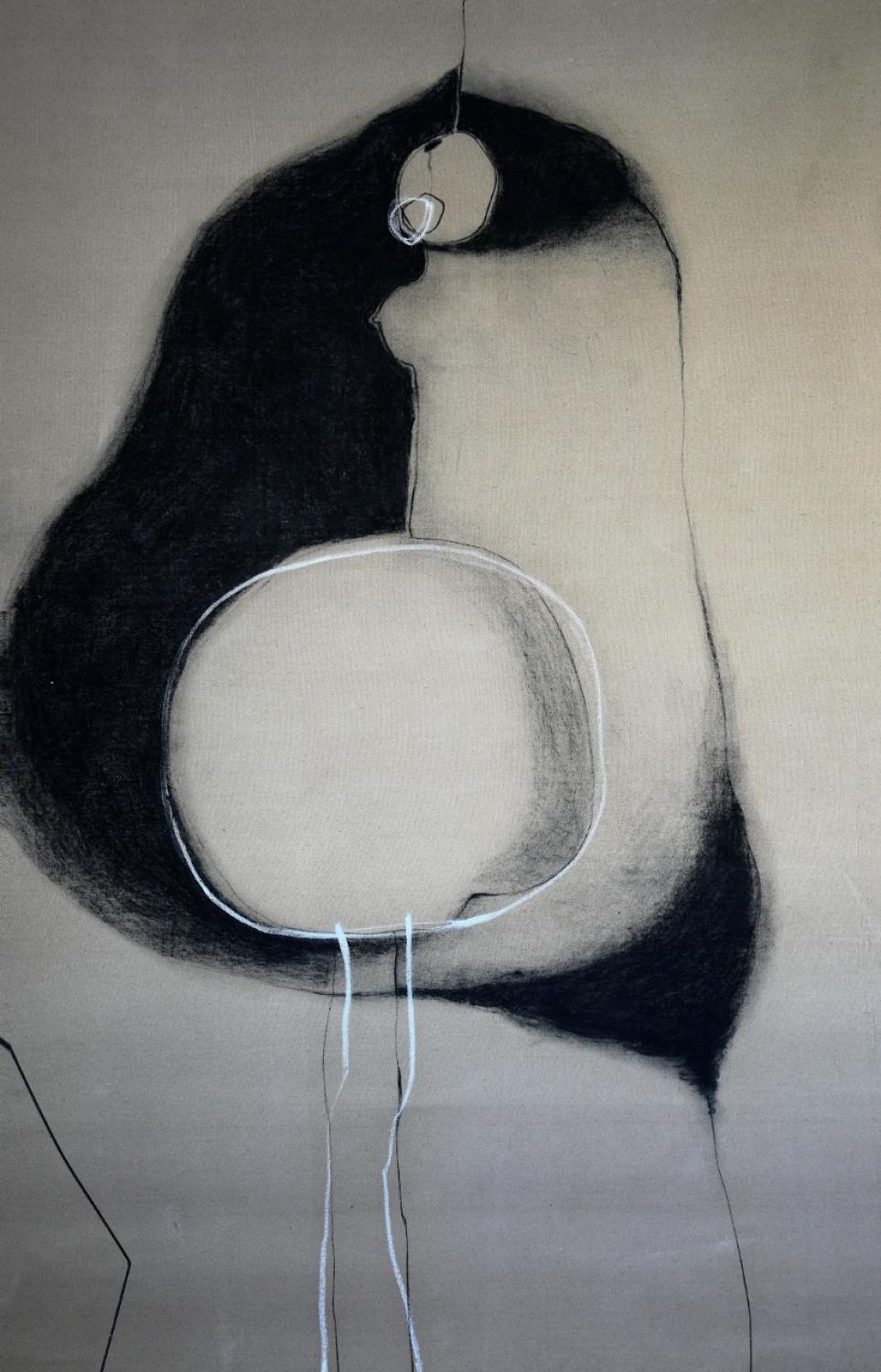
Drawing on her experiences of pregnancy and childbirth, she created a series of 28 works divided into three categories: birth-date portraits, pregnancy figures, and abdominal C-sections. Most were executed in pencil on craft paper, while two were produced on leather. The series emerged from what she describes as a mysterious and transformative period of her life, one that prompted questions about creation, pain, endurance, and womanhood.
“Later, in 2014, I created a land-art exhibition on Goizha Mountain along the Sulaymaniyah-Sitak road using natural stones, which extended for 75 meters and was designed to gradually merge with nature; only 10% remains today,” she says.
For Sleman, the project was also an artistic experiment. By placing pregnancy and childbirth at the center of her work, she sought to bring experiences often confined to the private sphere into public artistic expression.
From Kurdistan to the International Stage
Growing up in Sulaymaniyah, Sleman showed interest in art from an early age. She graduated from the Fine Arts Institute in Sulaymaniyah in 2001 before earning a degree in painting from the College of Fine Arts at the University of Sulaymaniyah in 2005.
Seeking to develop her artistic practice, she moved to the UK in 2012 to study at INTO Newcastle University. She later received a scholarship from the Jan Matejko Academy of Fine Arts in Krakow, Poland, further connecting her to international artistic circles.
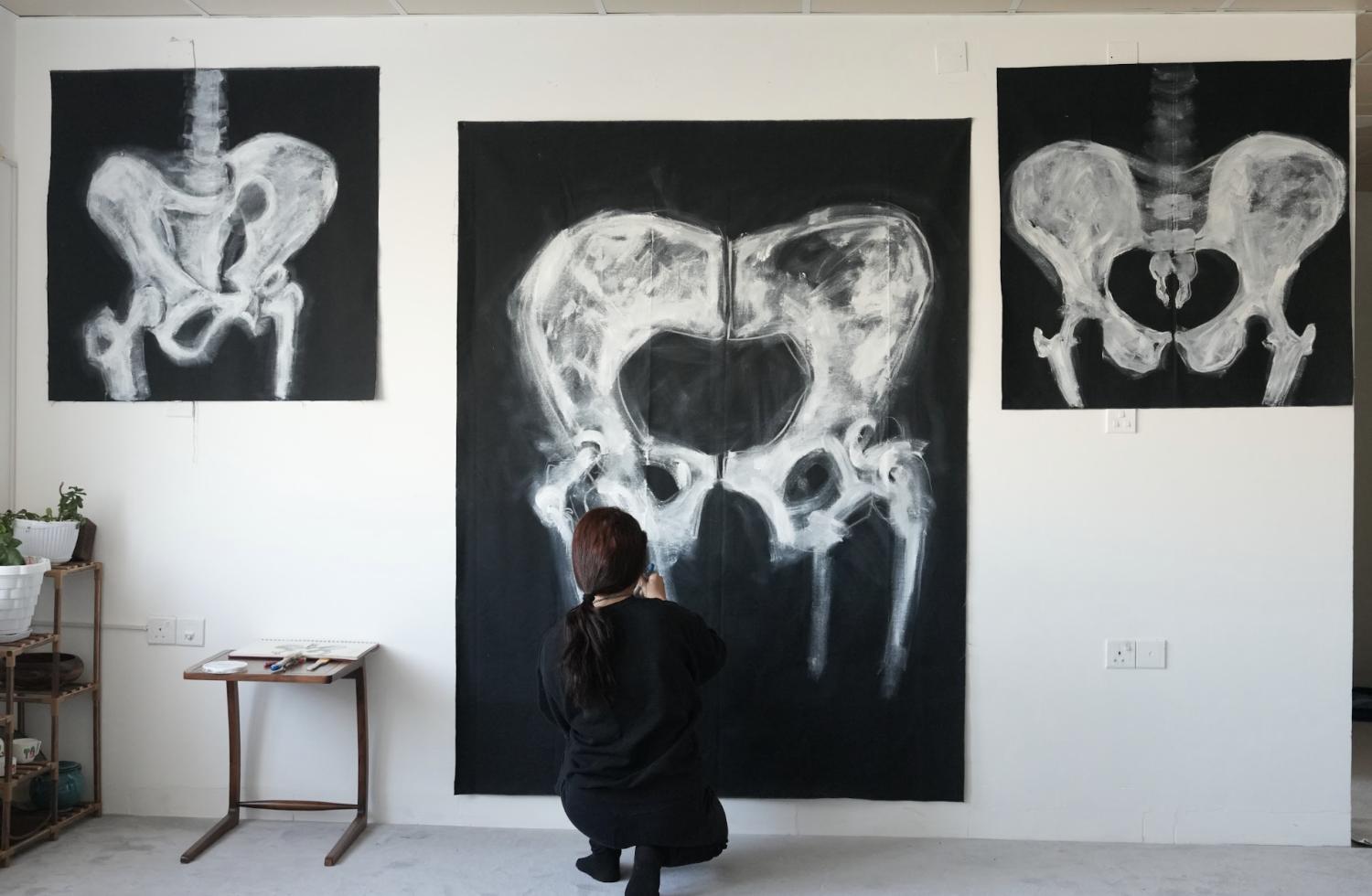
In 2017, Sleman was selected to participate in the 57th Venice Biennale, where she represented the Kurdistan Region and Iraq. Alongside her portrait work, she exhibited pieces inspired by motherhood, pregnancy, and land art. For an artist whose work draws heavily on personal experience, the exhibition provided an opportunity to present deeply personal themes on one of the world’s most prominent contemporary art stages.
The Bricks of Amna Suraka
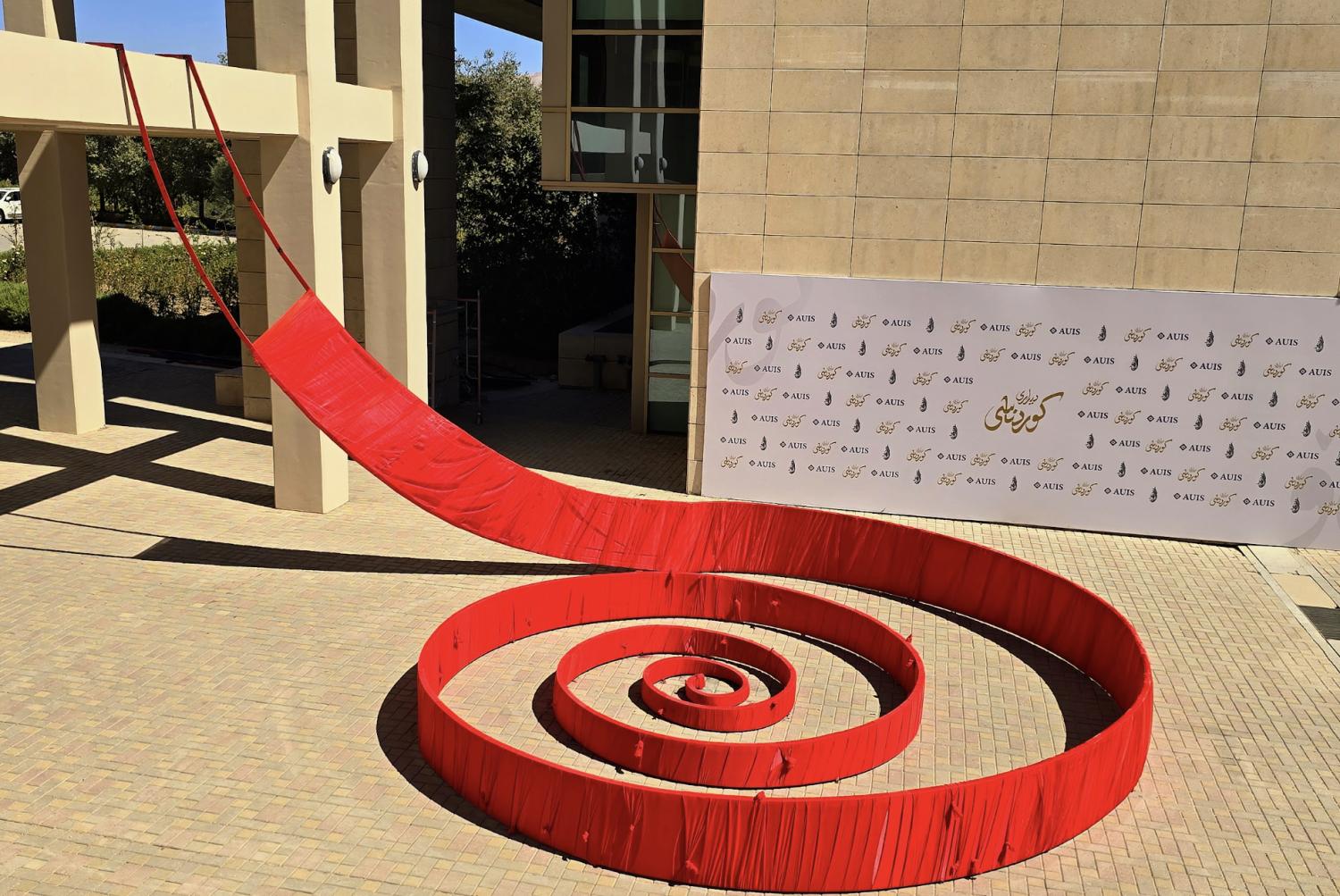
Sleman’s engagement with memory and women’s experiences extends beyond painting. In 2014, after visiting the Amna Suraka Museum in Sulaymaniyah — once one of the Ba’ath regime’s most notorious prisons — she developed an installation inspired by the site’s history.
Using broken bricks collected from the former prison, she constructed a 12-meter wall dedicated to women who had suffered there. The installation incorporated symbols associated with female prisoners and featured the names of more than 800 women affected by repression under the Ba’ath regime.
“As a living manifesto, I created a 12-meter wall of broken bricks with symbols and the identities of women tortured there,” Sleman explains. “Many of the imprisoned women were sexually assaulted, and some of them even gave birth to children whose fathers are still unknown. In this way, the museum became not only a symbol of torture, but also a testament to a generation whose fathers were never identified.”
Art, Memory, and Preservation
Sleman’s interest in preservation extends beyond painting and installation art. In 2017, she became involved in the restoration of a historic bathhouse in Kifri dating back more than a century. The abandoned structure was renovated and transformed into an art gallery known as Kimash. Sleman later exhibited her work there, using the project both to preserve a historic site and to create a new space for artistic expression in Kifri.
The project reflected a recurring theme in her work: the belief that art can preserve what might otherwise disappear, whether historical sites, collective memories, or overlooked aspects of everyday life. Sleman cites the British artist Richard Long, known for incorporating natural elements into his work, as one of her influences.
Today, she continues to work across a range of mediums, including painting, photography, performance, video, and land art, often focusing on women’s experiences and social issues. Despite an increasingly diverse artistic practice, she remains guided by the same curiosity and sense of exploration that first emerged during her experience of motherhood.
A Kurdish journalist, artist, poet, and art designer.