Color, light, and the language of imagery in Rebwar Said's art
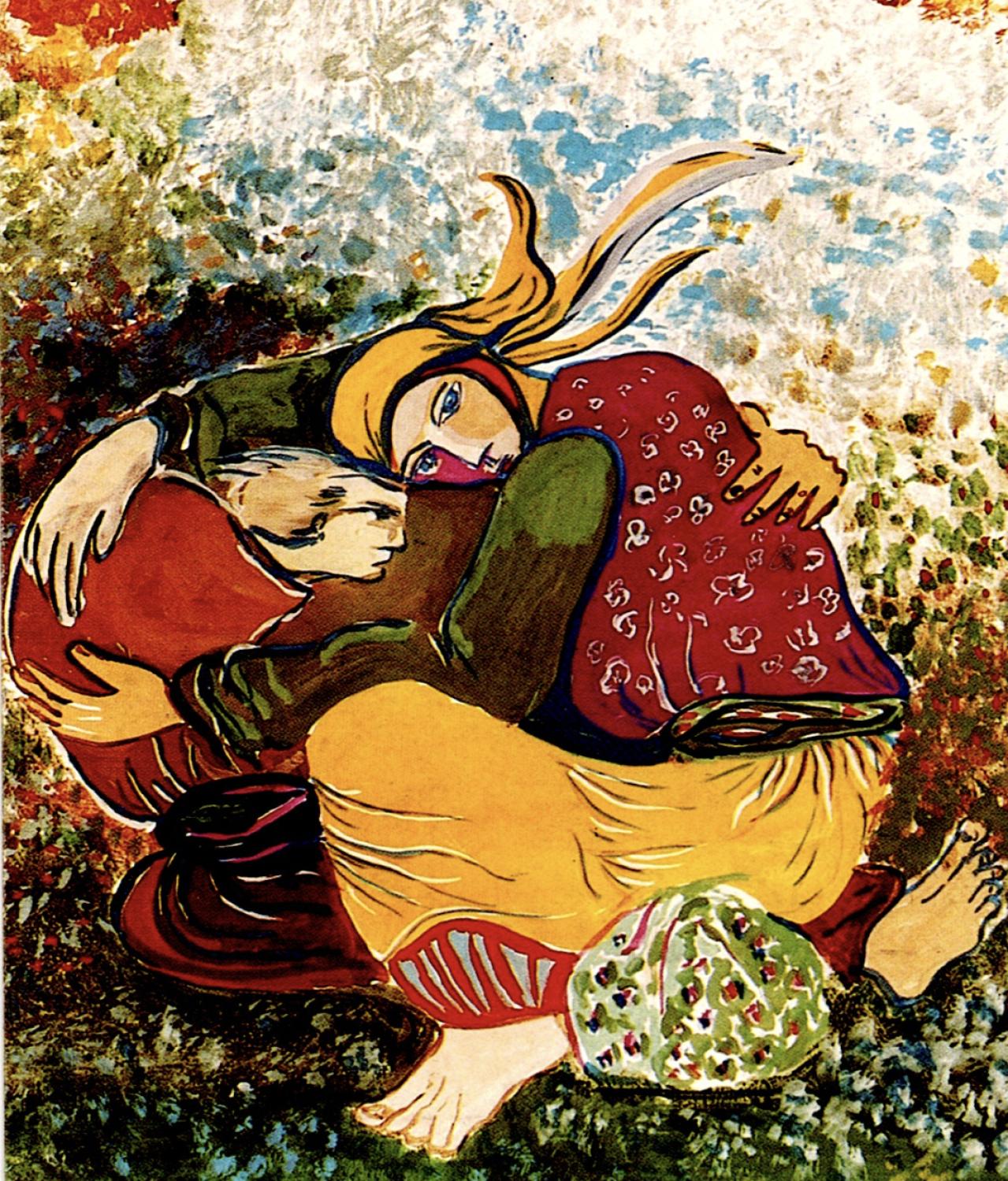
Rebwar Said’s paintings are distinguished by an interplay of chromatic intensity, figurative symbolism, and narrative resonance. Color, line, figure, and gesture serve simultaneously as aesthetic and conceptual elements.
His figures often appear suspended between gravity and flight, inhabiting a space that oscillates between the real and the imagined. Their bodies rarely remain static: limbs extend, eyes gaze outward or inward, and hands perform expressive gestures that suggest communication beyond speech. In this sense, Said’s canvases establish a visual field where figuration functions less as representation than as symbolic and emotional dialogue.
Said’s artistic practice has been shaped by three formative phases: his early creative experiences in Kurdistan; the years spent among the Peshmerga in the mountains; and the later period of displacement, exile, and artistic development in Europe, particularly in France and the UK. These experiences continue to shape his visual language.
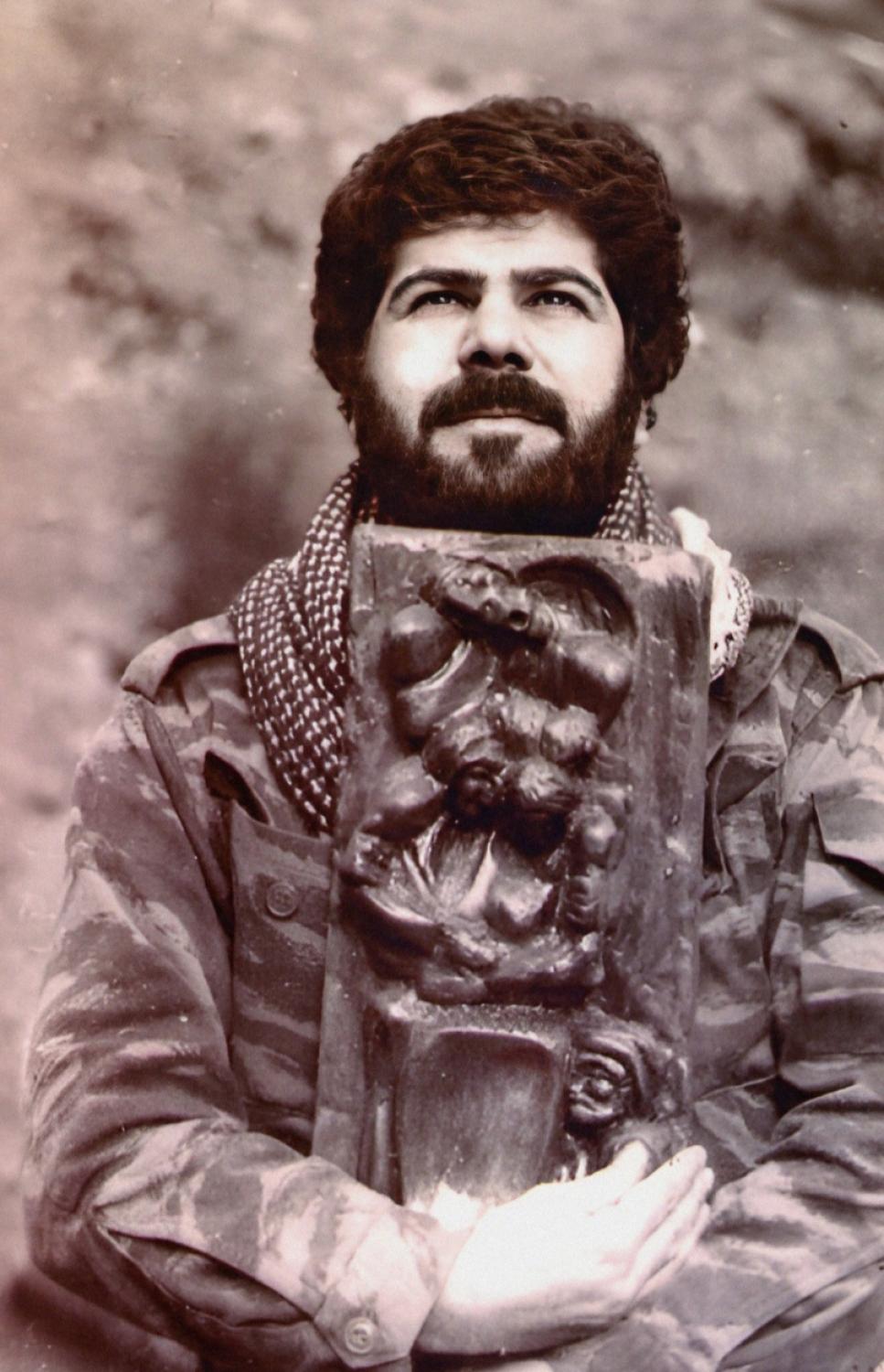
From an early age, Said experimented with carving, engraving, and assembling objects from modest materials, cultivating a sensitivity to form, texture, and structure that remains visible in the composition of his paintings. His canvases retain a tactile, mosaic-like quality, with visual fragments assembled into cohesive compositions.
The period spent with the Peshmerga profoundly shaped his artistic vision. Living among the Peshmerga exposed Said to conflict, uncertainty, and the deaths of friends and comrades. Rather than depicting these experiences directly, he translated them into a symbolic vocabulary of absence, memory, and suspended movement.
In this context, painting becomes a form of visual testimony. Said’s figures appear animated by an inner vitality that resists the finality of death, embodying not simply individuals but the persistence of memory and human aspiration. Through color, line, movement, and symbolic arrangement, lived experience becomes a layered visual narrative.
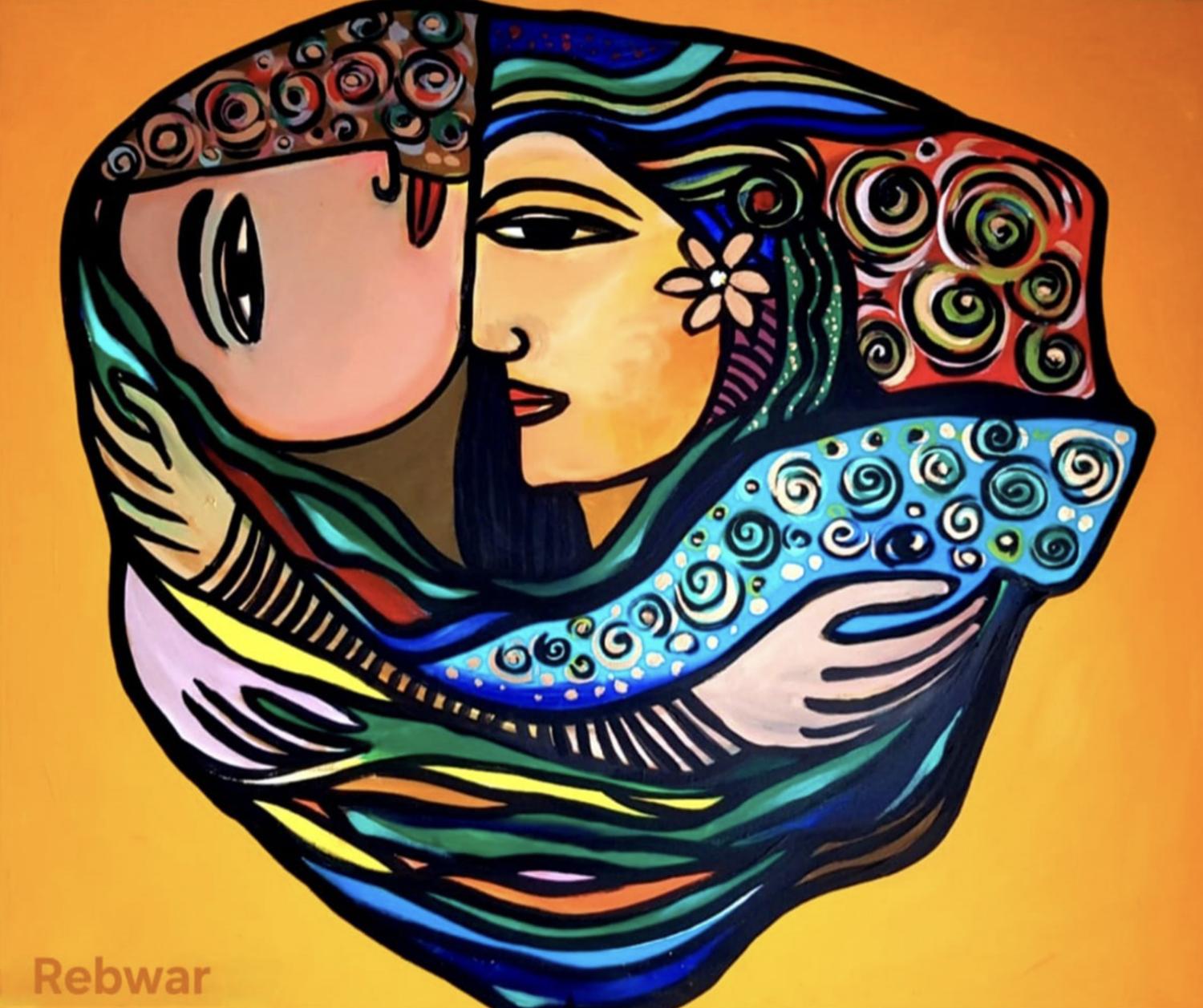
Exile forms another critical dimension of Said’s practice, placing him within a broader transnational artistic dialogue. European artistic environments expanded his formal vocabulary without weakening his distinct cultural grounding.
Despite this international context, Kurdish cultural motifs remain integral to Said’s visual vocabulary. The rich colors associated with Kurdish textiles, the incorporation of calligraphic elements and the presence of symbolic patterns rooted in ancient traditions all contribute to the distinctive character of his work. Rather than expressing nostalgia, these motifs function as living components of a contemporary artistic language that situates Kurdish visual culture within a global framework.
Message of Love: The Feminine as Symbolic Center
A defining characteristic of Said’s paintings is the balance between figuration and abstraction. His figures occupy an intermediate space where the body becomes a site of psychological and philosophical inquiry. Faces express introspection and vulnerability, while elongated hands serve as instruments of communication, mediating between inner emotion and external reality.
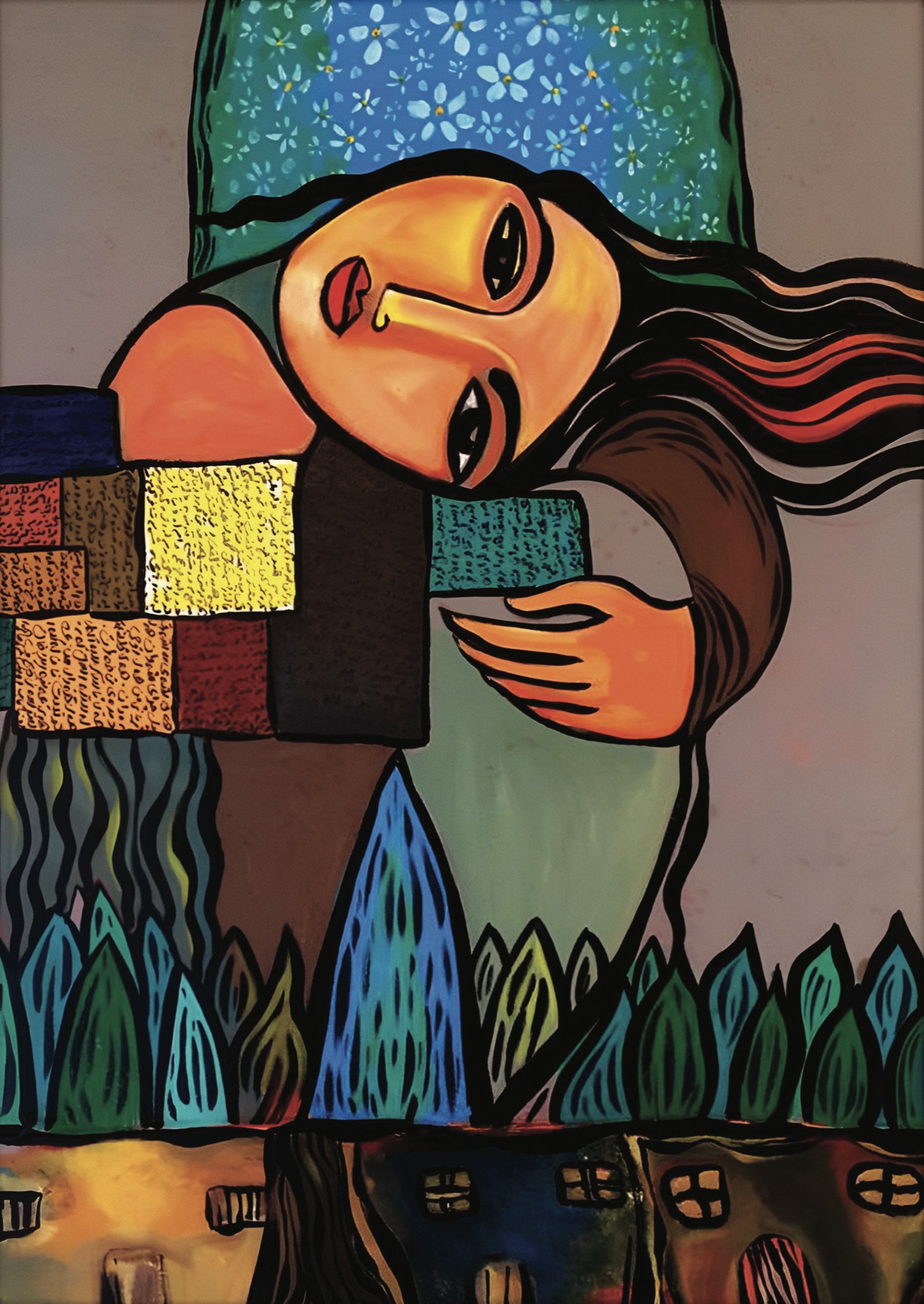
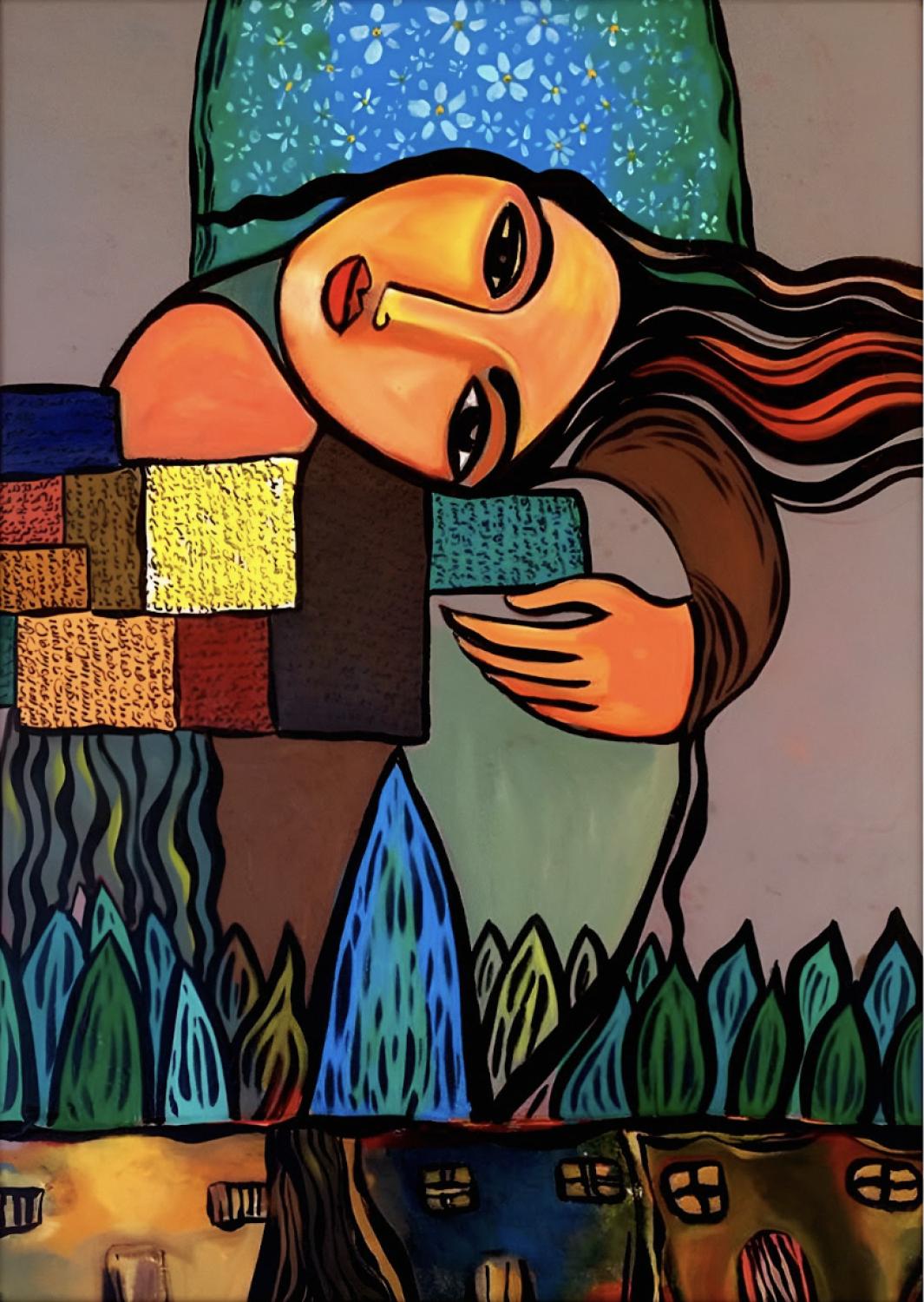
This visual language finds one of its clearest expressions in Message of Love, a painting that centers on a female figure whose presence structures the entire composition. Her face, rendered in warm tonalities of crimson and rose, emerges against a cooler blue-grey background, producing a chromatic contrast that remains balanced and contemplative.
The figure may be interpreted as Shem, the beloved of the Kurdish poet Welî Dêwana, but Said moves beyond illustration. Rather than depicting the poet, he centers the woman who inspired his verse. Dêwana appears only through the calligraphic verses encircling Shem’s neck like a necklace, integrating poetry and image into a unified whole. She becomes not merely the beloved, but the source of artistic creation itself.
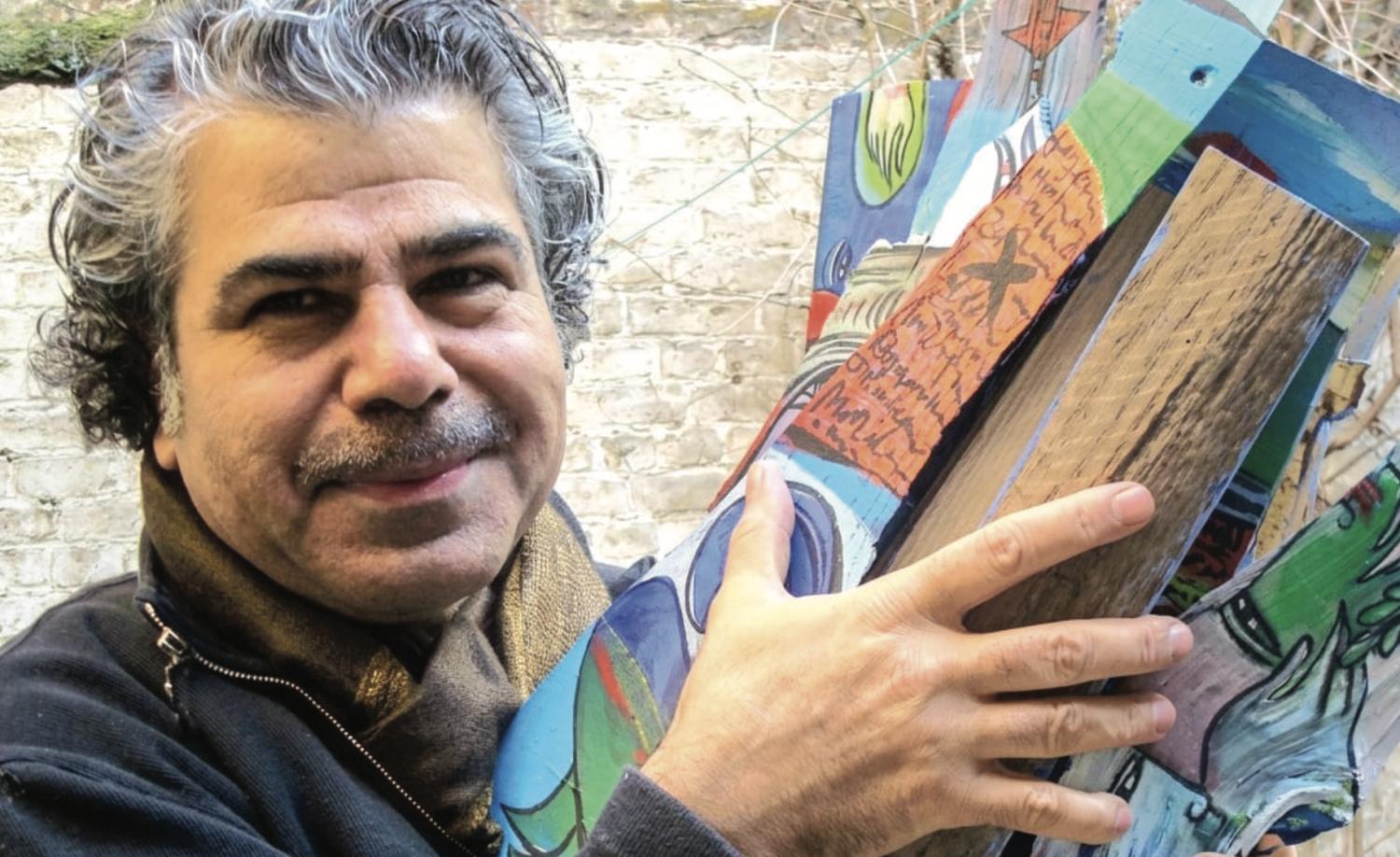
Such an interpretation also invites reflection on how women have been represented in literary traditions. In many poetic narratives, although depicted as a muse, the female figure remains passive and silent, existing primarily through the voice of the male poet. Said’s composition subtly reverses this dynamic. By placing Shem at the center of the visual narrative, the artist restores her presence as an active and defining force within the story.
The composition of Message of Love reinforces these conceptual interpretations. The area surrounding Shem is composed of abstract patterns that recall the intricate designs of Kurdish textiles. These forms create a luminous quality reminiscent of stained-glass windows, suggesting a transcendent or celestial environment.
In contrast, the lower section of the painting introduces a darker and more constricted visual register. Three black-and-yellow squares initially appear abstract before revealing distorted faces marked by anguish, recalling The Scream by Edvard Munch. They suggest confinement and social surveillance, while the open sky above Shem symbolizes freedom and transcendence.
Chromatic Structure and Artistic Synthesis
Said’s work resists affiliation with any single stylistic movement, combining realism, abstraction, geometric forms reminiscent of Cubism, and decorative motifs drawn from ancient Eastern mosaics.
Certain aspects of his imagery — particularly the sensation of weightless figures and a dreamlike narrative space — recall the poetic visual universe associated with Marc Chagall. Yet Said remains distinct through his integration of Kurdish cultural references with themes of memory and displacement.
His doctoral training at Middlesex University also informed a sophisticated understanding of color theory. In Said’s paintings, the interplay of warm and cool tones creates visual contrast while suggesting a symbolic reconciliation of opposing forces, producing a quiet but unmistakable sense of musicality.
This interplay echoes philosophical frameworks such as Yin and Yang, in which balance emerges through the dynamic coexistence of contrasting energies. In Said’s work, color thus becomes both an aesthetic and metaphysical principle.
Message of Love encapsulates many of the central concerns that define Rebwar Said’s artistic practice: the intersection of poetry, music, and image; the negotiation between memory and imagination; and the persistent search for freedom within conditions of constraint.
Although Said is also a poet, painting offers the fullest expression of his artistic imagination. His canvases become visual poems in which color, line, gesture, and symbol converge into a reflective meditation on the human condition.
Note: This article was originally published in Kurdish in two parts in Rexney Chawder on September 19 and 26, 2016.
An accomplished Kurdish academic, poet, and lecturer.