The enduring symbolism of Kurdish women’s
traditional tattoos
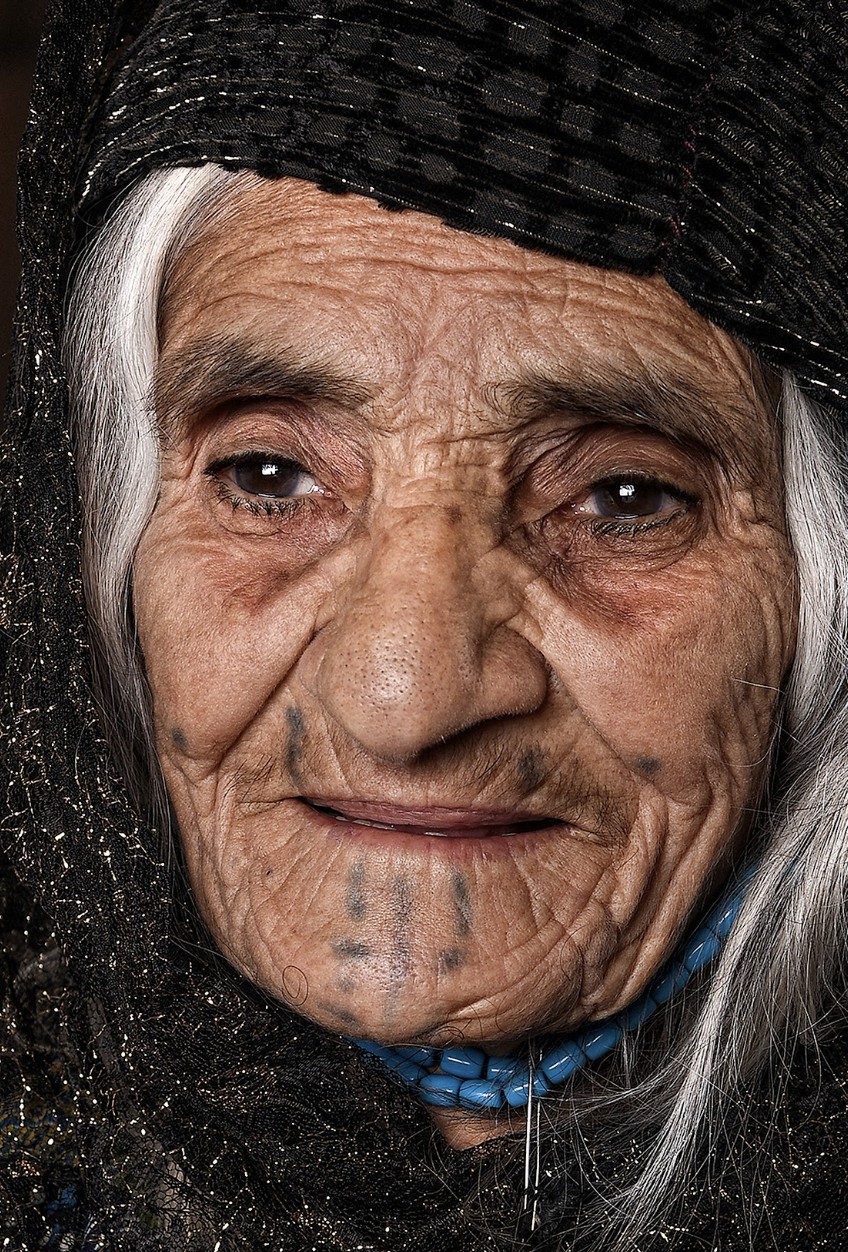
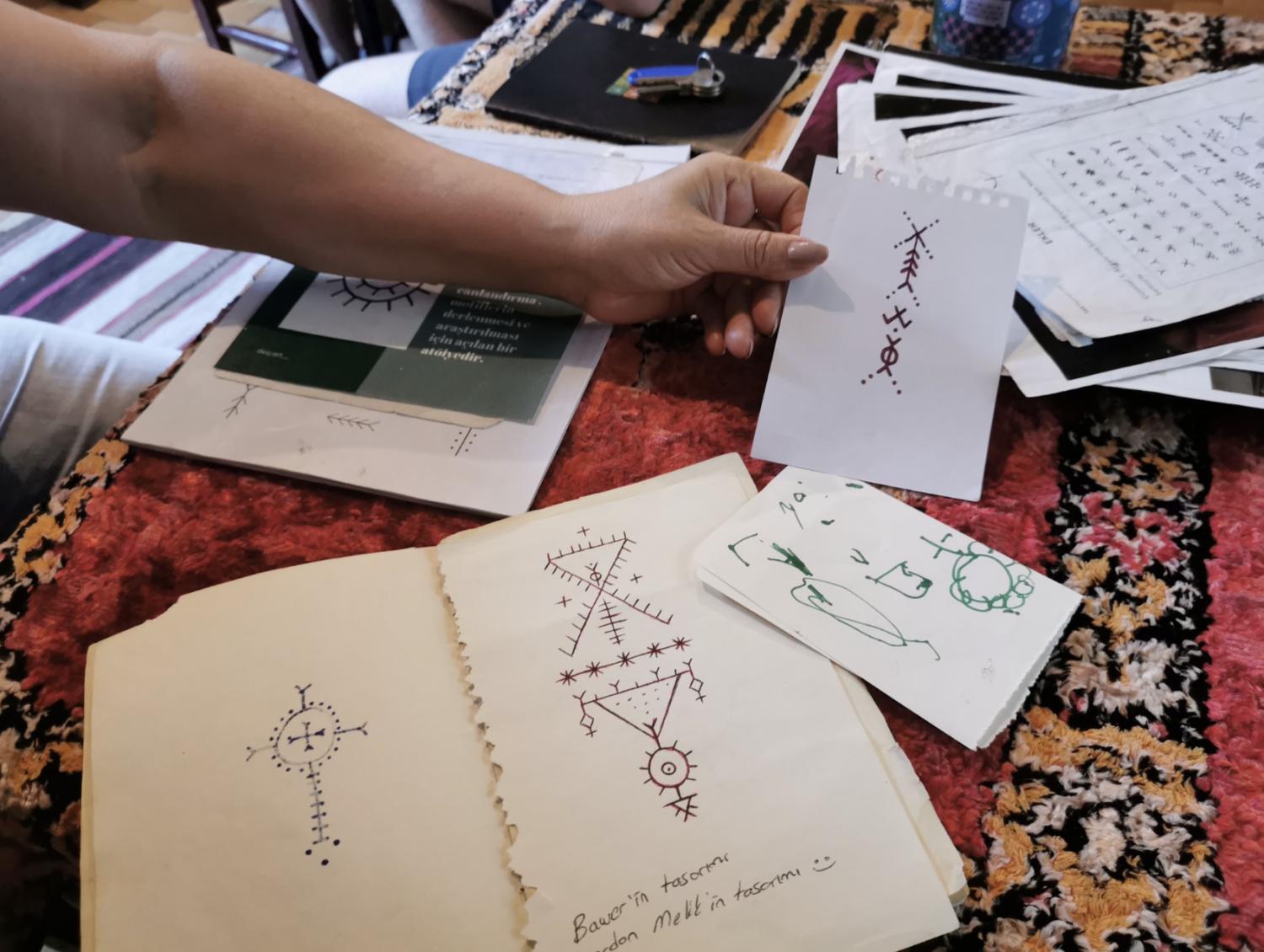
On the faces of elderly women in the villages around Mardin, Diyarbakır, and Şanlıurfa in southeastern Turkey, a very particular script can be read: small dots on the chin, star patterns on the hands, suns on the forehead. These markings — known in Kurdish as dêq (دەق) — are a traditional form of tattooing, practiced especially in the Kurdish regions of Turkey, Iraq, Syria, and Iran.
The word dêq derives from the Aramaic Dyoqo (ܕܝܘܩܐ), meaning “to pierce” or “to puncture” — a reminder that this tradition emerged in a space where cultures, languages, and religions have overlapped for millennia. The practice predates the spread of both Christianity and Islam and is rooted in local cosmologies. It is not ornament in any modern sense of the word. It is better read as a language in its own right: held by women, transmitted by women, and inscribed onto women’s bodies.
The Language of Dêq
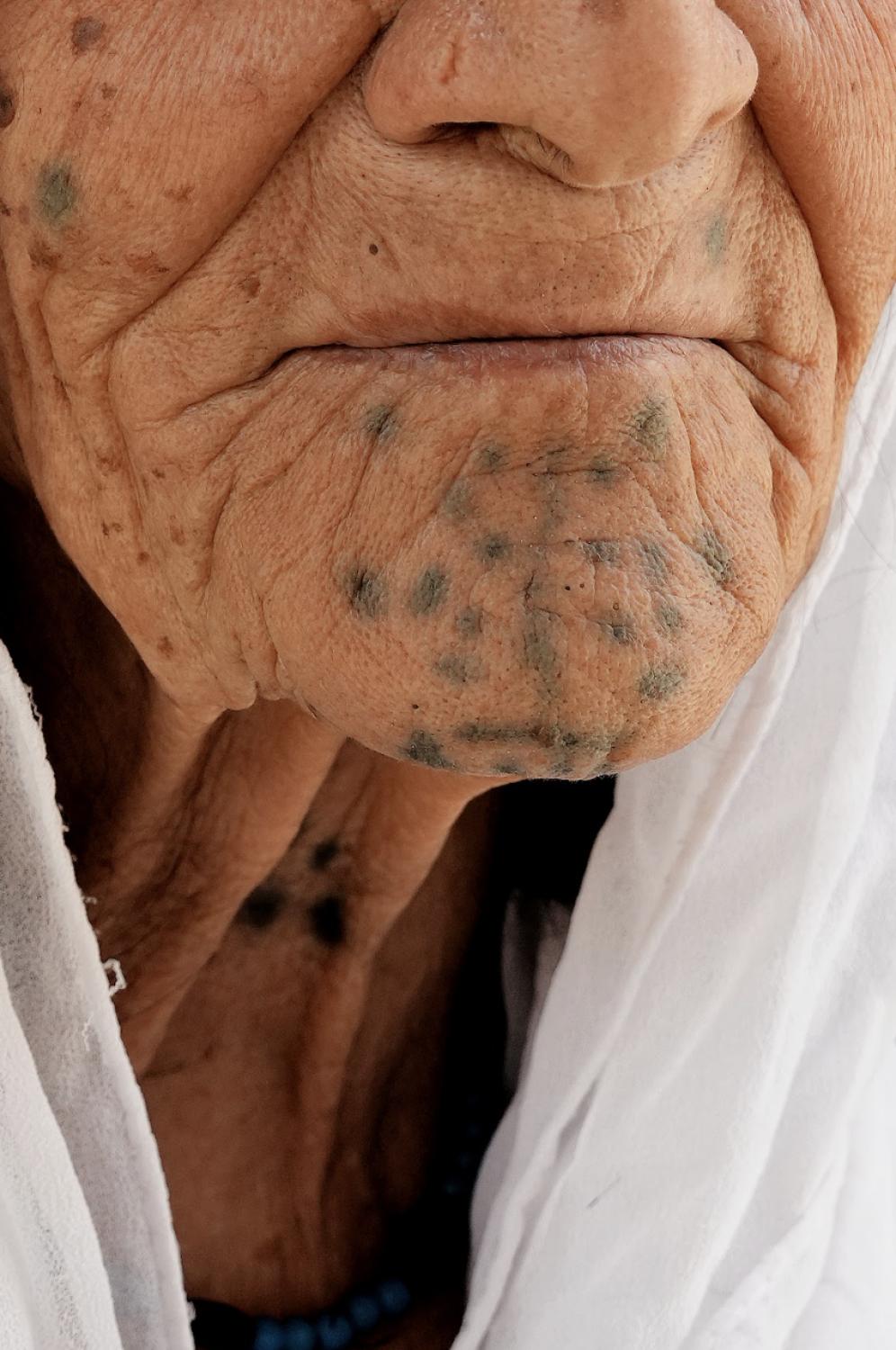
Traditional dêq ink is made from a mixture of soot and the breast milk of a woman who has given birth to a daughter, sometimes combined with herbs or ox bile. The tattoo is applied by piercing the skin with a needle dipped in the ink. This practice was carried out by women, for women — on the hands, the chest, and the face — and often began in early life, with mothers tattooing their daughters, and girls imitating the patterns of their elders.
The French archaeologist Jacques de Morgan, during expeditions through Asia Minor in 1895, observed that older women sometimes had dêq across their entire bodies. In the 1950s, the American anthropologist Henry Field confirmed similar findings in the Kurdish heartland and Kermanshah.
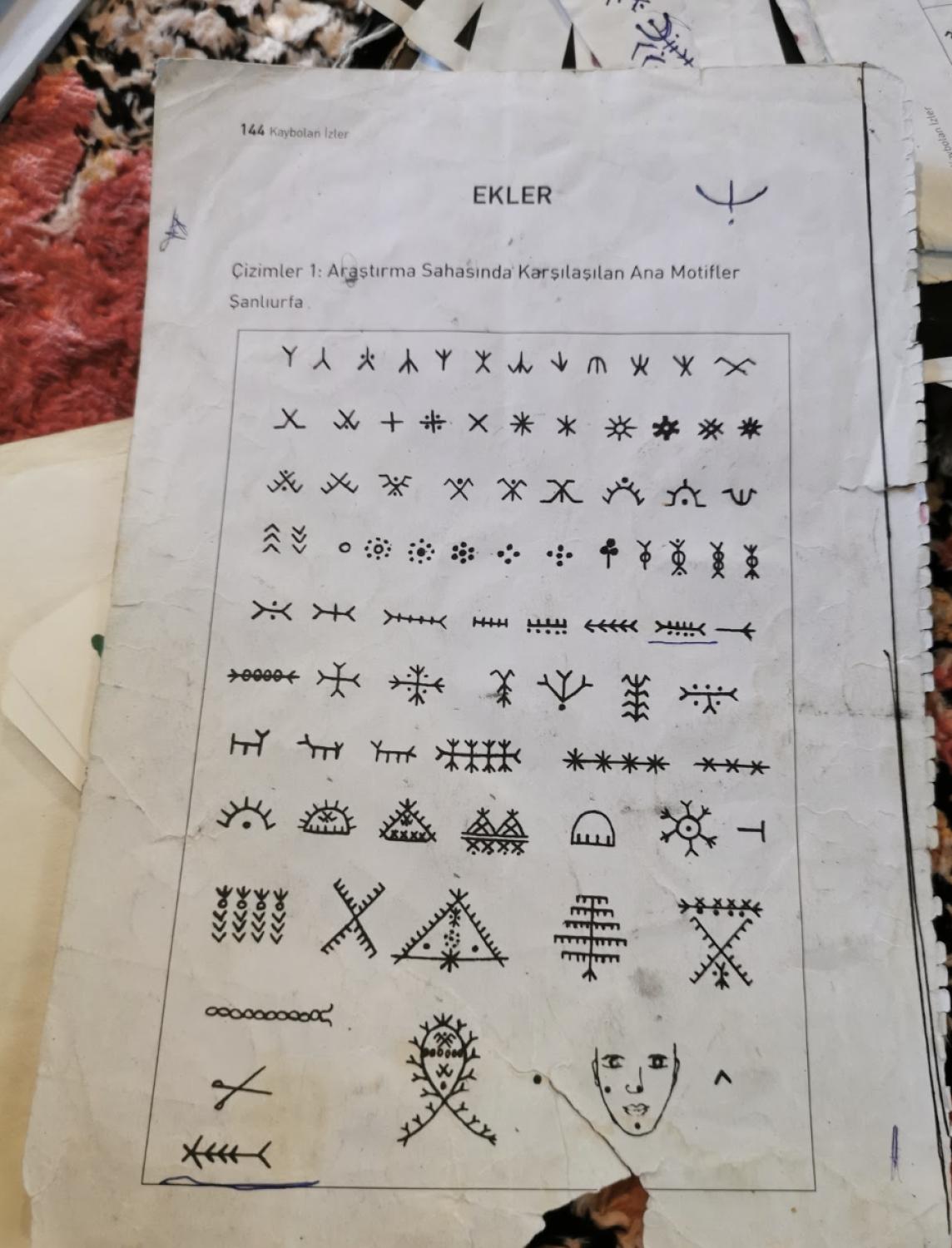
Dêq is not arbitrary decoration. Each motif carries meaning, and its placement on the body shades that meaning further. The motifs are nature-derived — simplified representations of the Sun, Moon, stars, plants, and animals — rendered in a highly linear, geometric style. These same symbols appear in architecture, on gravestones, and in carpets and embroidery: the body is merely one medium within a single, cross-cultural system of signs.
Many motifs are associated with specific meanings: the Sun — the most beloved dêq motif — stands for purity and new beginnings. Circles are associated with fertility; crosses with protection against evil spirits; diamonds with strength. The V-sign on the chin was a marker of tribal affiliation. The comb represents beauty.
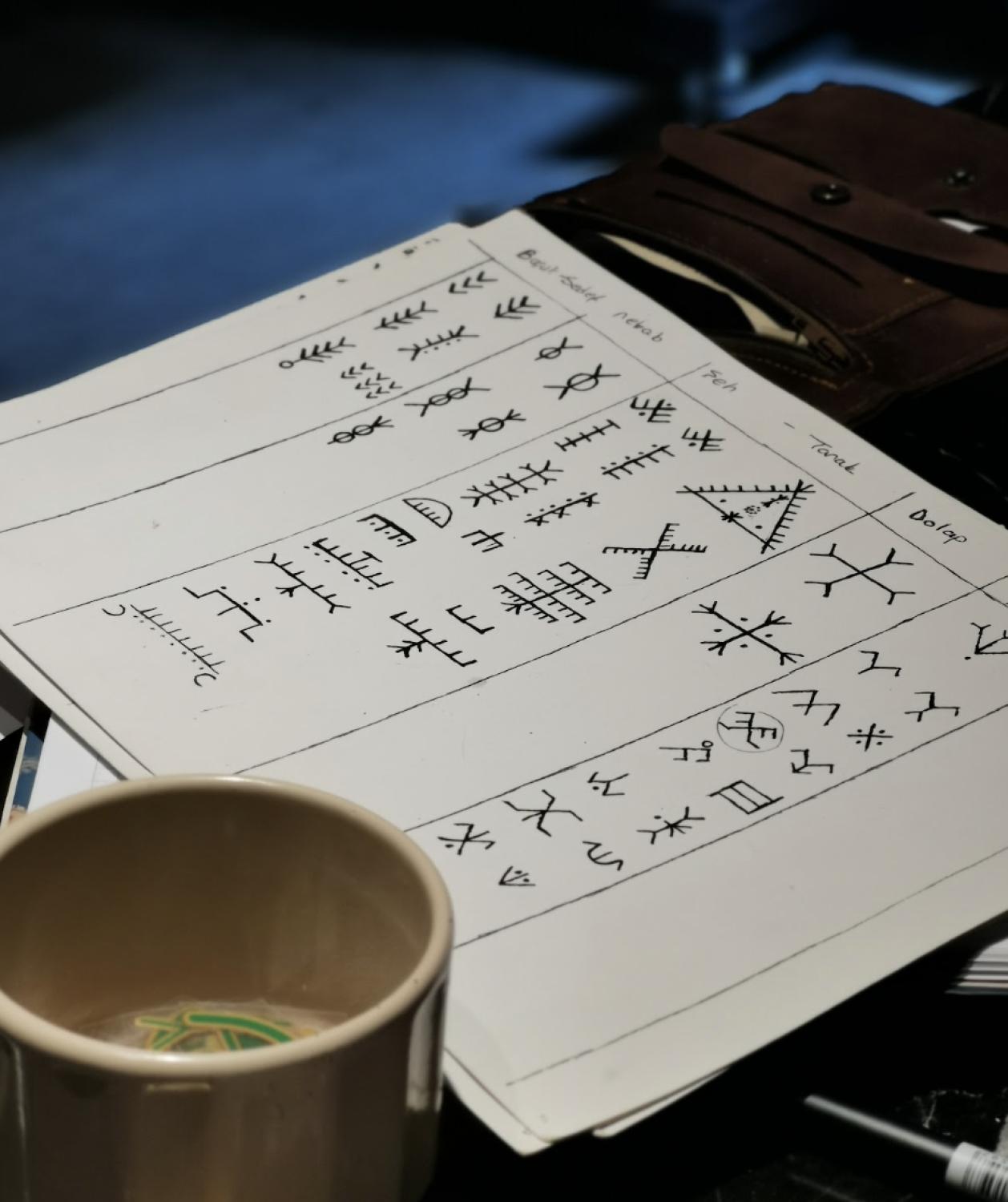
Dêq may thus be read as a woman’s cosmological diary: what she sought to protect, whom she loved, to which tribe she belonged, and what she hoped to receive from the spirit world.
Whereas people today are tattooed for decorative or commemorative purposes, dêq was traditionally performed to petition the gods for abundance, protection, and fertility — long before the spread of monotheistic religions. The Kurdish anthropologist Ahmet Yavuklu has described dêq as a traditional form of worship.
Facial dêq were believed to ward off evil spirits, promote health, and foster fertility. Specific patterns were believed to have healing properties: dots at the sides of the forehead were thought to protect against headaches. Women had themselves tattooed during pregnancy to ease childbirth and protect the child. Among Yezidi Kurdish women, dêq carried even greater weight, constituting a central element of religious expression.
Decline and Revival
The history of dêq is also a history of silencing. Over the course of the 20th century, the practice became progressively less widespread — the result of the stigmatization of Kurdish identity in parts of the region, migration, urbanization, and the growing influence of Islamic currents that discourage tattooing as haram. Some women had their tattoos removed or concealed them out of shame.
Safi Haso, a woman from the village of Girik near Kobane in northern Syria, told photojournalist Jodi Hilton: “We are probably the last generation to have tattoos. All Kurdish women had them.”
But the silence is breaking — most loudly within the diaspora.
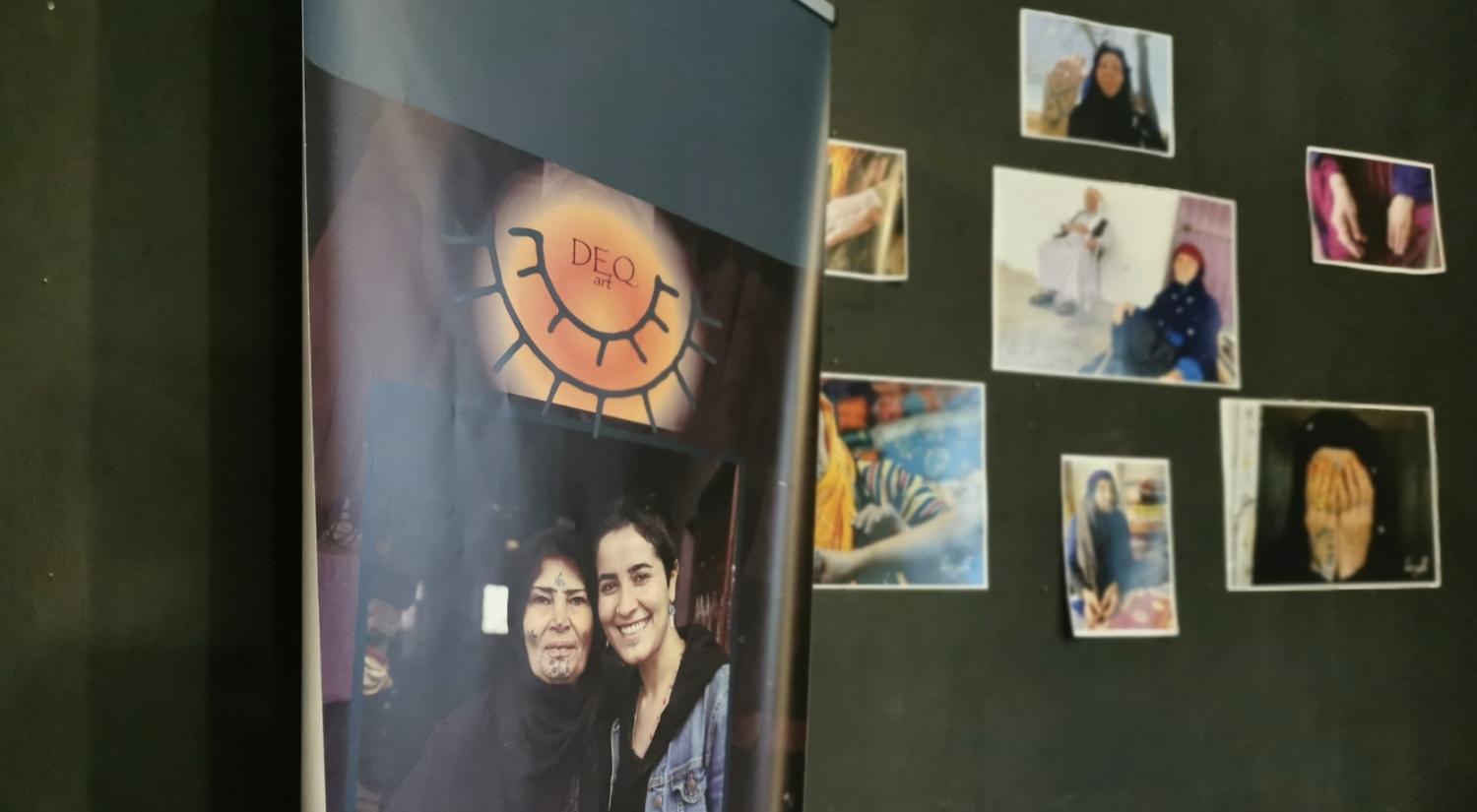
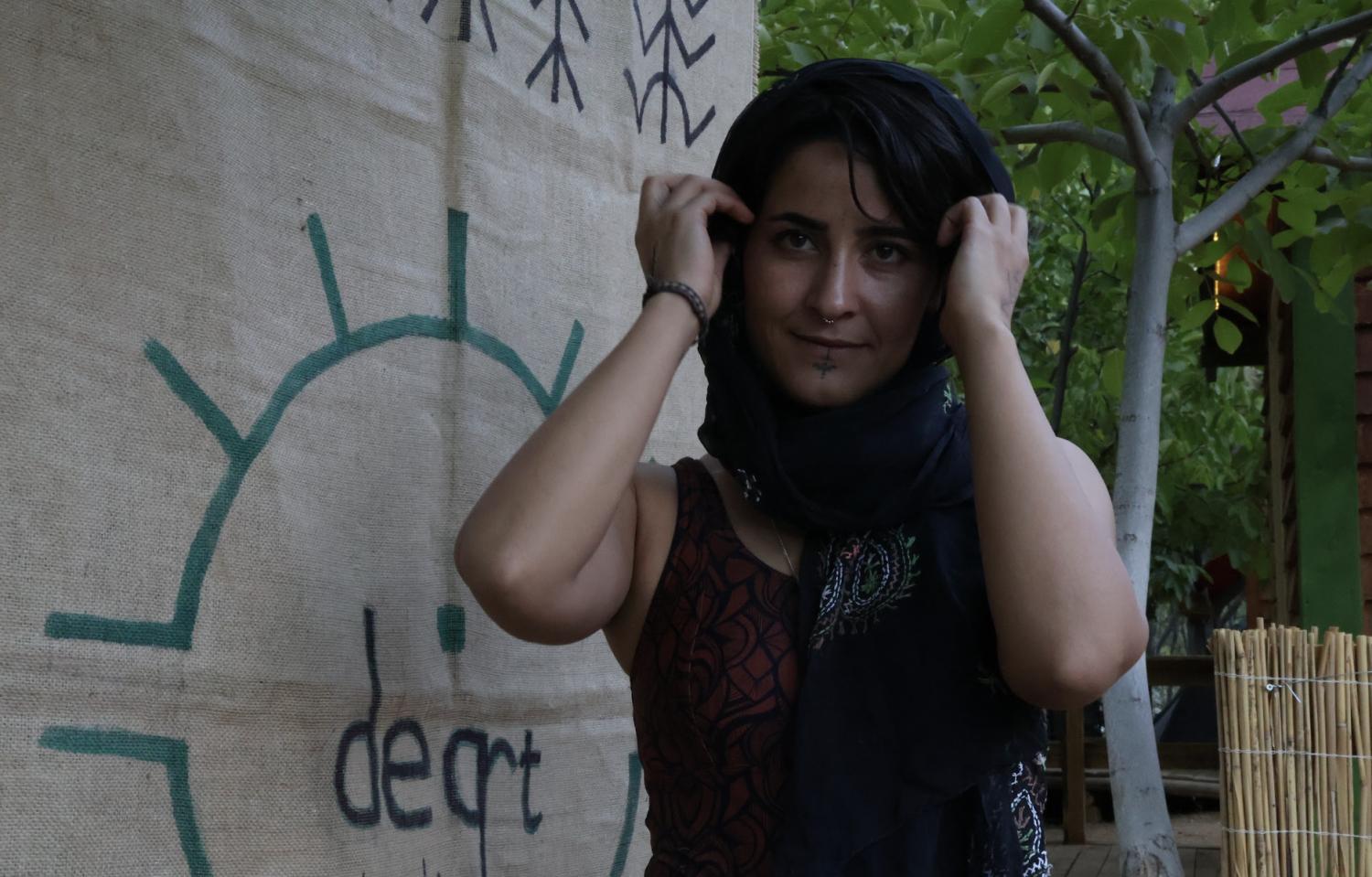
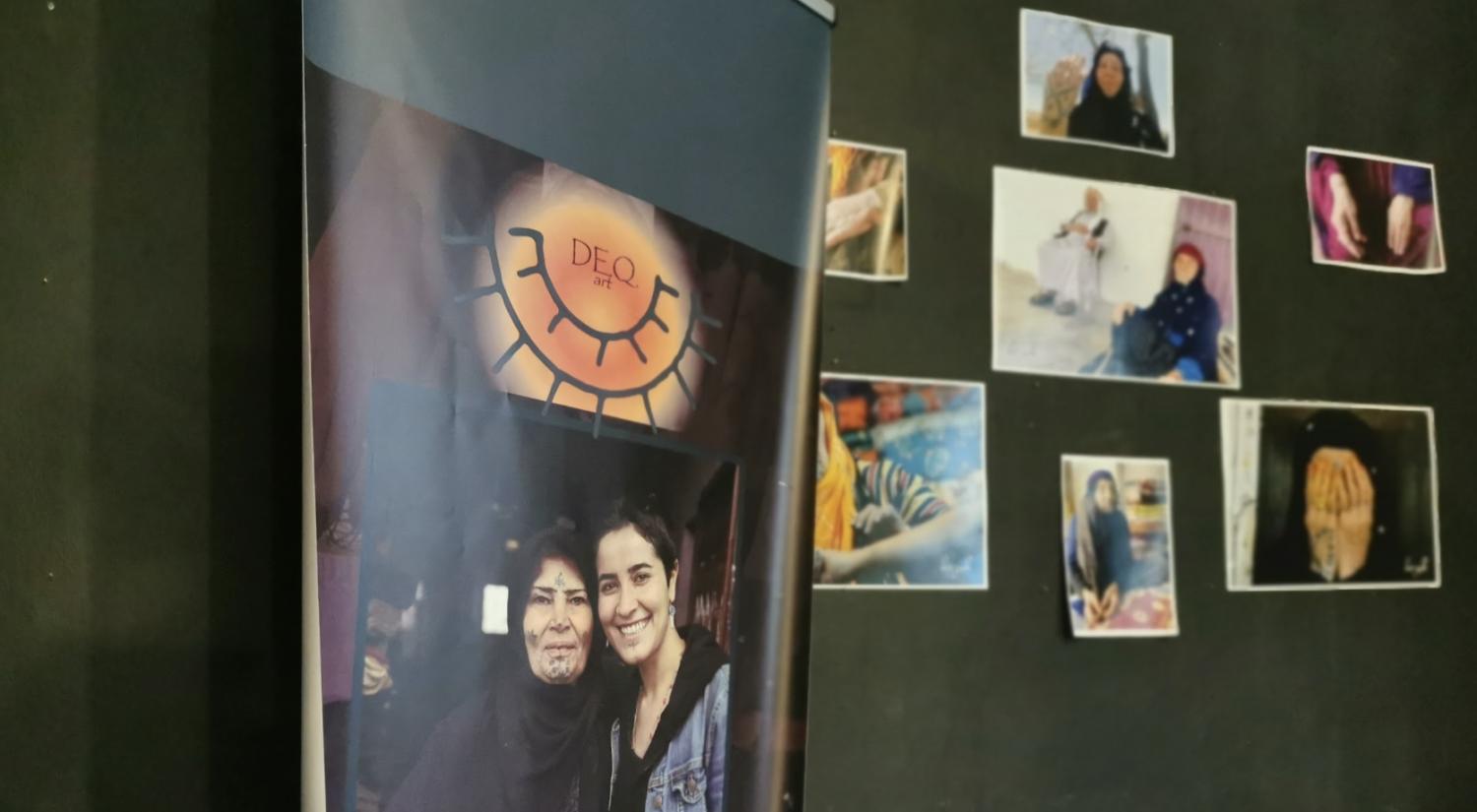
Tattoo artist Elu, who grew up in western Germany in a Kurdish-Alevi family from eastern Anatolia, first encountered dêq about ten years ago, when the tradition was on the verge of extinction. She spent months reading and translating across several languages and traveling to parts of Kurdistan to learn from community elders. Now living in Lisbon, she has described dêq as a means of spiritually reconnecting with her roots. Together with activist Çiler Kılıç, she has spent years working on a crowdfunded documentary about the last women bearing traditional tattoos from Dêrsim.
In Turkey, something is stirring as well. Fatma Temel, a young woman in her late twenties, opened a small dêq studio in November 2021 in the historic Sur district of Diyarbakır — one of the few artists actively preserving this ancient tattooing culture. The most popular motif among her clients, most of them young Kurds, is the Sun.
For Elu, a dêq today is a cultural tool “to build bridges between generations and over geographic distances. While there are many personal reasons why Kurdish people practice dêq, there is a collective desire to reclaim this almost-vanished tradition as a form of self-identification.”
In a context where Kurdish identity has been suppressed across generations, dêq is more than cultural memory — it is resistance.
An Alphabet Older Than Any Written Language
What accounts for the power of these motifs? Part of the answer may lie in their antiquity. The sun, moon, star, diamond, circle, and serpent appear across cultures and centuries, carrying meanings that transcend any single tradition. Carl Jung might have called such recurring images archetypes, describing them as “primordial images” of the collective unconscious and depicting them as already inscribed within us. The Sun stands for vital force among Kurds as among ancient Egyptians, the Celts, the peoples of the Andes. The V-sign appears on potsherds from the Neolithic.
Dêq is thus simultaneously particular and universal: a local practice that uses soot and breast milk to write humanity’s oldest questions into the skin — Who am I? Where do I come from? What protects me?
I, too, have been caught in the spell of this language, not as a Kurdish woman or carrier of familial memory, but as someone moved by the power of these signs. Dêq has reminded me that bodies are repositories of memory, and that certain symbols are so deeply anchored within us that they require no translation.
Janin Riegow-Can lives and works as a primary school teacher in Berlin, Germany. She studied linguistics and literary studies, and her work continues to be shaped by a strong interest in language as a carrier of meaning. She shares a deep bond with Kurdistan — a connection of the heart she has come to know through its people, stories, and traditions. And for her, this journey is far from over.
She studied linguistics and literary studies, and her work continues to be shaped by a strong interest in language as a carrier of meaning.