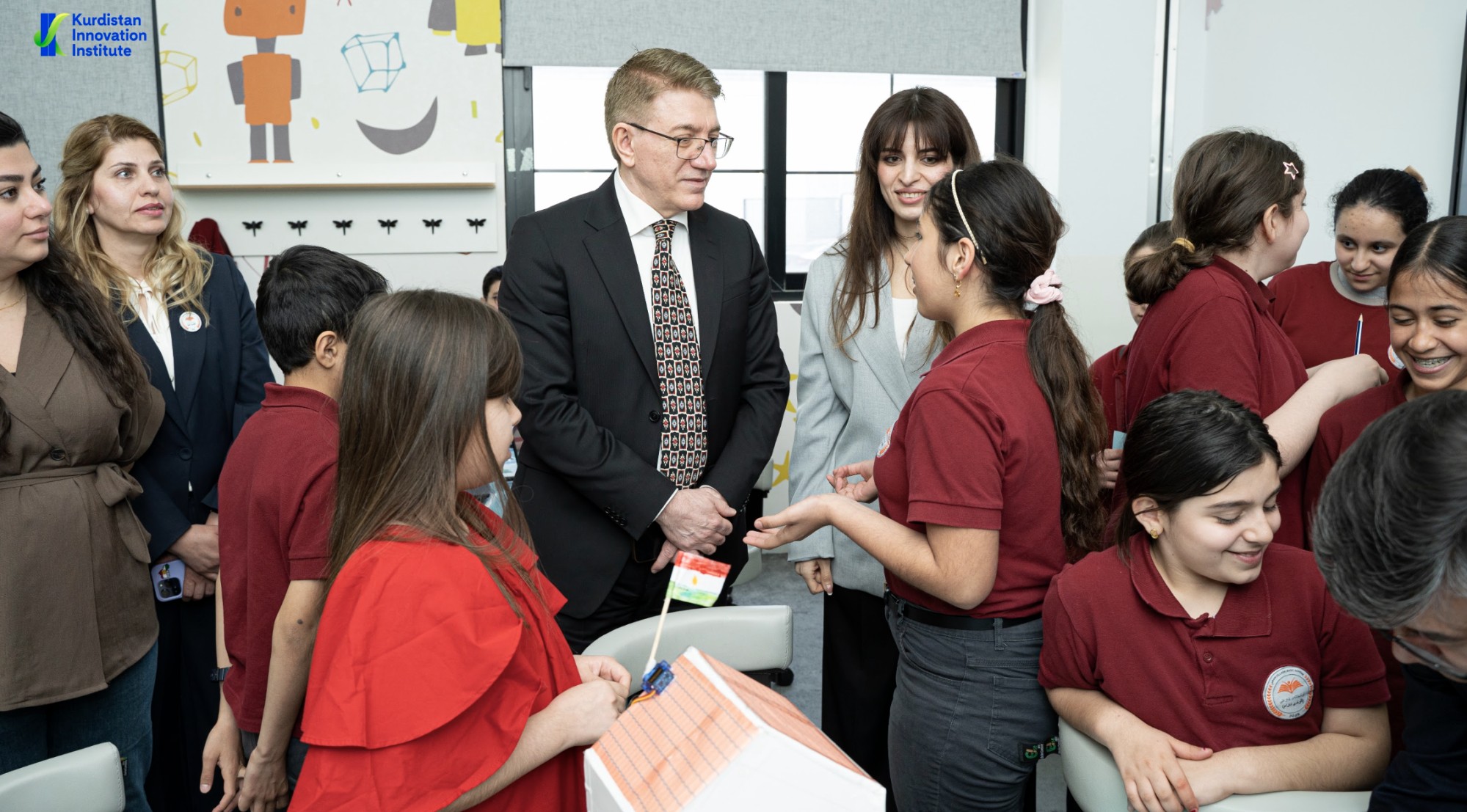
The Kurdistan Innovation Institute aims to transform education by converting classrooms into innovation labs
Before it became an Innovation Lab, it was just a room.
Tucked away in one of Erbil’s public schools, the space had no special meaning for students. It stood quietly in the background of daily education.
Then the room changed. Tables were arranged for teamwork. Robotics kits, computers, and learning materials arrived. Teachers were trained, and a new innovation curriculum was introduced. The once-empty room became a hub of activity: students leaning over projects, asking why something worked, trying again when it failed, and discovering that a lesson could be hands-on.
For the Kurdistan Innovation Institute (KII), this transformation is at the heart of the School Innovation Program.
With the support of the Kurdistan Regional Government Ministry of Education and the Erbil General Directorate of Education, the program began its pilot phase in Erbil with nine public schools and one center for students with autism. Dedicated Innovation Labs were created for hands-on learning in science, technology, design, teamwork, and problem-solving. Following positive feedback from the Ministry, teachers, and parents, the model is expected to expand to 125 additional schools, most of them public. The program is built on the belief that innovation is a latent skill in every child, and that the right environment can bring it out.
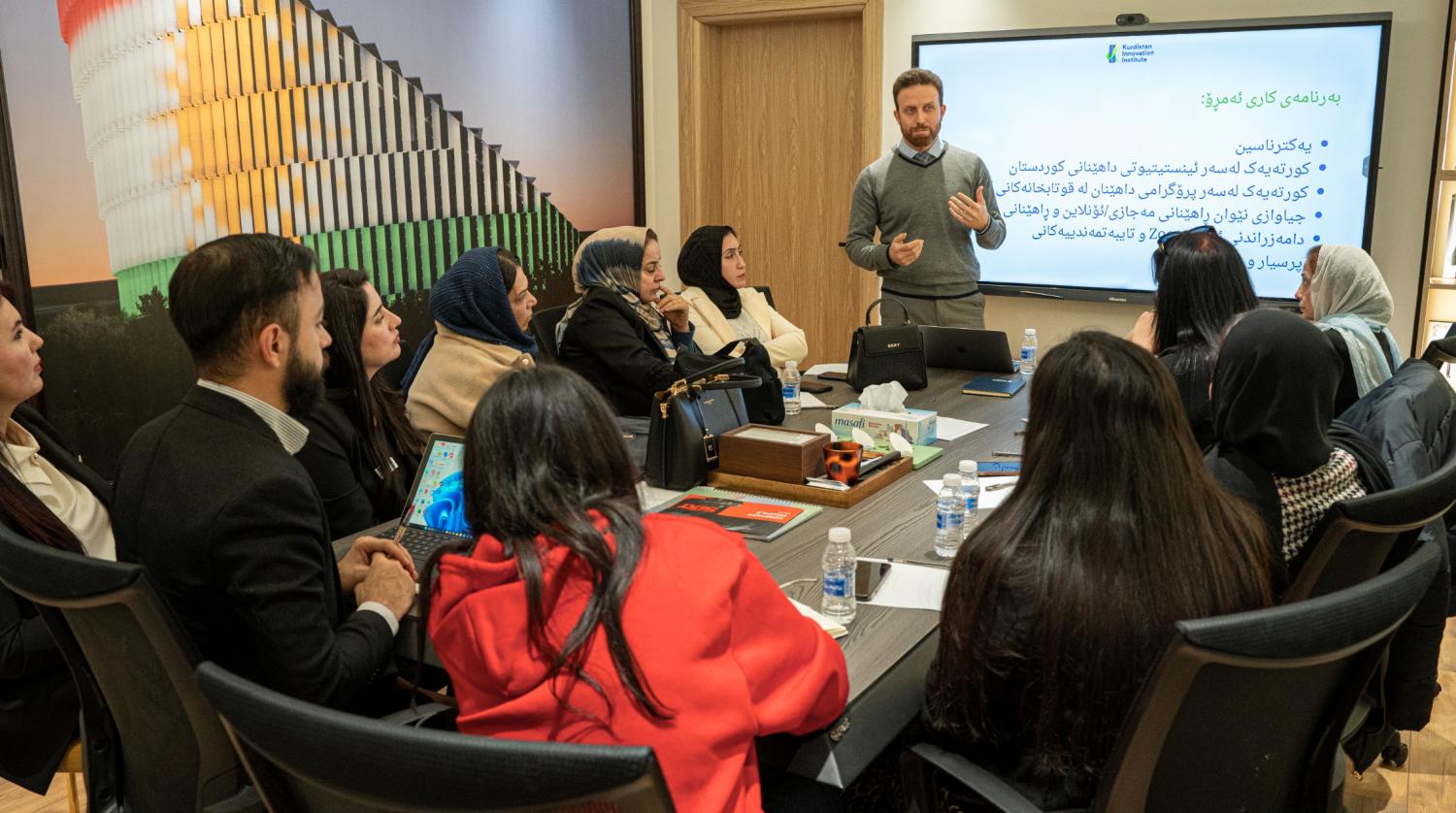
Inside the Labs
Inside the labs, students build circuits, explore robotics, experiment with mechanics and hydraulics, develop simple software, and learn to identify problems before designing solutions. They also learn to divide roles, test, improve, and explain what they have made.
Dr. Azad Najar, CEO of KII, says the institute was shaped by the conviction that innovation must begin early. “To rise as a nation, we need to increase the number of innovators,” he explains. “We wanted to create a system through which we can systematically increase the number of innovators, creators, and people who think outside the box.”
That conviction led KII to develop its own innovation curriculum, teaching students how ideas move from imagination into action.
The program required careful preparation: schools were selected, teachers trained, and unused rooms transformed into Innovation Labs. KII teams supported every stage of implementation.
Aveen Ahmed, KII’s School Innovation Project Manager, saw the clearest impact at schools where hands-on experimentation was still new. “One of the moments I felt the program was really working was in schools like Bnar and Mem,” she says. “When students saw something simple, like an LED turning on after they connected it themselves, their reaction showed that learning had become real for them.”
Nooralhuda Suliman, KII’s senior trainer, notes the importance of creating dedicated spaces for innovation. “The program was not simply about placing tools inside schools,” she says. “It was about creating a full learning environment where teachers and students could use those tools with purpose.”
What Teachers Noticed
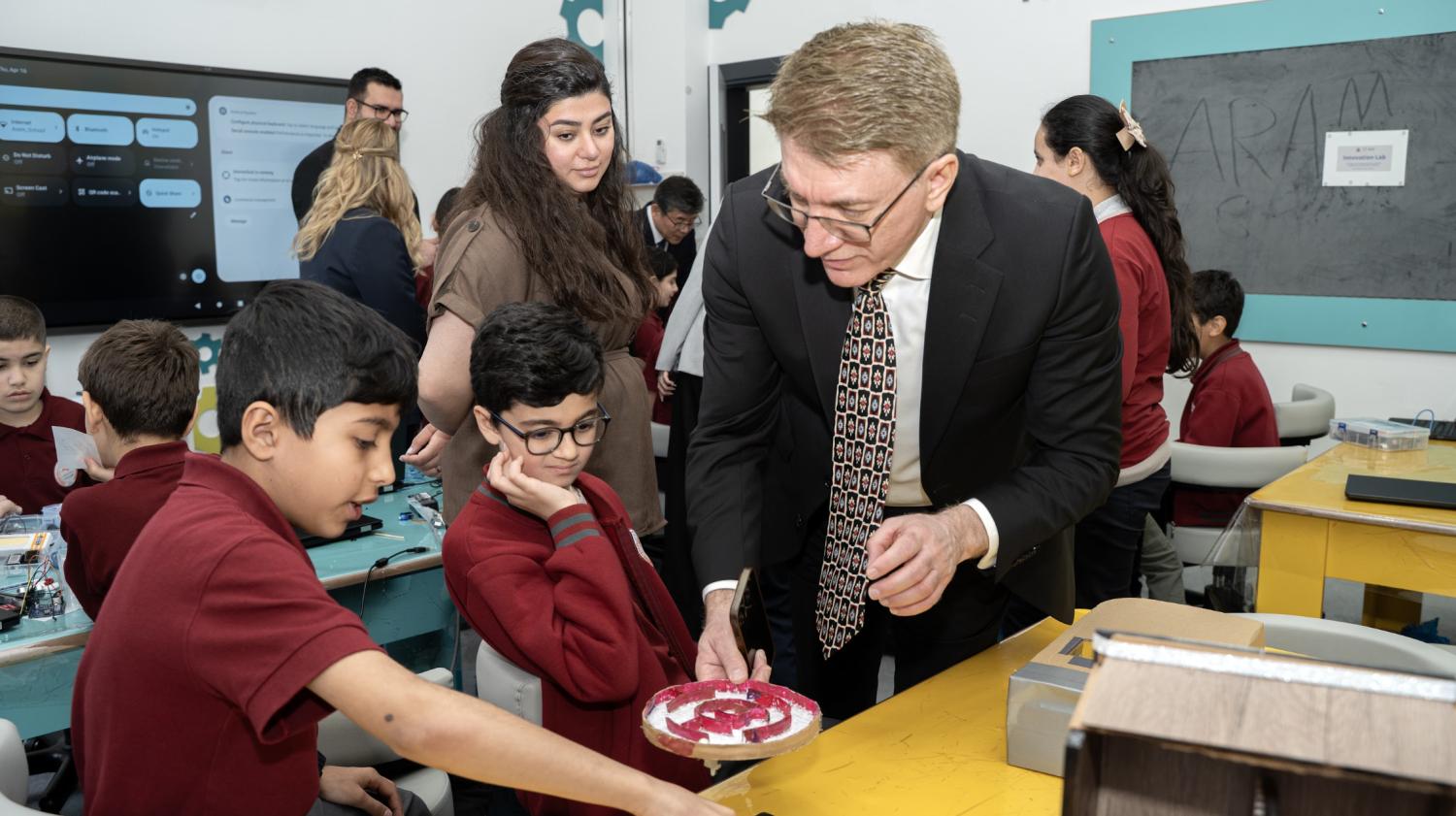
For teachers, the labs have changed the rhythm of the classroom. Sawza Mustafa, a teacher at Majidi School, found that students who were quiet during normal lessons came alive when asked to build or test something. “Some students don’t lack curiosity,” she says. “They simply need the right space to show it.” The change was not limited to when school was in session. “What impressed me most was seeing students take innovation home. They worked with their parents, built projects voluntarily, and brought them back to school.”
In a short time, students built projects ranging from a home security system to a smart clothes-drying rack. Bayan Khalid, a participating teacher from Mam School, says the lab gave students a different way to learn. “Some students understand better when they can see, touch, build, and test,” she says. “This program gave them that opportunity.”
Aya Shawkat, a participating teacher from the Aran Center for Children with Special Needs, found that her own role shifted inside the lab. “We were not only explaining the lesson. We were guiding students through questions, mistakes, teamwork, and improvement.” For Darin, a student on the autism spectrum at Aran Center, the value is straightforward: “I enjoy the Innovation Lab because I love making new things with my hands.”
Beyond the Classroom
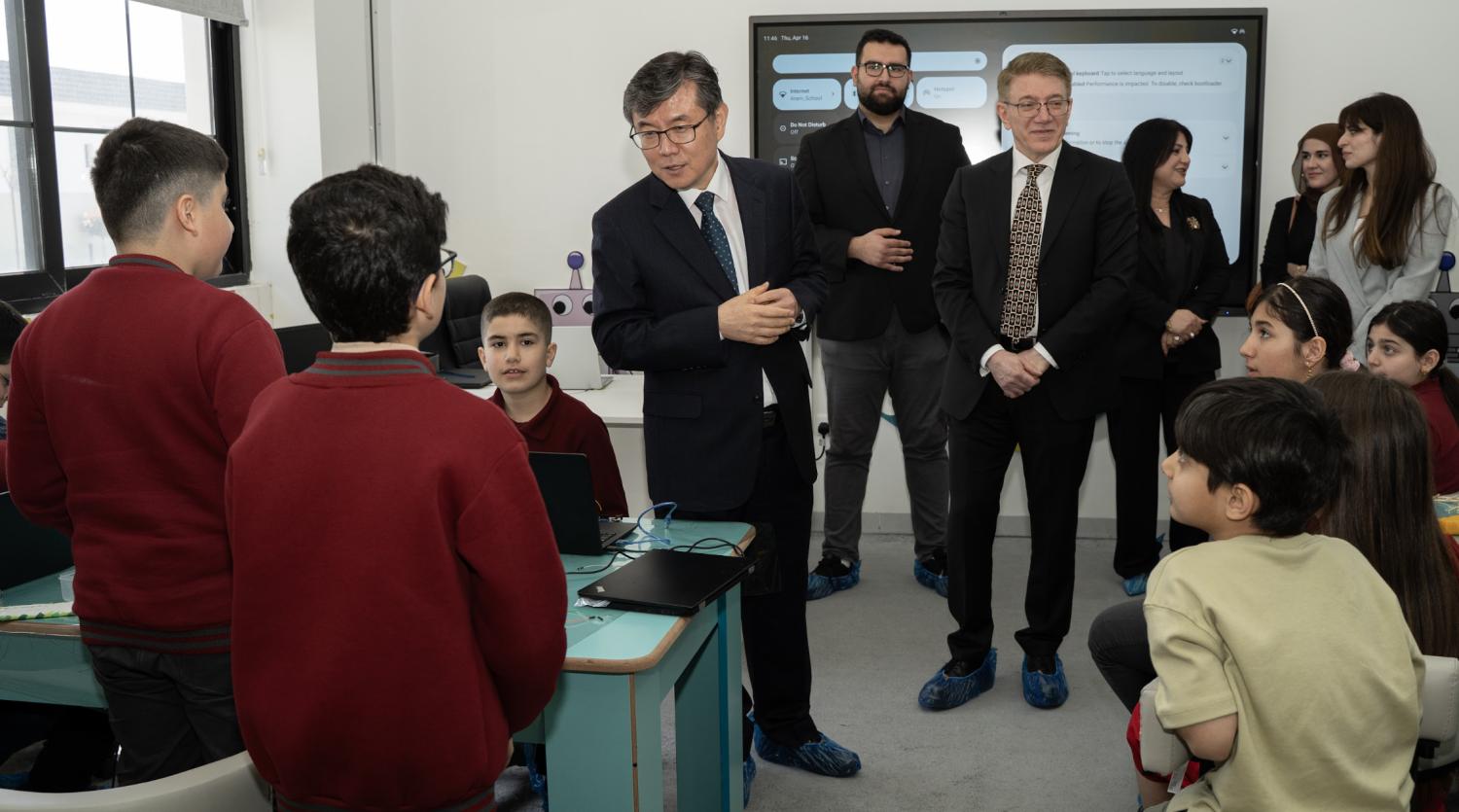
The program has also extended to families. Bafrin Yusif, mother of a student at Bnar School, noticed a clear change at home. Before the lab opened, her son spent most of his time playing soccer. Now, he is eager to make things and recently built a hydraulic jack. “He keeps talking at home about the projects they make at school,” she says. “I really hope the Innovation Lab becomes a fixed part of all schools.”
Another parent, Nihaya Muzafar, saw a similar shift after her daughter built a smart door in the lab. “Her father, brother, and I now enjoy helping her turn her ideas into working projects,” she says. “It has even helped us spend less time on social media.” She adds that the lab encourages teamwork and hopes innovation becomes an official course.
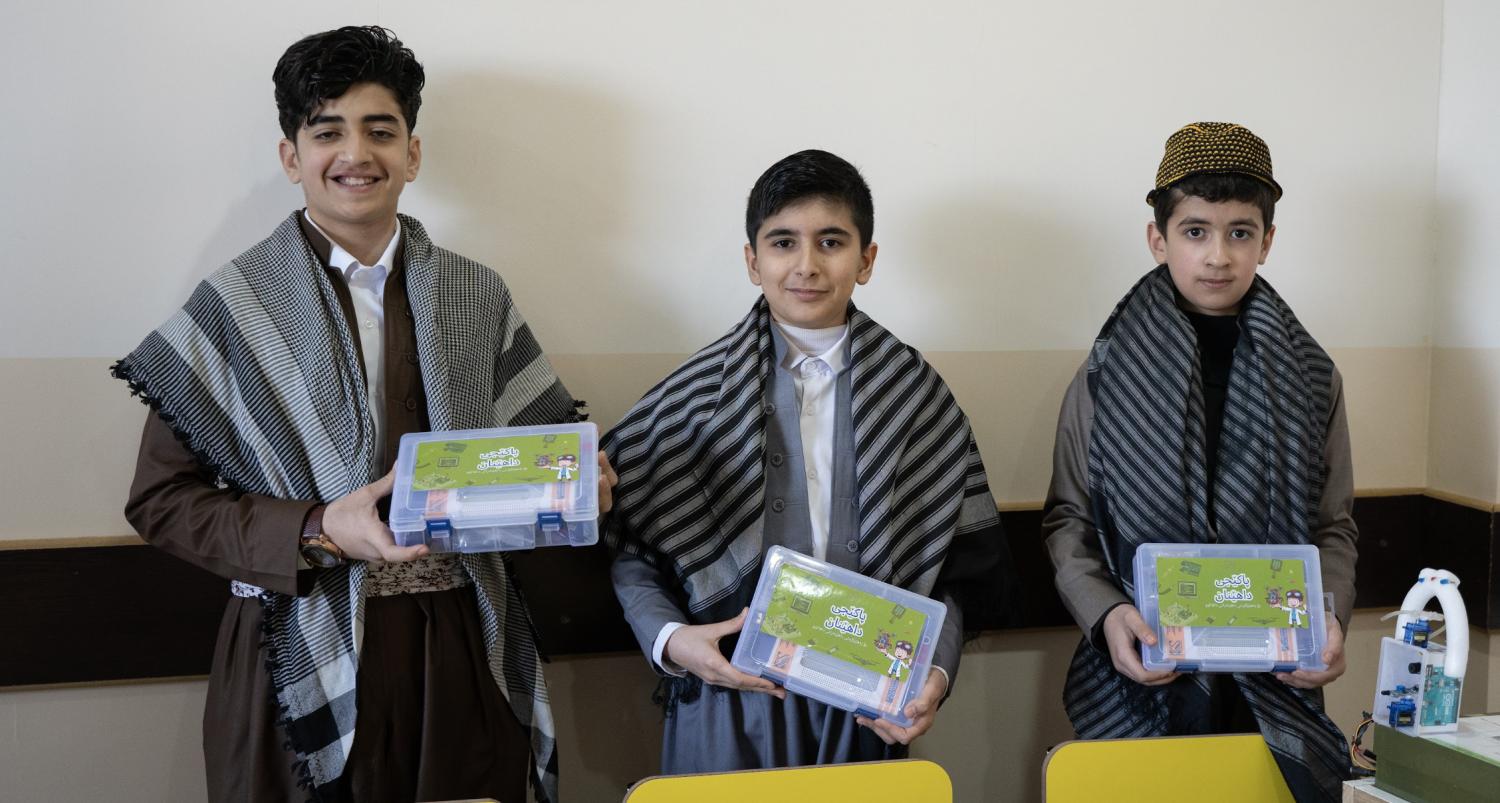
The enthusiasm has not ended with the school year. Some parents, teachers, and students have asked for the Innovation Lab to continue during the summer break. For KII, this is a strong sign that the program has become something students associate with curiosity, confidence, and creation.
Najar compares the approach to planting young trees in a large garden. “If we go to schools, we can multiply the number of innovators by a thousand in the future,” he says.
The room that once stood unused now serves a different purpose. Inside, students are not only learning about the future. They are already building it.
is a youth advocate currently serving as Communications Associate at the Kurdistan Innovation Institute.