In his forthcoming book, Ehmedê Xanî’s Mem û Zîn and Persian Literary Domination, to be published in August, philosopher and Kurdish studies scholar Dr. Michiel Leezenberg offers a fresh interpretation of one of the foundational works of classical Kurdish literature.
According to a press release from Leiden University Press, Ehmedê Xanî’s 17th-century romance Mem û Zîn has long been recognized as the national epic of the Kurds, but it has received remarkably little attention among literary scholars.
“There are numerous translations of Mem û Zîn, but their quality varies. My book is not a translation but a scholarly study; I am, however, currently preparing a Dutch translation,” Dr. Leezenberg told Kurdistan Chronicle in an interview.
“There are surprisingly few studies of Xanî’s poem, and of classical Kurdish literature more generally, in Western languages, let alone in book form. I hope international scholarly attention for this rich tradition will be encouraged by studies such as mine.”
In his book, Dr. Leezenberg describes the Persianate literary tradition as a form of “premodern literary domination.”
“The cosmopolitan sphere of classical Persian literature, or ‘the Persianate’ as it is called by scholars, is usually described in purely humanistic (i.e., literary and aesthetic) terms,” Dr. Leezenberg said.
“Although it was not sustained by any state or empire, this Persianate sphere did involve a form of domination that marginalized other languages. Xanî is well aware of this marginalization, and explicitly calls his writing in vernacular Kurdish an act of heresy (bid’et).”
The new book also seeks to break free of the conceptual and normative confines of modern Kurdish nationalism within which the epic is usually read.
“Mem û Zîn has long been treated as the product of a purely Kurdish oral and literary tradition, but it also has an obvious background in the cosmopolitan tradition of classical Persian. It contains some 2,000 Persian loan words, it frequently refers to characters from classical Persian literature, and it explicitly mentions two Persian poets, Nizami and Jami, among its antecedents,” Dr. Leezenberg said.
“Surprisingly, I have not seen any study yet that explores this Persian background in greater detail. In my book, I explore this background, and also discuss the poem’s mystical dimensions, which are often overlooked or downplayed in discussions about what kind of Kurdish identity it expresses.”
Moreover, Dr. Leezenberg discusses how Mem û Zîn circulated outside the Kurdish language from the 18th century onward via translations into various other languages, becoming a part of ‘world literature’.
Read More: Mem u Zin: A Reflection on History, Division, and Resilience
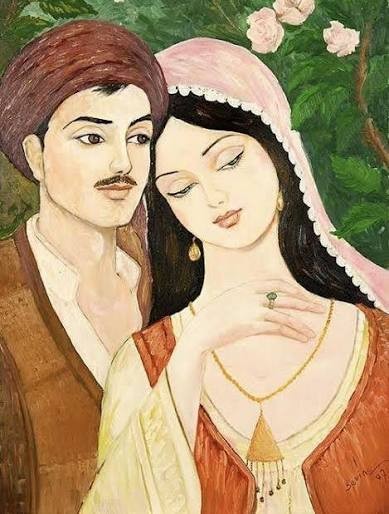
Published in 1692, Mem û Zîn is an epic poem of cultural, literary, and historical importance; it is often considered the Kurdish Romeo and Juliet, just as Xanî is sometimes considered the Kurdish Shakespeare.
Dr. Leezenberg’s book was developed on the basis of years of conversations with his Kurdish colleagues.
While he does not contest the poem’s importance as the Kurdish national epic, he hopes to draw more attention to its other aspects. “It is the Kurdish national epic, yes; but is much more than that,” Dr. Leezenberg added. “I do not expect readers to agree with all my analyses, but I look forward to continuing the conversation.”
A seasoned reporter and analyst who specializes in Kurdish affairs.