Rastak, established in Iran in 1997, reinvents Iranian folk music by blending traditional regional melodies—from Kurdish to Baluchi—with modern harmonic arrangements. The multi-instrumentalist group preserves cultural authenticity while engaging younger and international audiences, performing widely across Europe, Asia, and North America, and fostering cross-cultural collaborations.
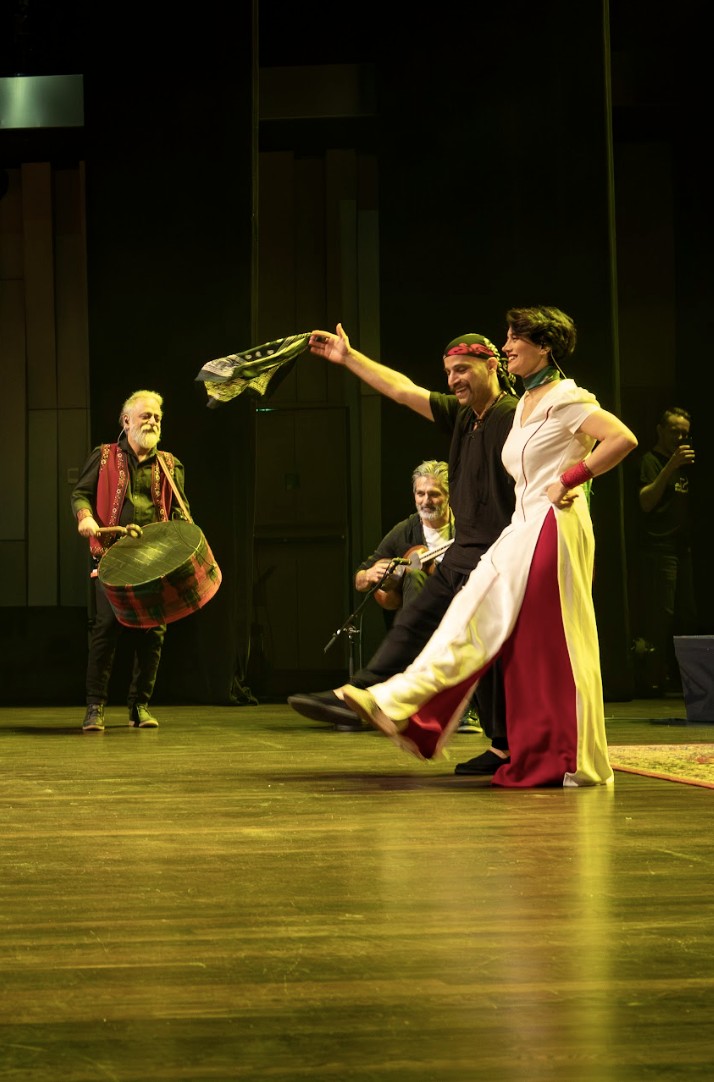
When Rastak, one of the most well-known bands in contemporary Iranian folk music, takes the stage, the air fills with the rhythms of Iran’s many regions – Kurdish daf beats, Azerbaijani melodies, and Baluchi harmonies. For nearly three decades, the group has been redefining Iranian folk music for a new generation. Formed as an experimental music group in 1997, it has regularly performed at the youth event TEDxNishtiman in Erbil.
“We started in 1997 – 28 years ago,” Behzad Pournaghi, the manager of the group, told Kurdistan Chronicle. “Our goal was to reinterpret Iranian folk music from different regions and ethnic groups. While groups like the Kamkars focus mainly on Kurdish music, we’ve been working with traditions from across Iran.
“It required a lot of research. We spent nearly ten years exploring the country’s diverse musical heritage on our own. Then, in 2007, we brought all those experiences together in our first album, Ancient Hues.
“Iranian folk music, though incredibly beautiful, can sometimes feel repetitive and doesn’t always resonate with younger listeners or international audiences,” he added. “That’s why we felt the need to reinterpret it, to create a sound that stays true to its roots while connecting with new generations and non-Iranian listeners.“We wanted to become a cultural bridge – preserving the roots while making it appealing to new listeners,” Pournaghi continued. “The challenge was how to add harmony, which doesn’t exist in Iranian folk music in the same way it does in Western classical music, because of the microtones in Iranian folk and classical traditions.“In our arrangements, we preserve the melodies and lyrics of the folk songs, but we make them more engaging by adding harmonic layers. It represents our desire to stay rooted in tradition while growing in new directions.”
Roots from across Iran
In Farsi, rastak refers to a seedling that grows at the bottom of a tree. Sometimes it grows taller and stronger than the main tree itself, representing the renewing nature of life. “We, the music group Rastak, like the natural process of rastak, have borrowed the background of our music from the roots of our history and culture. We have been using ethnic-based themes with our specific arrangement to connect with a global audience for years,” Pournaghi said.
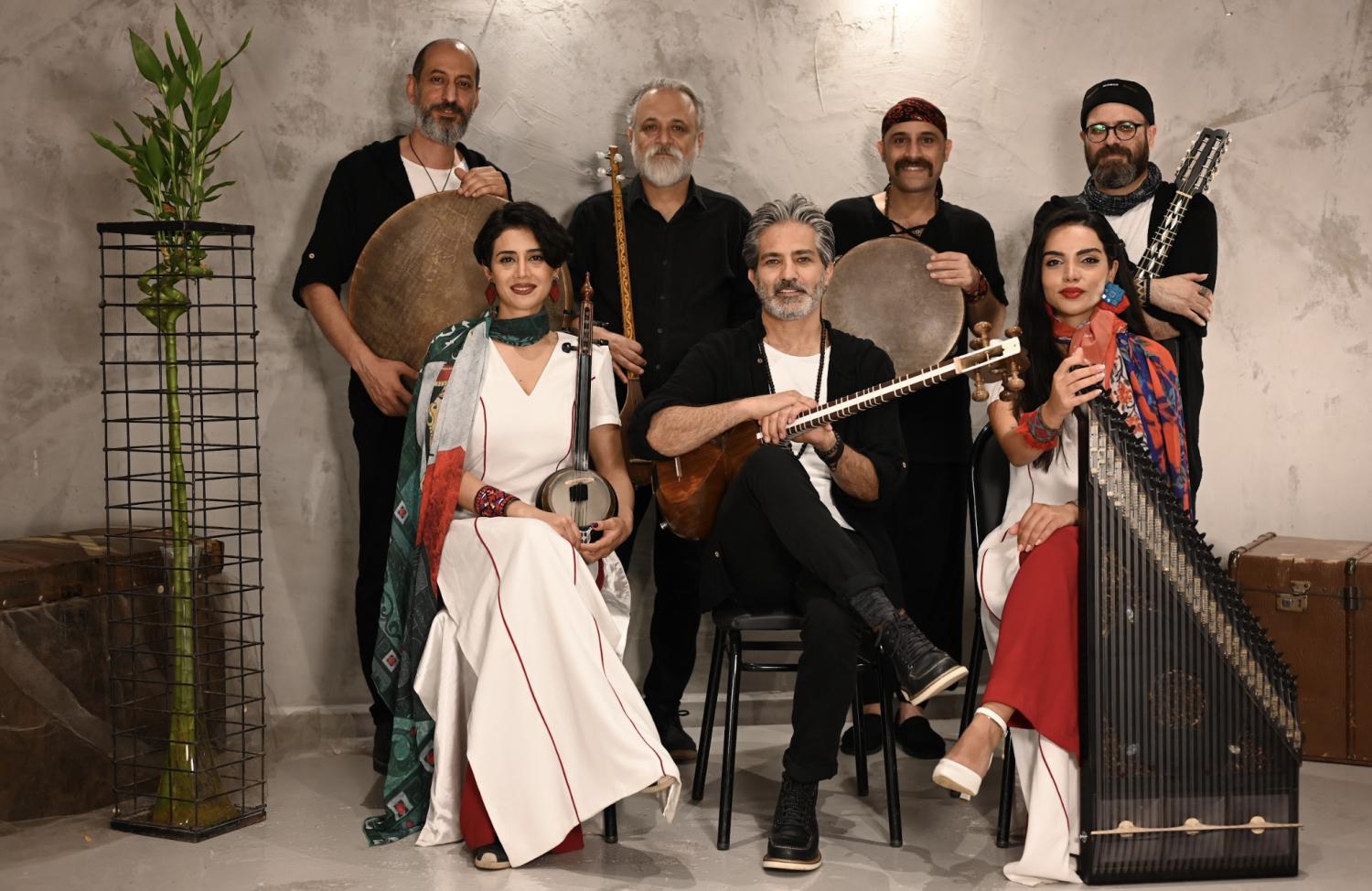
Rastak’s members have roots in different regions of Iran. Though some were born in Tehran, their repertoire spans music from across the country, with songs remarkably close to their original forms. “Farzad and I, for example, are from Kurdistan, but when we sing Azerbaijani or Baluchi songs, audiences are often surprised to learn that we are not from those regions.”
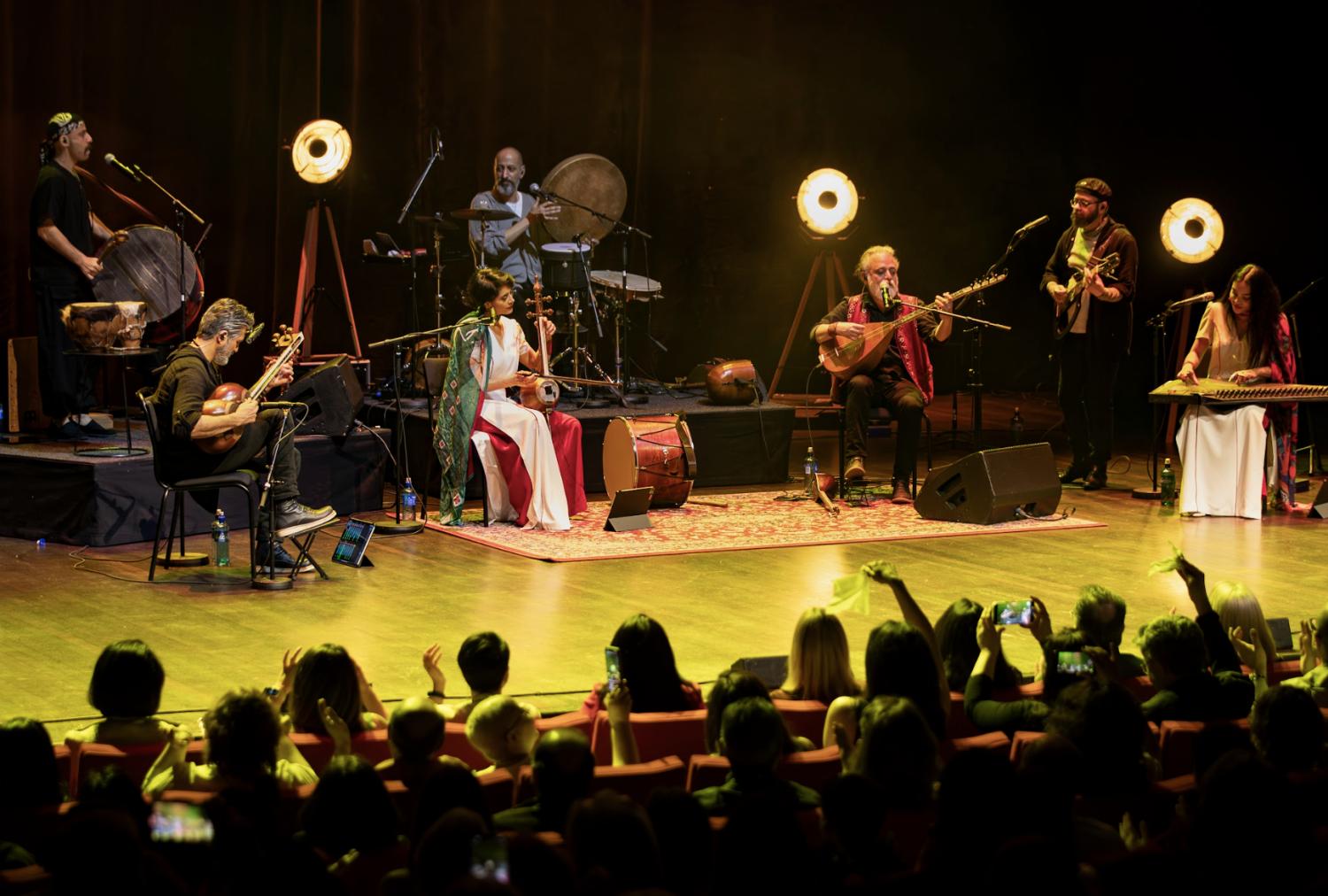
He added that this authenticity comes from the band’s dedication to studying different dialects and verifying details with native musicians.Most of the band members are multi-instrumentalists, mastering traditional instruments such as the tanbur, divan, setar, komuz, oud, tar, kamancheh, qanun, and daf, while also incorporating modern techniques.
The band’s creative process is collective. “We hold workshops to explore melodies and ideas together,” Pournaghi noted. “The art direction and arrangements are led by Siamak, but the song selection and development are collaborative decisions.”
Kurdistan feels like home
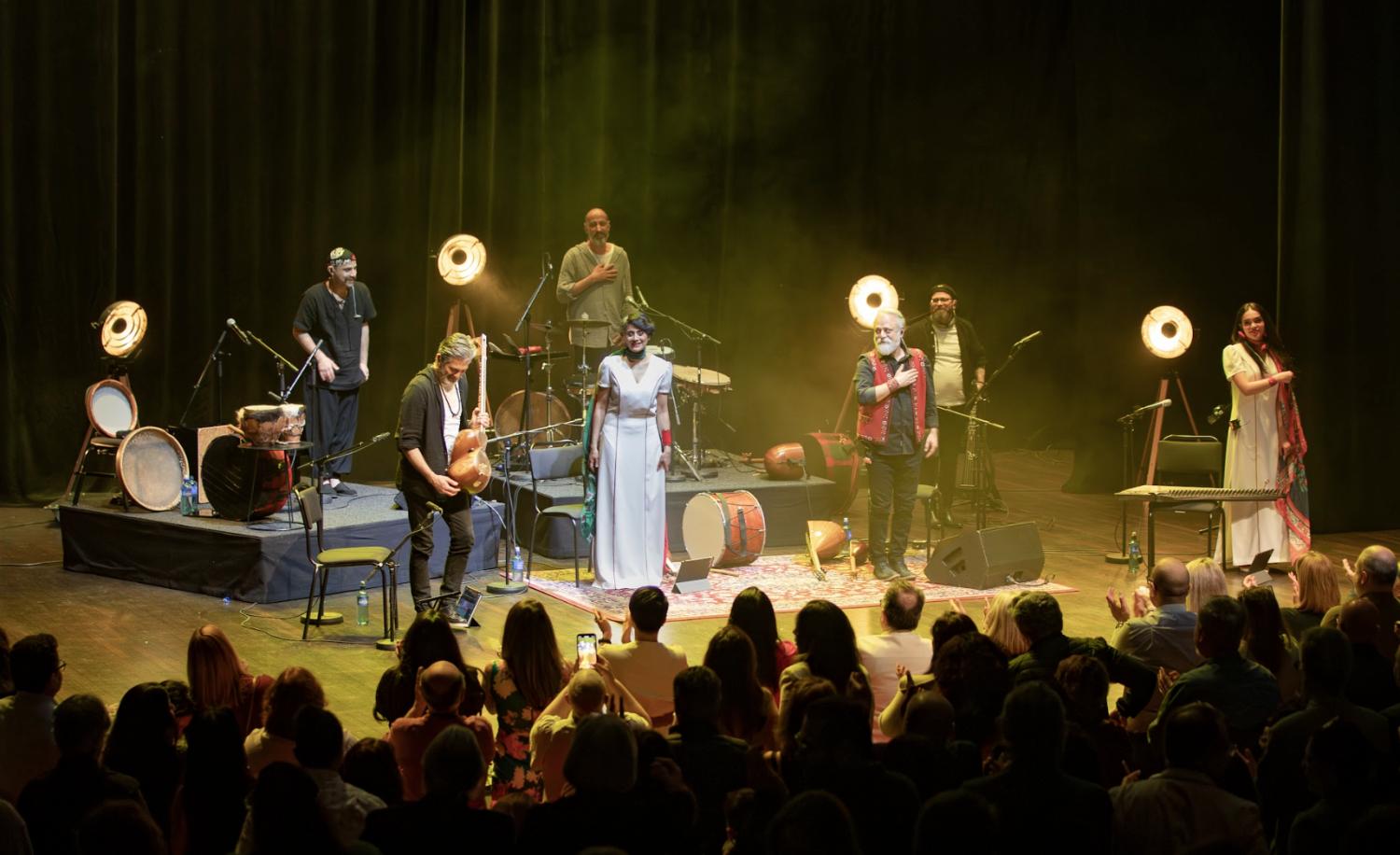
Rastak has performed in Kurdistan several times. “We’ve played in Erbil three or four times – once at TEDx, and several times in Sulaymaniyah. Whenever we come here, it feels like home,” Pournaghi said.
The group has a large Kurdish fan base, and many Kurds even think it is a Kurdish band, although its members come from different parts of Iran. “At our concerts in Europe, we often find that our biggest audiences after Iranians are Kurds, and they’re the most energetic,” he said. “Even in Turkey, many of our fans are Kurdish. Our music seems to resonate with them deeply.”Rastak was previously based in Iran but is now based in Turkey.
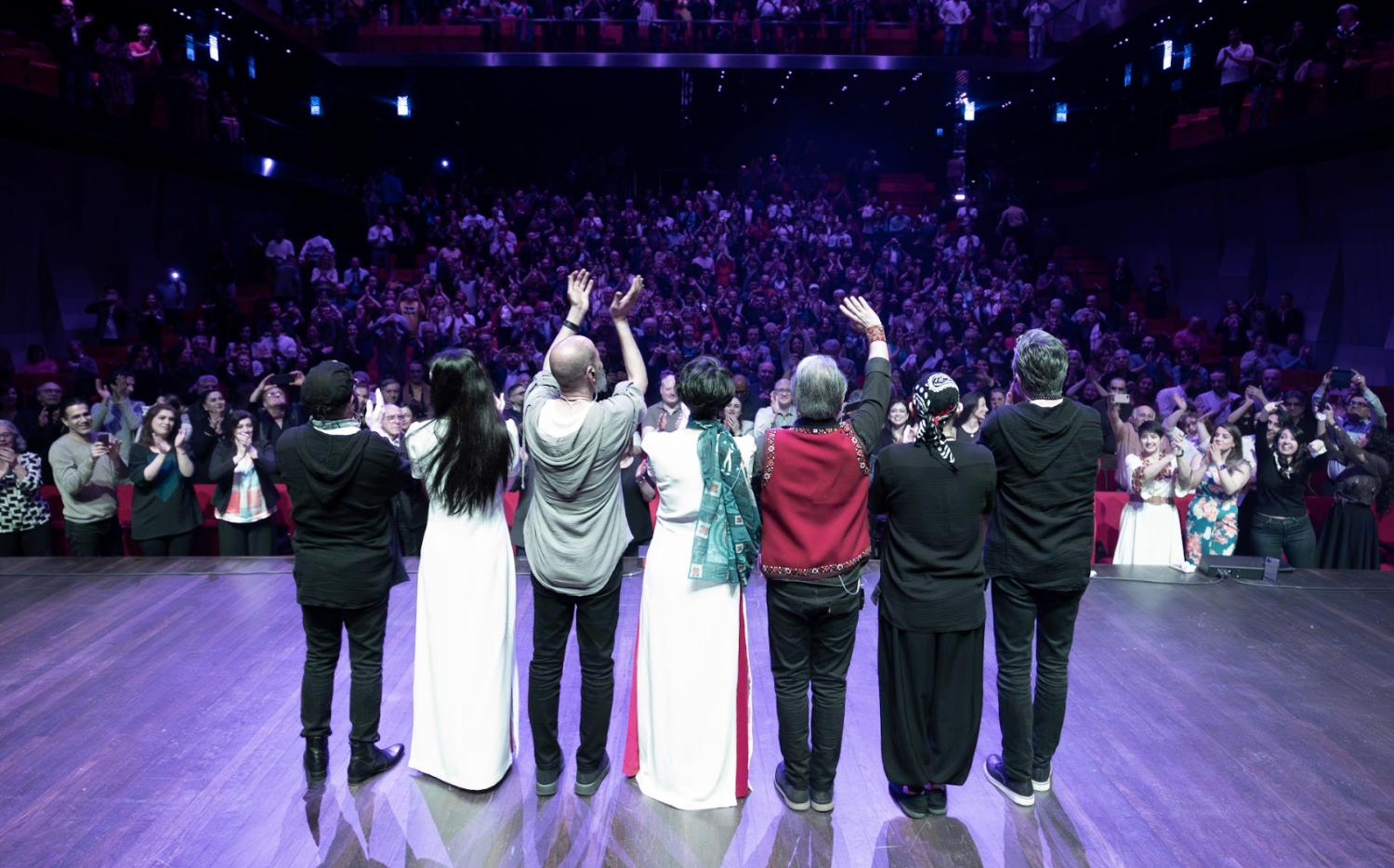
Growing international image
In recent years, the group has toured widely, performing in Europe, the United States, Canada, Australia, New Zealand, China, Japan, Kazakhstan, and Malaysia.“We even performed on Chinese TV in 2023,” Pournaghi recalled. “At first, we thought that the invitation email was a scam – it just sounded too unreal! But after a few messages, we realized it was true. The program was about the Silk Road, and they were inviting one craft artist and one performing group – music, dance, or theater – from every country along the route. We were chosen to represent Iran, which was an amazing experience. They even asked us to create a collaboration with a Chinese singer.”Another memorable moment was performing at the Weengushk International Film Festival in northern Ontario, Canada, an indigenous-run festival. “It was eye-opening to discover how Indigenous tribes in North America preserve their cultures and languages – something we relate to deeply.”
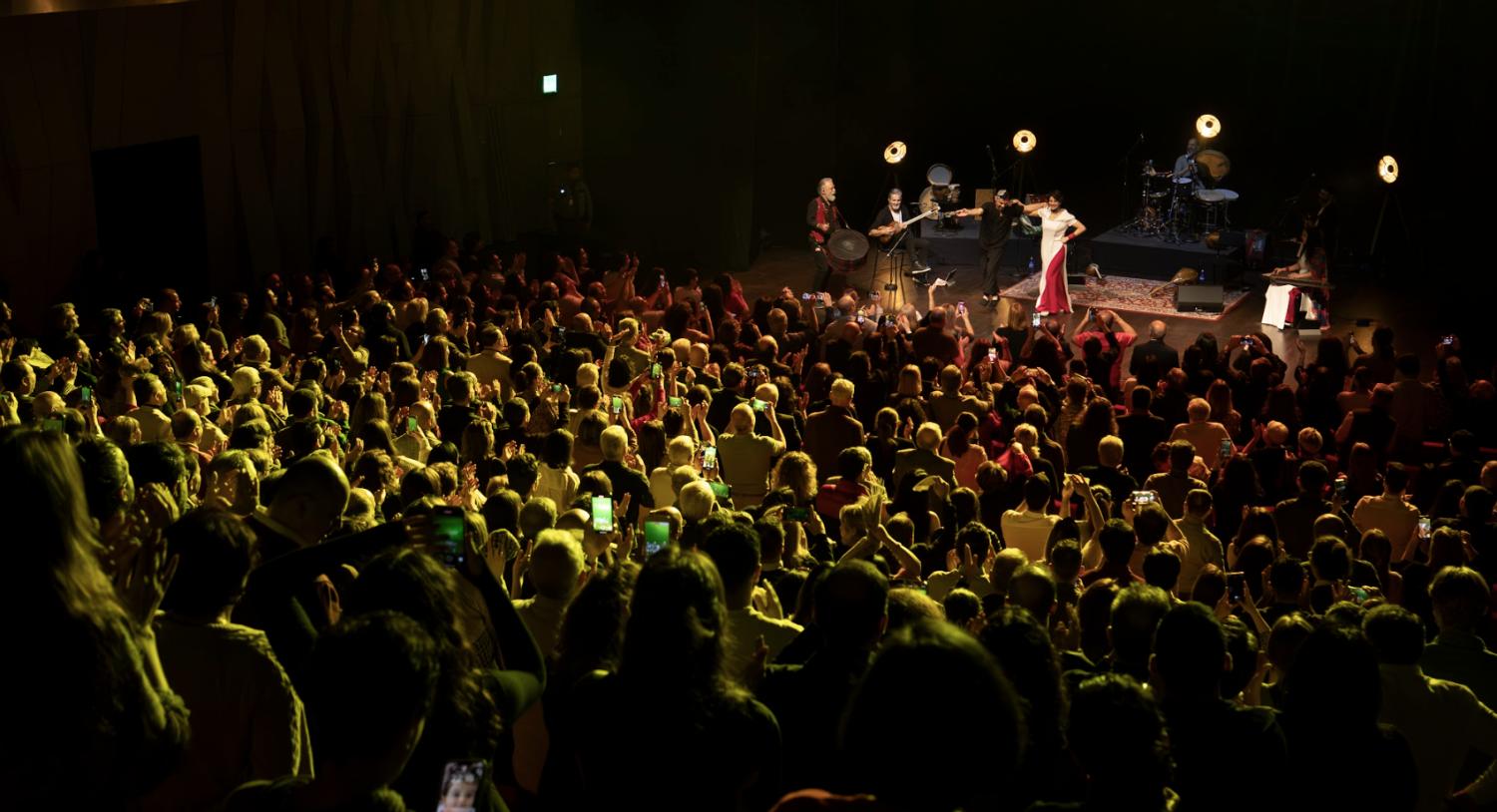
Rastak’s appeal has also reached unexpected corners. “A Japanese dancer once sent us videos of her dancing to our songs on YouTube,” Pournaghi said. “She told us she loves Middle Eastern folk culture.”
Recently, the group has been working on a new project with French musicians, a fusion of Iranian and French folk music. “During our research, we discovered how many surprising similarities there are between the two – in melodies, instruments, and even how the music is used in local traditions,” he said. “The connections are truly unexpected and fascinating.“It’s part of our broader ‘borderless’ initiative,” he added, “where we collaborate with musicians from neighboring countries such as Turkey, Armenia, Afghanistan, and Iraq. The goal is to explore shared cultural roots and create something new together.
“We’ve even mixed Iranian and Turkish sounds in the past – not folk, but 1970s-style pop. We’re always trying to connect cultures through music.”
A seasoned reporter and analyst who specializes in Kurdish affairs.