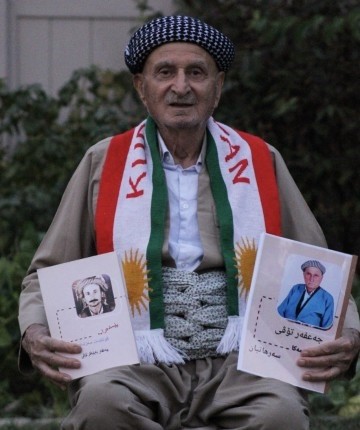
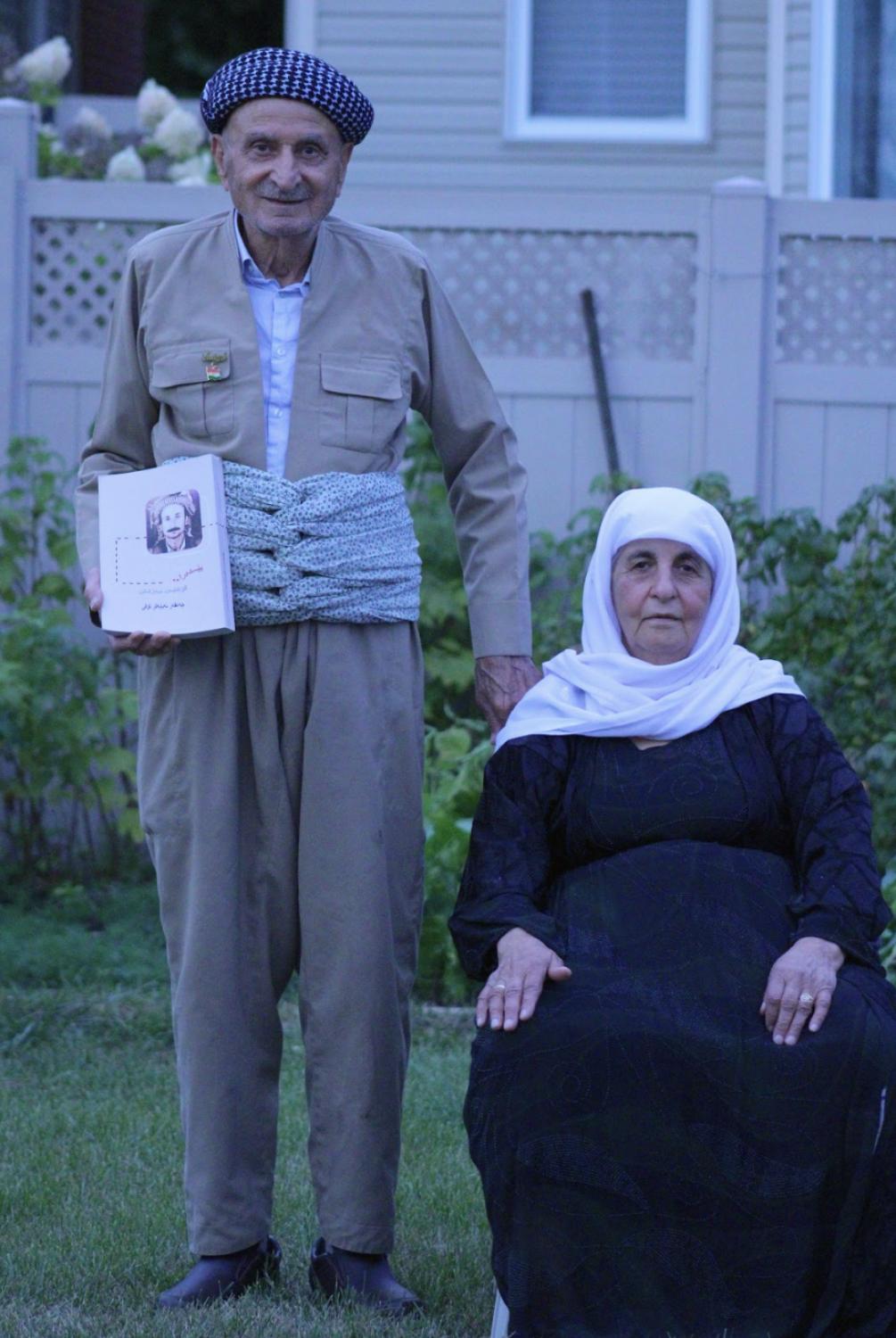
In a quiet Ottawa living room, the same hands that once steadied a rifle now turn the pages of a children’s book. For Jafar Abdullah Tuve – former Kurdish Peshmerga fighter, political prisoner, and refugee – the battle has not ended. It has changed shape: from defending land to defending language, memory, and pride.
Tuve was born in 1949 in a small farming village in the Kurdistan Region. His formal education was cut short after just three years when Duhok’s only school closed due to conflict. When the First Iraqi-Kurdish War erupted in 1962, a 13-year-old Tuve saw only one path forward.
“Being Peshmerga was not just carrying a weapon,” he says of the Kurdish fighters, whose name is often translated as “those who face death.”
“It was a choice. You were fighting for the survival of our language, our culture, our very existence. The government in Baghdad wanted to erase us. We had to stand and face the wind.”
He learned every bend and escarpment of the Duhok range and became a natural guide for Kurdish Democratic Party units, organizing movements like an unofficial officer. The price was steep. In April 1974, during an ambush on Zawa mountain, he was shot in both legs while defending his sleeping comrades. He crawled to safety through gunfire.
Prison and exile
Although the revolution ended the next year, the danger did not. Tuve helped reorganize local Peshmerga groups and, in 1980, paid for it by being arrested and serving a seven-year sentence in the notorious Abu Ghraib Prison. After three harrowing years, he was released in a political prisoner exchange.
“Prison was not a place for the living,” he says quietly. “They starved and tortured us. They would pull our fingernails out. Seven of my closest friends never walked out of that place.”
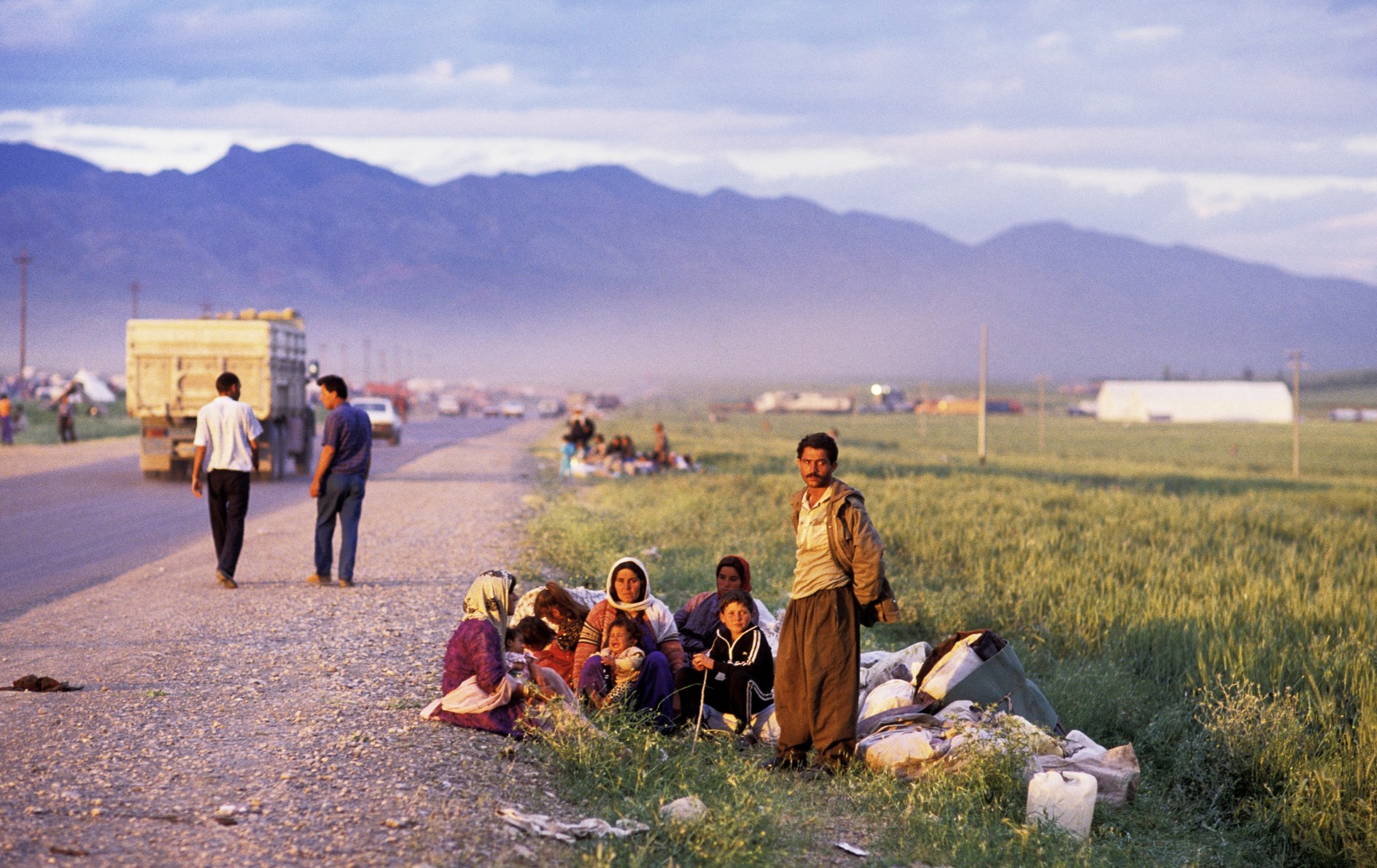
In March 1988, when Saddam Hussein’s regime gassed the Kurdish city of Halabja, Tuve believed his village could be next. He fled with his wife Fehima and their twelve children over the mountains to Turkey. They waited in camps for years; Tuve again stepped into a leadership role, organizing ration lines and settling disputes.
Then chance intervened. His teenage son added their names to a resettlement list, and in 1994 the family landed in Canada with little more than their documents and each other.
The new front line in Canada
Ottawa soon filled with newly arrived Kurds who needed housing, jobs, and translation services. The man who once mapped mountain passes now mapped bureaucratic ones, helping families secure apartments, navigate schools, and establish a foothold. He became a foundational member of the Ottawa Kurdish community.
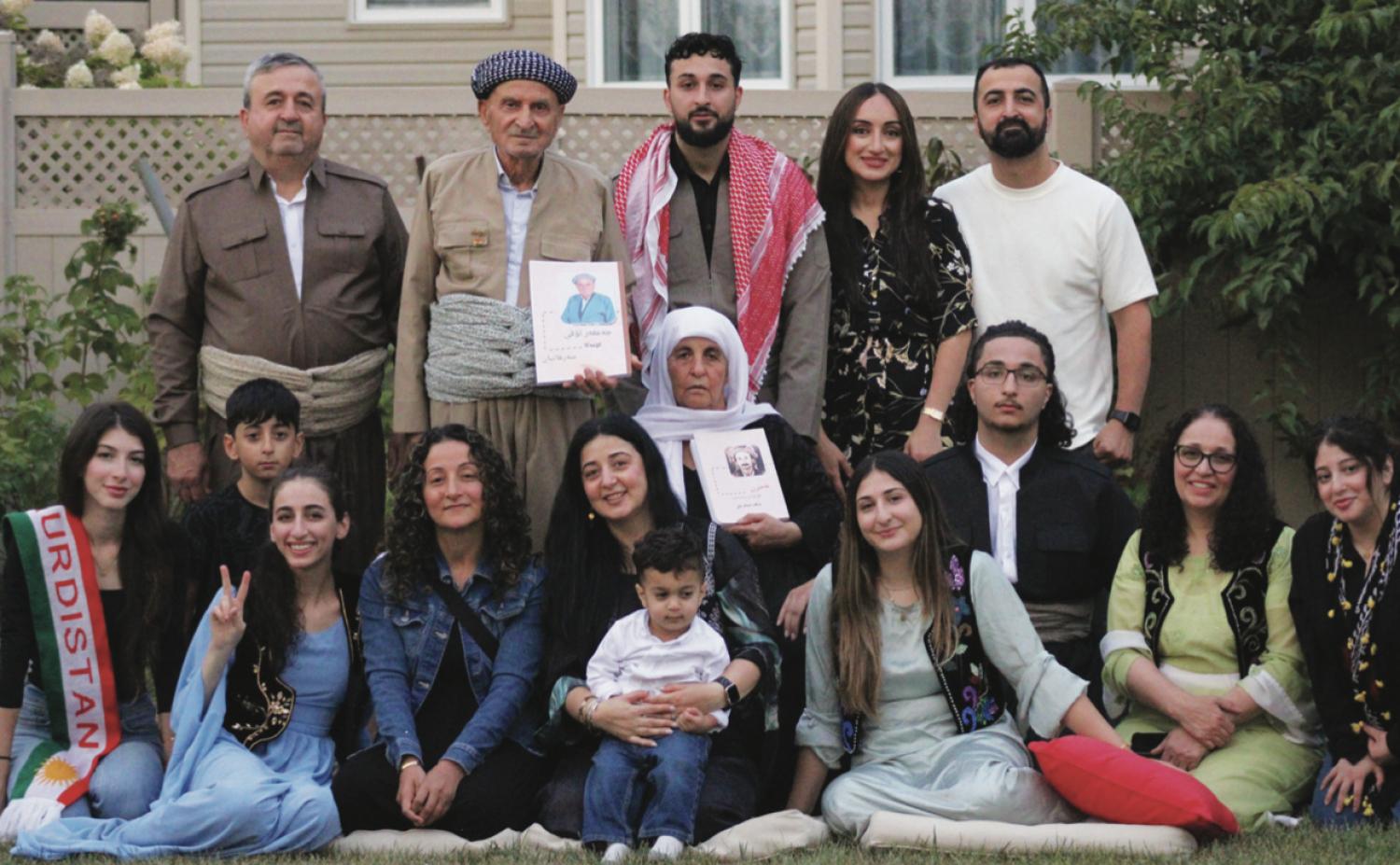
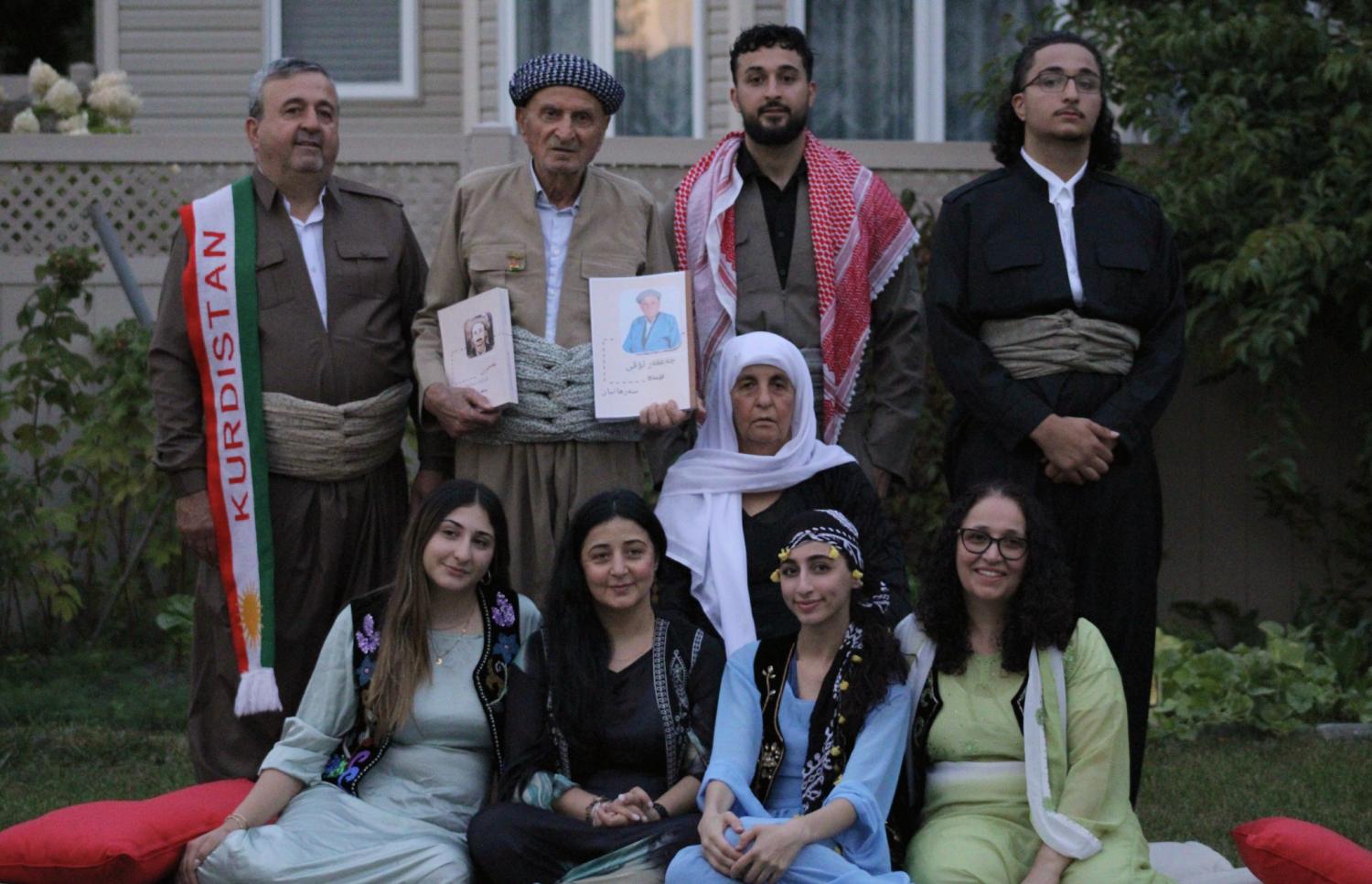
“My father’s long, rich history as a Peshmerga defined him,” says his son Hariwan Jafar. “He devoted his life to the cause, and everything about him still exudes Kurdishness. Knowing that, we wanted to build on it. As his kids, it shaped us – we started the Kurdish Youth Association at the universities of Ottawa and Carleton. Our Kurdishness is a point of pride wherever we go.”
Tuve’s own summary is sparse: “The fight has never stopped,” he says. “It has only changed shape. Before, we used guns to protect our land. Now we must use words, books, and stories to protect our heritage for our grandchildren. This is our new front line, here in Canada.”
Books as refuge
During his time in Canada, Tuve has turned his attention to language. He has written three books: a collection of Kurdish expressions, a book of children’s riddles, and a volume of folktales. A fourth is underway, a book that encourages speakers to replace assimilated loanwords with original Kurdish vocabulary. For Tuve, culture is not an abstraction, but a daily practice – he co-organizes aid drives, mentors young people, and urges them to wear traditional Kurdish clothes at community events.
That emphasis on the everyday – on food, fabric, and speech – has shaped the generations born far from the mountains their grandfather once climbed.
“My grandfather makes it a point to speak Kurdish to the family,” says Nujen Jafar, Tuve’s granddaughter. “Even the clothes he wears and the food we eat are unspoken ways he’s taught us to take pride in being Kurdish. When you’re around him, you can feel the culture running through his veins. As a family, we tend the flame of that pride he lit and reignite it with each generation.”
What matters most
Community leaders across Ottawa now turn to Tuve for counsel, and the Conservative Party of Canada has honored him for service to the community. He appreciates the certificate but measures impact differently. The true reward, he says, is hearing his grandchildren speak Badini – the northern Kurdish dialect of his village – and seeing them carry forward names, stories, and songs that once seemed destined to be silenced.
Nevertheless, he retains old scars. They’re visible if you know where to look: the stiff gait on winter days, the calluses formed by tools, not rifles; the instinct to scan a room before sitting down. But the most striking thing about him is gentler – the patience with which he coaxes a child through a riddle from his book, waiting for the answer, laughing when it arrives.
The mountains are far now, but the front line he describes is close: a kitchen table, a community hall, a bookshelf in a small Ottawa home. There, the man who once faced death fights for memory. And there, a language survives.
an undergraduate student at the university of Ottawa in the bachelors of International development and globalization.