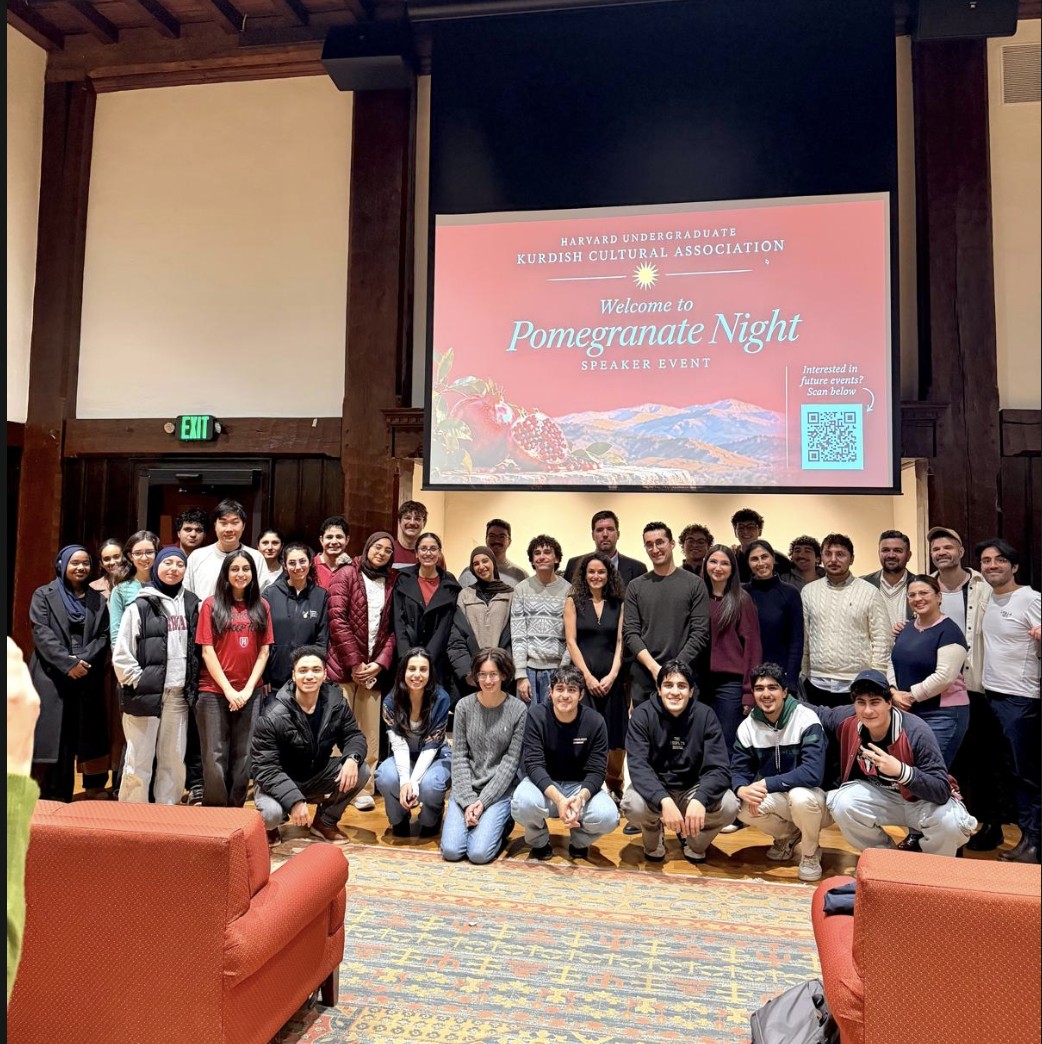
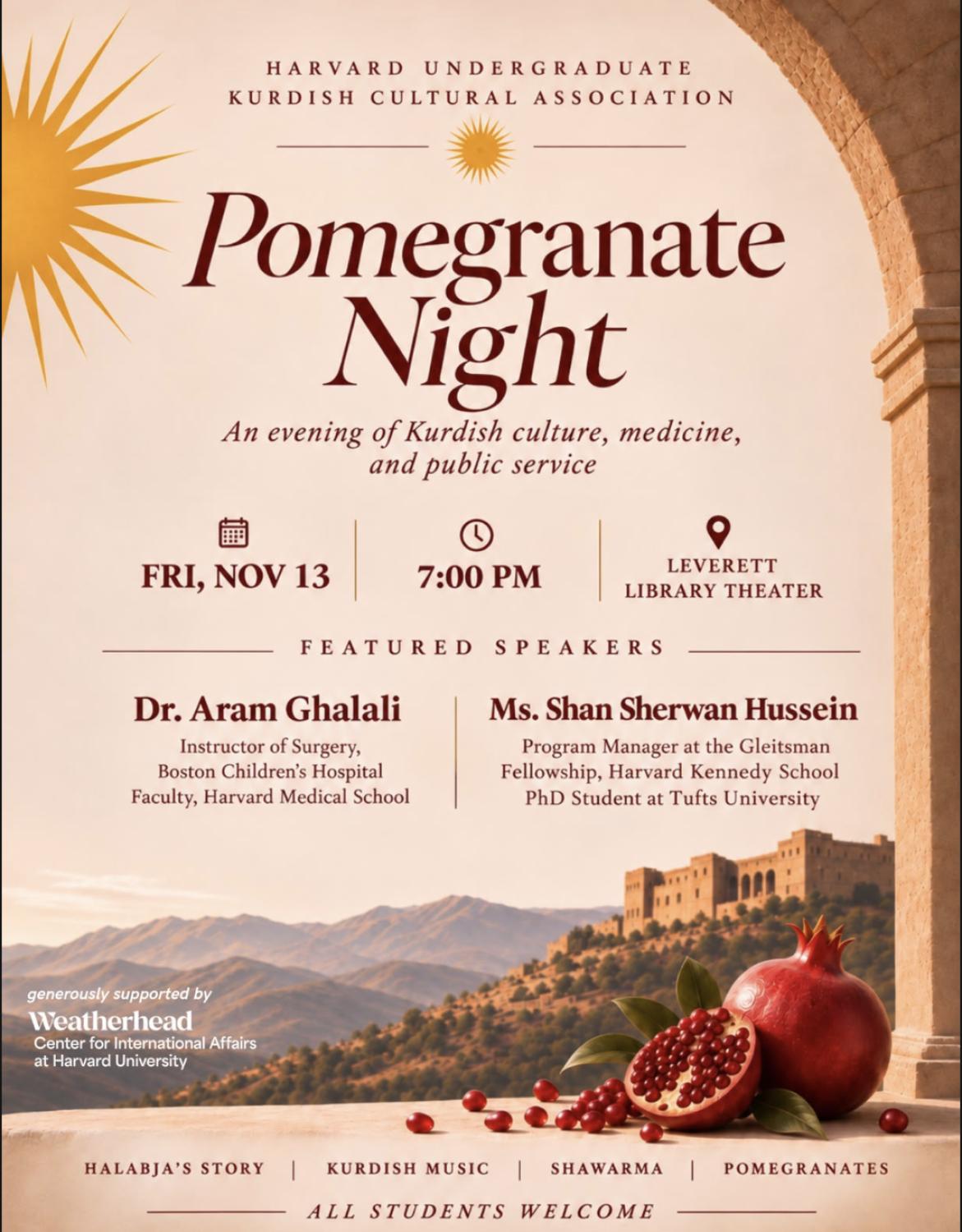
On Friday, the Harvard Undergraduate Kurdish Cultural Association held Pomegranate Night, bringing together approximately 50 students and faculty members for an evening of Kurdish culture, history, medicine, and public service.
The event drew inspiration from Halabja’s annual Pomegranate Festival, which celebrates the agricultural heritage and traditions of the Kurdistan Region. Yet the city’s name also carries the sobering weight of the 1988 chemical attack by the Iraqi Ba’ath regime, in which thousands of Kurdish civilians were killed and many more injured.
Maryam Al Qaderi, president of the association, told Kurdistan Chronicle that the event was intended to help the Harvard community discover “the history, beauty, and resilience of Kurdistan” through a story of deep significance to the Kurdish people.
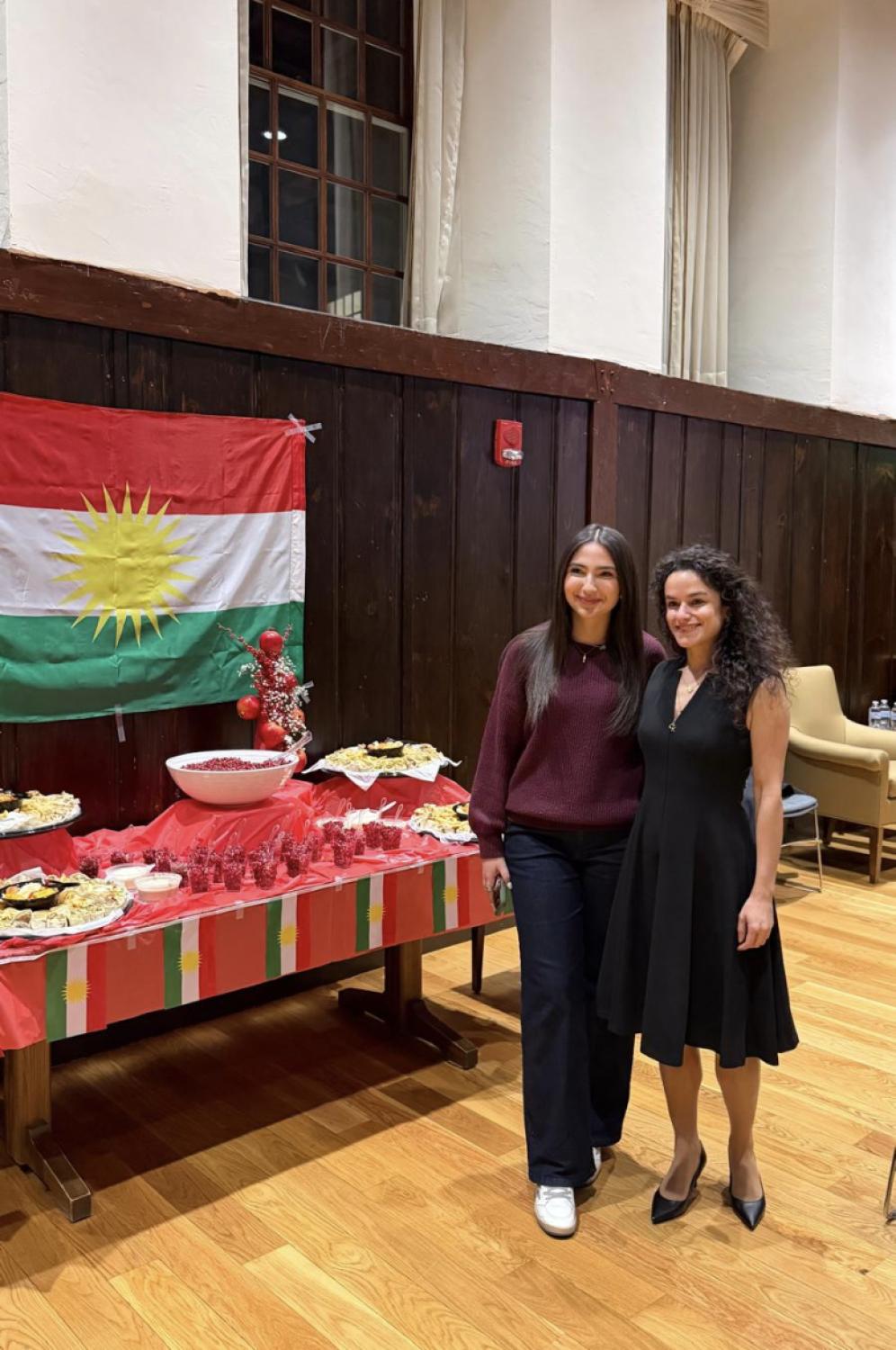
“Pomegranate Night was about creating a space for cultural exchange, education, and meaningful conversation,” she said.
The event welcomed Kurdish students to celebrate their identity and gave attendees from all backgrounds an opportunity to learn about Kurdistan.
Al Qaderi highlighted that sharing Kurdish culture has long been important to her. Born in Erbil and later moving to the United States, she described her Kurdish roots as “an essential part” of who she is. To her, leading the association is both an honor and a responsibility “to create opportunities for our stories to be heard, our history to be understood, and our culture to be celebrated.”
The story of Halabja gave the event an added purpose. The Harvard Undergraduate Kurdish Cultural Association invited two keynote speakers to shed light on the event. The first speaker, Shan Sherwan Hussein, program manager at the Gleitsman Fellowship at Harvard Kennedy School and a PhD student at Tufts University, gave a brief history of the 1988 chemical attack and the broader Anfal campaign carried out by the Iraqi Ba’ath regime across the Kurdistan Region.
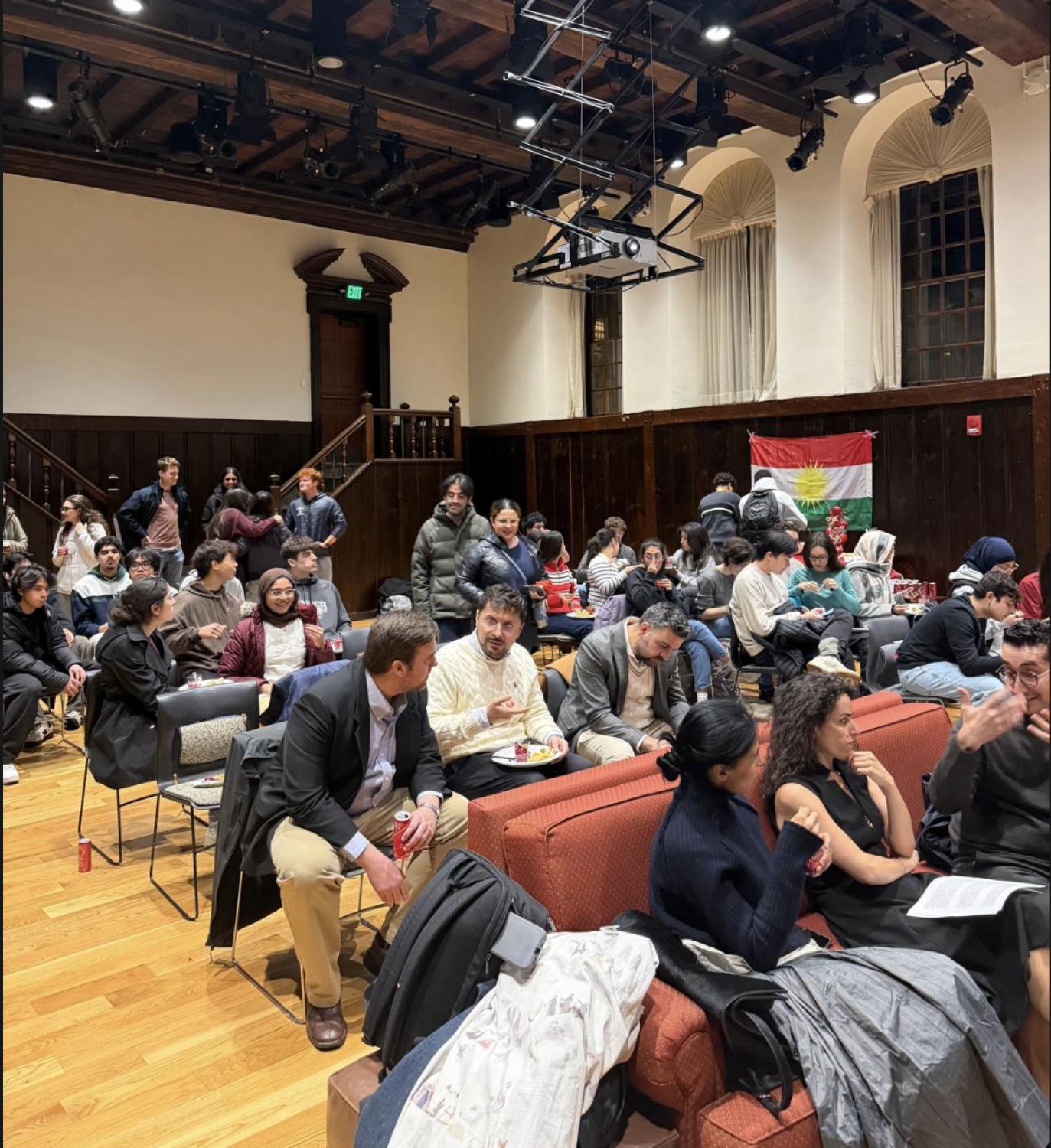
Hussein told Kurdistan Chronicle that the event aimed to raise awareness about Kurdish people — their “existence, experiences, struggles, and triumphs.” The pomegranate, a fruit closely associated with Halabja and its annual festival, offered a way to introduce the city’s culture and history.
“We wanted to raise awareness not only from the angle of victimhood, but also from the angle of revival,” she said.
Hussein also spoke about her mother, Rukhosh Ali, who collected testimonies from more than 50 survivors of the attack for her book, Between Poison and Hope: For the Memory of Halabja. Survivors described the attack, their dangerous journeys to safety, and their eventual return to rebuild the city.
Hussein then turned the floor over to Dr. Aram Ghalali, an instructor in surgery at Harvard Medical School, who presented his pioneering research on the enduring toll of chemical weapons on Halabja’s survivors and environment.
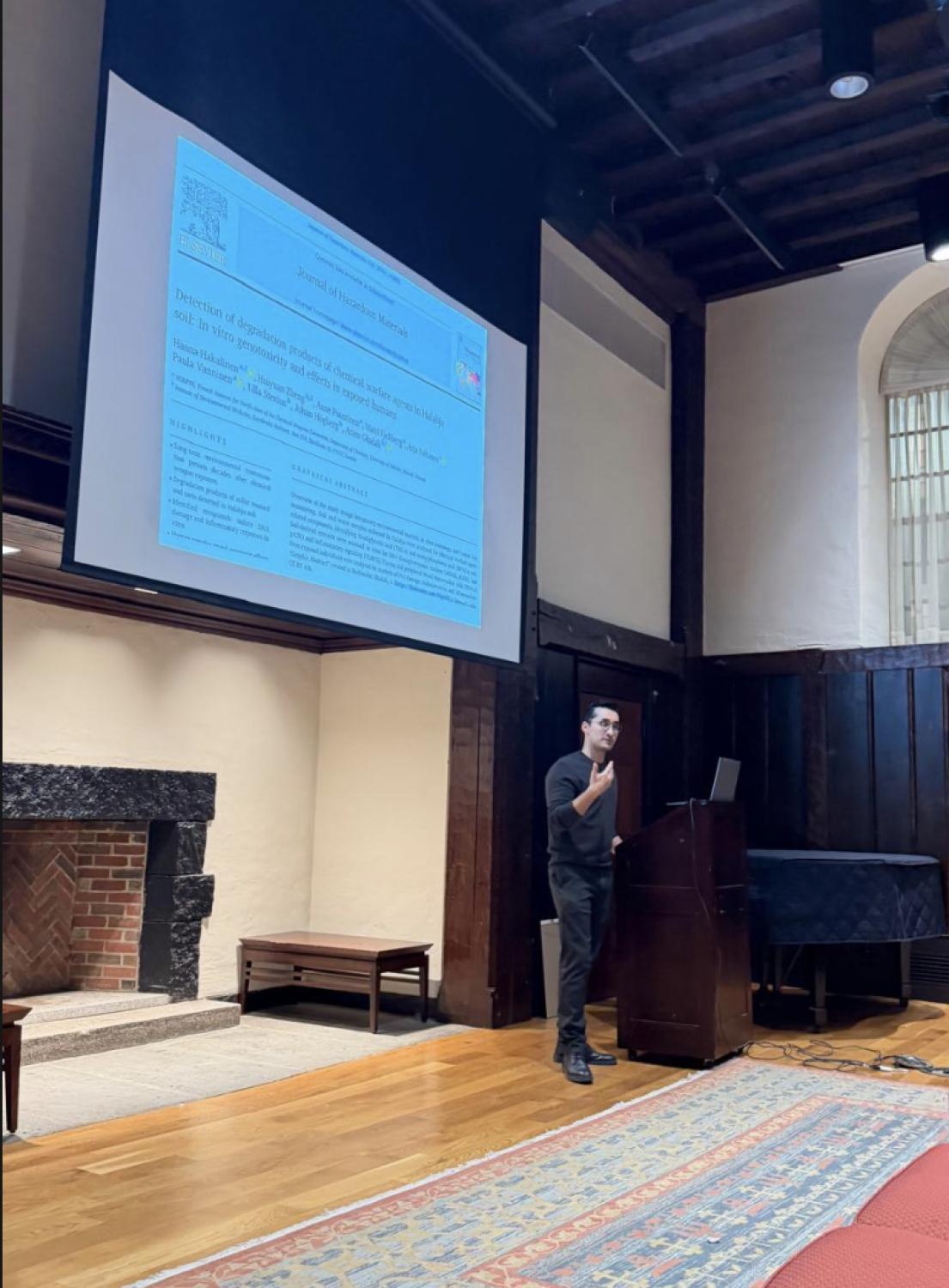
A study led by Ghalali, titled “Detection of degradation products of chemical warfare agents in Halabja soil: In vitro genotoxicity and effects in exposed humans,” was published in the Journal of Hazardous Materials in October 2026. With the research, Ghalali aimed to put the Halabja massacre on the scientific map. The study is, “to our knowledge, the first worldwide to combine environmental chemical analysis with biological assessment of chemical warfare agent residues nearly four decades after their use,” he said.
Beyond its scientific significance, the research provides vital evidence to help document the genocide and preserve its history.
“For students and future generations, this evidence is essential to preserving historical truth, understanding the long-term consequences of chemical warfare, and ensuring that such atrocities are never forgotten or repeated,” Ghalali told Kurdistan Chronicle.
Elaborating on the environmental toll, he noted that toxic remnants remain detectable in the region nearly four decades later. “Our findings indicate that there are still remnants of these substances present in Halabja, and we have observed the types of damage they induce,” Ghalali added. “We began by conducting cell culture studies in the lab and confirmed those harmful effects in exposed individuals from the local community.”
The evening concluded with informal conversation and networking. Several attendees with a different backgrounds admitted that they had never heard of the attack on Halabja. One attendee from Kuwait, a country that borders Iraq, said they had never been told what Saddam Hussein’s regime did to the Kurds.
A Kurdish-American journalist overseeing the US Desk at Kurdistan Chronicle.