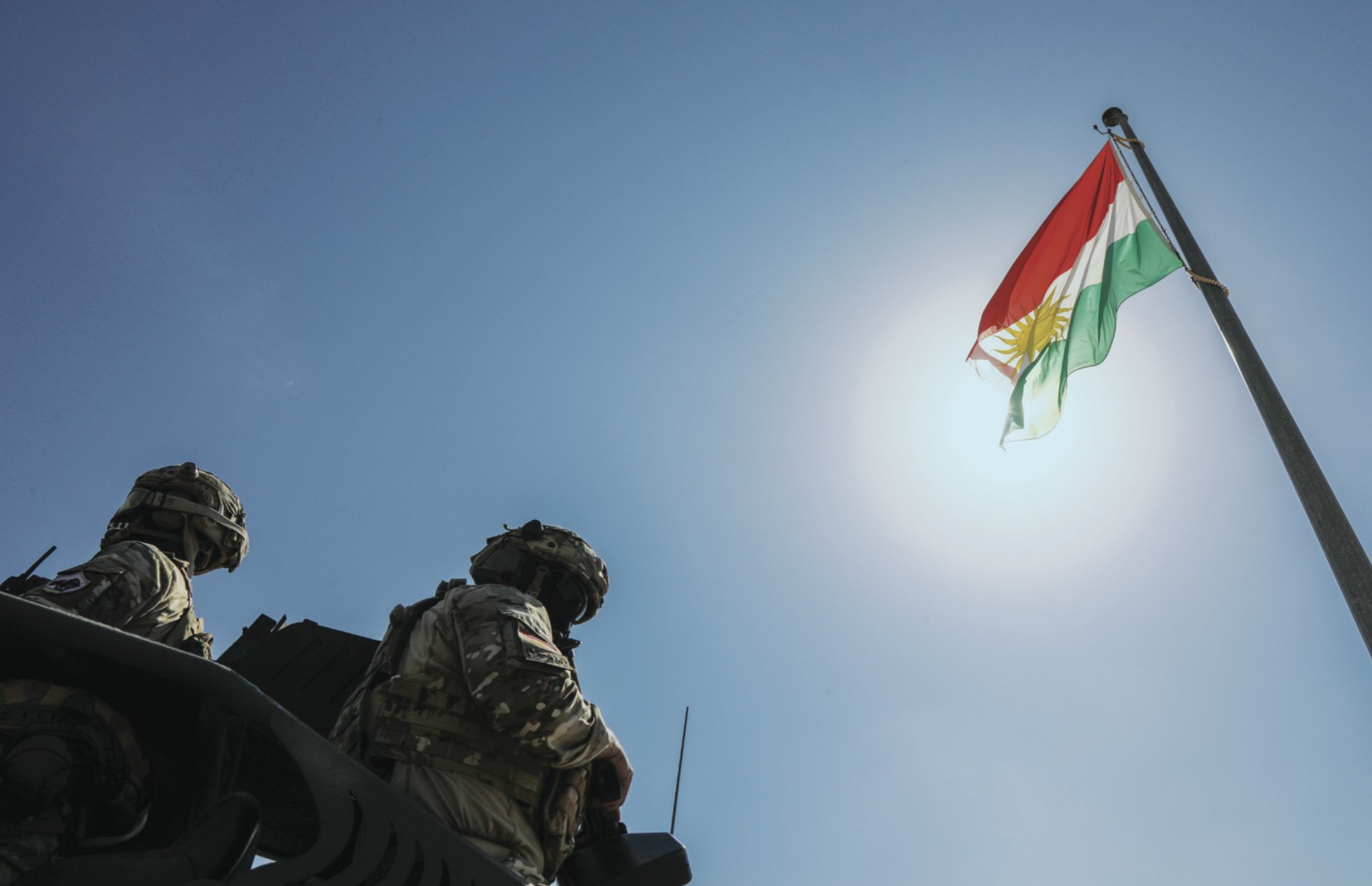
The Peshmerga have long represented the Kurdish struggle; now, they are the unified defense force of the Kurdistan Region.
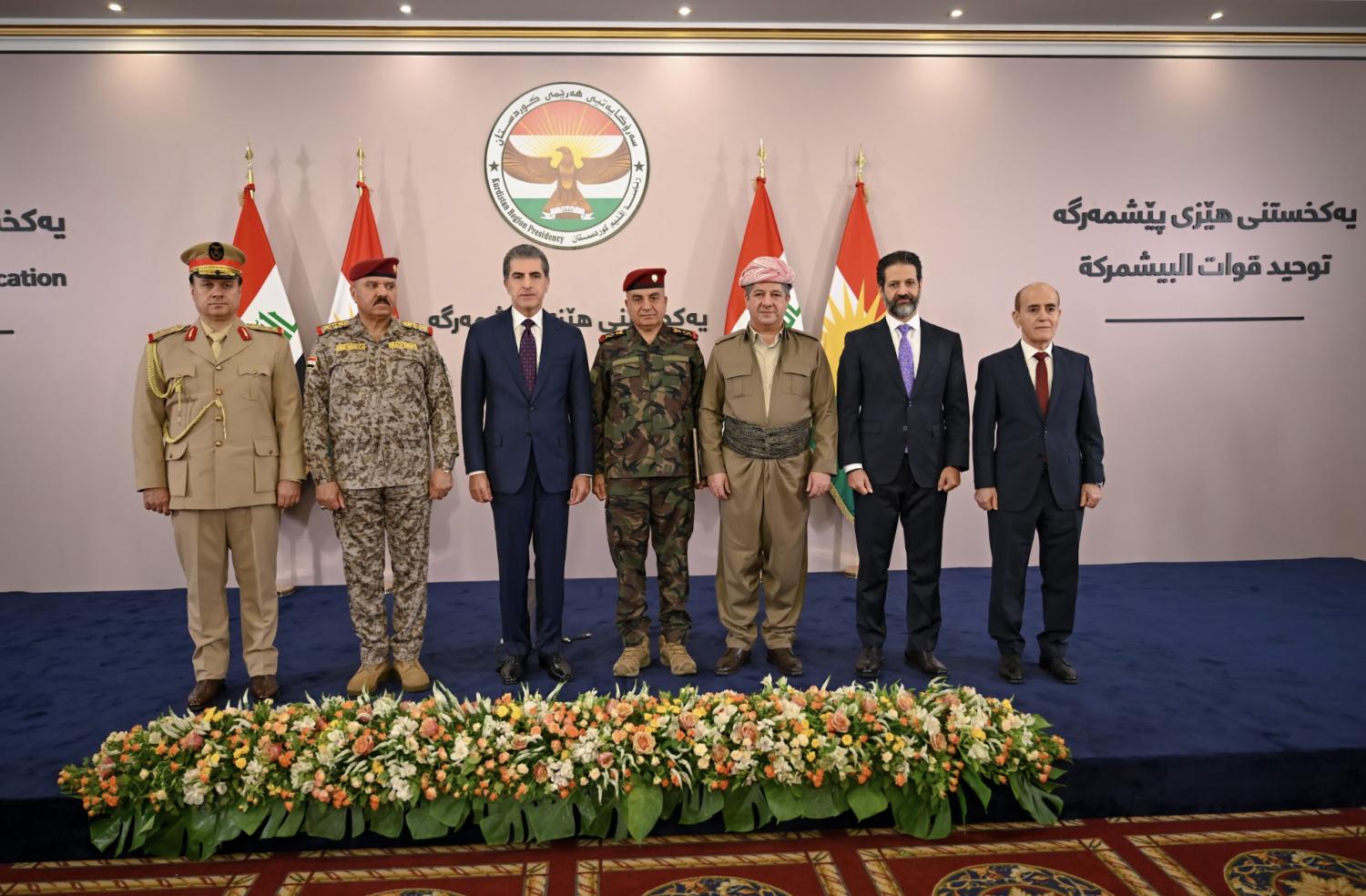
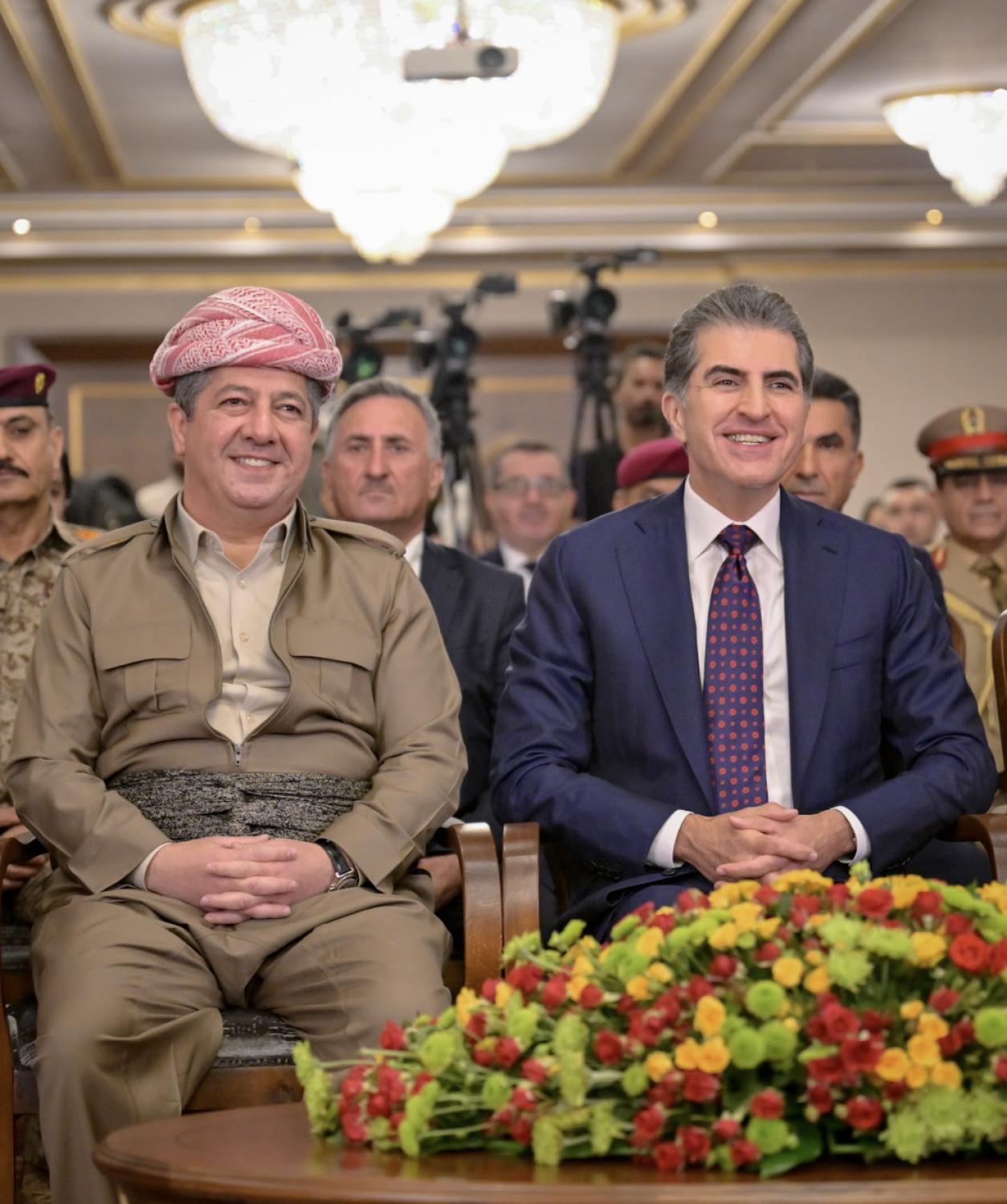
On September 21, 2026, standing at a podium at the Kurdistan Region Presidency headquarters in Erbil, Kurdistan Regional Government (KRG) Prime Minister Masrour Barzani announced a monumental milestone: the complete unification and reorganization of the Peshmerga forces under the Ministry of Peshmerga Affairs (MoPA).
“Today is a historic day for Kurdistan and the Peshmerga; the process of unifying and reorganizing the Peshmerga forces has been successfully completed,” Prime Minister Barzani stated.
For decades, the Peshmerga were divided along political lines between forces affiliated with the Kurdistan Democratic Party (KDP) and the Patriotic Union of Kurdistan (PUK). The historic consolidation brought approximately 150 separate units — including Unit 70 from the PUK and Unit 80 from the KDP — into newly formed, integrated Regional Guard Brigades under a single national command structure.
Minister of Peshmerga Affairs Shoresh Ismail Abdulla captured the weight of the moment: “This unification represents a critical step toward establishing a modern and cohesive military force that can effectively respond to threats facing our region.”
The achievement followed four years of intensive reform under a 2022 memorandum of understanding between the U.S. Department of Defense and the KRG MoPA. The process was overseen by President Masoud Barzani, supported by Kurdistan Region President Nechirvan Barzani, and implemented by Prime Minister Masrour Barzani, and his cabinet.
Addressing the assembly, President Nechirvan Barzani spoke directly to the troops about the shift from party allegiance to a national calling: “I call on every Peshmerga soldier to recognize the MoPA as the institution they serve and regard fellow soldiers as brothers-in-arms, regardless of party affiliation or region of origin. Today, your greatest responsibility begins. When you put on the Peshmerga uniform, you are the Peshmerga of Kurdistan.”
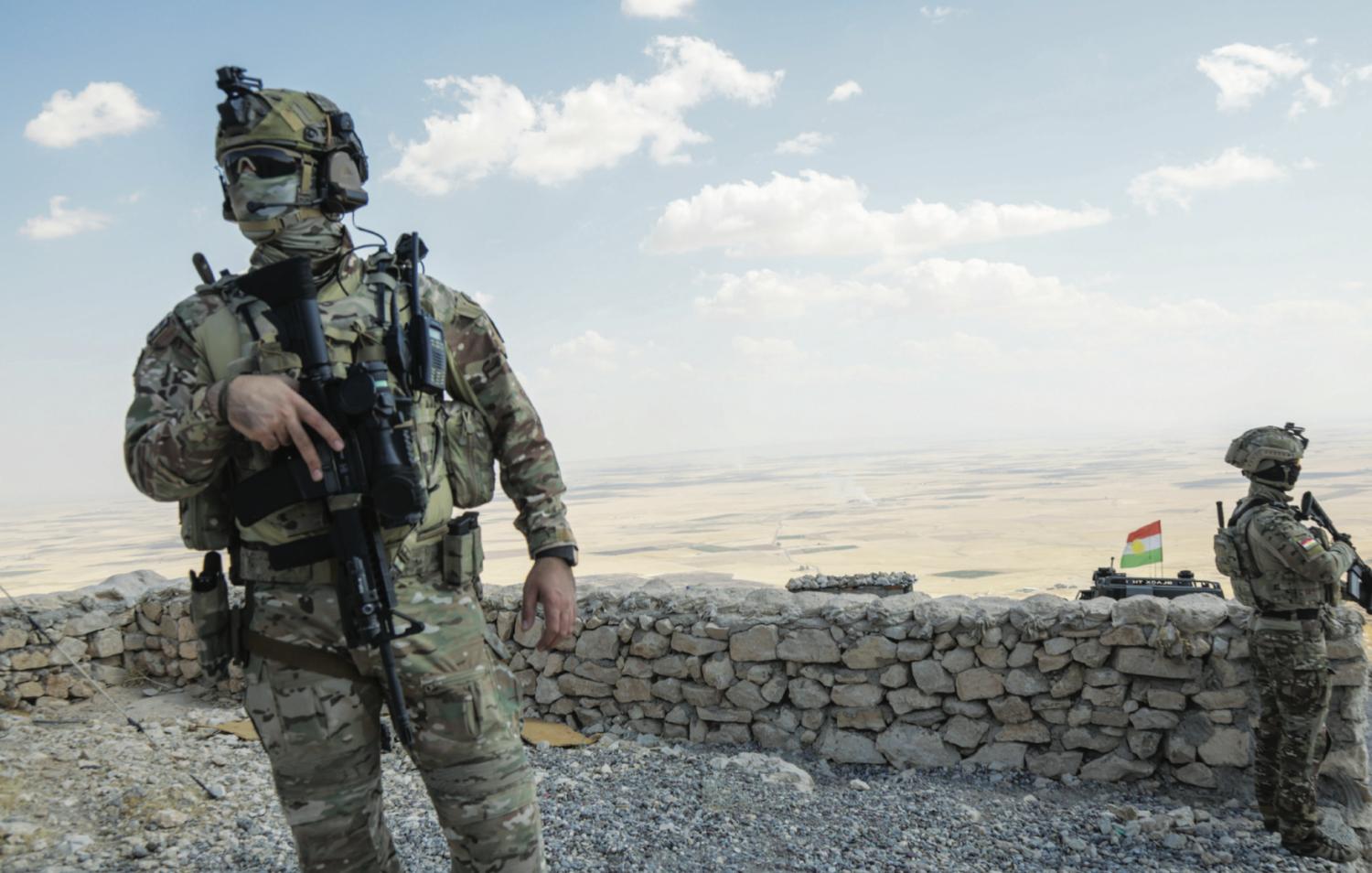
Who Are the Peshmerga?
To understand why a unified army matters today, you have to understand the heavy poetic weight of their name. Peshmerga literally translates to “those who face death.” They are the constitutional armed forces of the Kurdistan Region of Iraq, guarding the governorates of Erbil, Sulaymaniyah, Dohuk, and Halabja. But to the Kurdish people, they have never been just a conventional army on a payroll. They are a living symbol of national identity forged over a century of mountain warfare, regional uprisings, and existential defense against tyranny.
They did not start out with standard-issue uniforms, official state budgets, or modern command centers. They were born in the rugged Zagros Mountains out of necessity, transforming over decades from fierce guerrilla fighters into a battle-tested military force.
The roots of the modern Peshmerga trace back to 1946, a pivotal year in Kurdish history. General Mustafa Barzani, often revered as the father of the Kurdish national movement, established a group of approximately 1,200 fighters to serve as the military arm of the newly formed, Soviet-backed Mahabad Republic in Iran.
Although these fighters performed admirably against Iranian Pahlavi forces, the Mahabad Republic was short-lived. Within a year, the Soviet Union withdrew its support, leaving the fledgling republic vulnerable. Iranian forces quickly moved in to crush the state and reconquer the Kurdish lands. General Barzani later led hundreds of fellow Peshmerga on a long, arduous journey across rugged terrain into the Soviet Union, where many attended military academies and received training in modern military organization. In 1958, following the establishment of the Iraqi Republic under Prime Minister Abdul Karim Qasim, General Barzani and his comrades returned to Iraq under an agreement with the new government. He subsequently reorganized the Kurdistan Democratic Party (KDP) to lead the Kurdish national movement.
However, ideological and political differences soon surfaced within the movement. Leading figures of the KDP’s significant leftist faction — specifically Jalal Talabani — emerged as principal opposition to Barzani before eventually splitting away to officially found the PUK in 1975. This political schism established an enduring two-party dynamic in Iraqi Kurdistan, with both the KDP and PUK eventually commanding their own distinct Peshmerga units.
Trial by Fire
Prior to the U.S.-led invasion of Iraq in 2003, the history of the Peshmerga was defined by an unbroken chain of armed conflict, pitting them either against rival internal factions or against successive hostile regimes in Baghdad.
The first major confrontation, known as the First Kurdish War, erupted in 1961. Following a series of anti-Kurdish decrees issued by Iraqi Prime Minister Abdul-Karim Qasim, General Barzani initiated a sweeping Kurdish uprising. Two weeks into the war, the Peshmerga had swelled to nearly 8,000 fighters, successfully taking control of large swathes of Iraqi Kurdistan as ordinary citizens flocked to the rebel cause and thousands defected from Qasim’s regular army.
However, the Kurds were initially unprepared for prolonged conventional territorial defense. When Qasim launched a heavily mechanized counterattack, the Peshmerga utilized their deep knowledge of the terrain, retreating into the rugged mountains and mastering guerrilla tactics. They excelled at ambushing road-bound government columns and supply lines. In one particularly disastrous defeat for the Iraqi military, during the May 1966 offensive between Mount Zozik and Mount Handrin, Barzani’s forces descended on an encampment, killing 2,000 soldiers and capturing many others, effectively halting the government’s advance. By 1970, Baghdad conceded, granting official autonomy to the Kurds which was expected to be implemented in four years.
However, four years passed, and Iraq had yet to honor the autonomy agreement. Meanwhile, the Iraqi government had already begun Arabizing strategically important Kurdish areas, including Kirkuk and Khanaqin. The Kurds saw these policies as an attempt to erase their identity and began the Second Kurdish War in 1974, under the command of General Mustafa Barzani.
By this time, the Peshmerga had grown to between 50,000 and 60,000 fighters. However, the campaign met a tragic end when the 1975 Algiers Accord between Iraq and Iran led Tehran to abruptly cut off its support in exchange for territorial concessions. Deprived of vital supply lines, Peshmerga positions collapsed. Roughly 70% of the fighters surrendered, while 30,000 others fled alongside 200,000 refugees into Iran as Saddam instituted a brutal campaign of forced demographic engineering and massacres.
The Anfal Campaign
The genocidal Anfal campaign was yet another attempt by Saddam Hussein’s regime against the Kurds in mid-1980s. The systematic plan was considered a collective punishment targeting not only the Kurdish rebels, but also civilians across the Kurdish areas. According to KRG officials, 182,000 Kurds were systematically murdered during this dark period.
The most notorious single attack occurred on March 16, 1988: the Halabja chemical attack. Iraqi fighter jets dropped a lethal cocktail of nerve agents and mustard gas directly onto the town of Halabja in southern Kurdistan. In mere moments, an estimated 5,000 innocent people — predominantly women and children — were asphyxiated in the streets. Thousands more suffered lifelong medical complications.
Rising from the Ashes
Following the 1991 Gulf War, the Peshmerga rose up in a massive rebellion known as the Raparin (“uprising”), briefly liberating Kurdish cities before facing a fierce government counter-offensive. Recognizing the unfolding humanitarian catastrophe, a coalition of Western powers led by the United States, France and the UK established a northern no-fly zone and safe haven over the Kurdish areas of Iraq. For the first time in modern history, Iraqi Kurdistan achieved de facto autonomy, establishing the KRG in 1992 with Erbil as its capital.
Tragically, peace was short-lived. Long-standing political friction between the KDP and PUK boiled over into a bitter intra-Kurdish civil war in 1994, resulting in at least 5,000 deaths and slicing the region into two distinct partisan administrative zones. Recognizing that internal division threatened their very survival, in 1998 the two factions signed the Washington Agreement, brokered by the United States.
This reconciliation paved the way for a historic geopolitical shift. During the 2003 U.S.-led invasion of Iraq, Task Force Viking — a major U.S. Special Operations Forces contingent — used Iraqi Kurdistan as its primary staging ground, working side-by-side with the Peshmerga to topple Saddam Hussein’s Ba’athist regime. Under the 2005 Iraqi Constitution, the KRG and the Peshmerga were formally recognized, cementing an enduring defense partnership with Washington.
Facing the Caliphate with Kalashnikovs
While the Peshmerga were officially recognized under the Iraqi Constitution, decades of separate command structures meant the force was still in the middle of a long transition toward full unification. In 2014, this ongoing transition was abruptly tested when ISIS launched a swift and aggressive offensive across Iraq.
After capturing Mosul and routing heavy military defenses in the area, ISIS turned its full force toward the borders of the Kurdistan Region. Facing an unexpectedly massive and heavily armed enemy, the Peshmerga stood on the frontlines as the primary barrier against the terrorist group’s expansion.
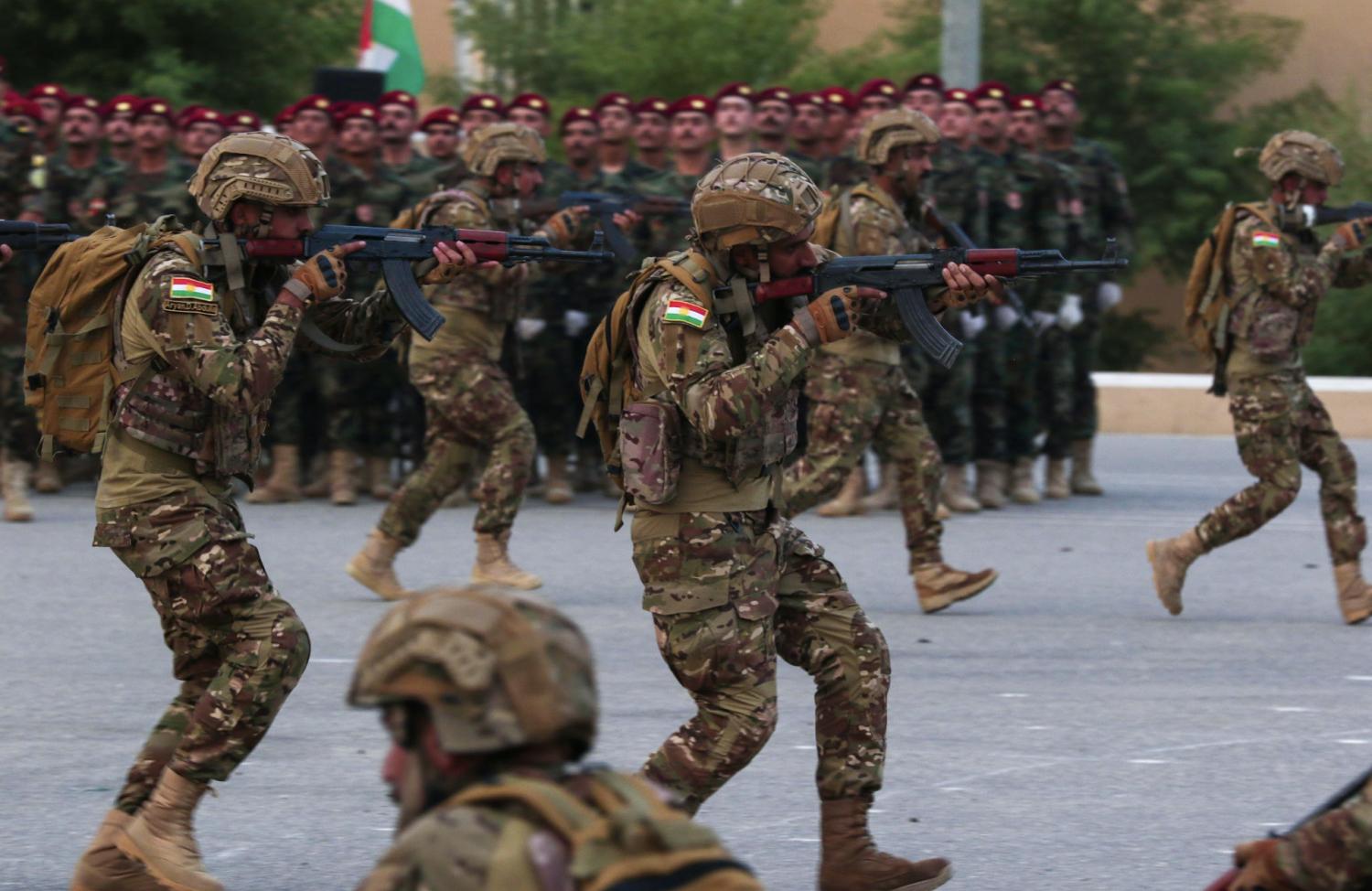
Led by President Masoud Barzani and armed often with little more than aging Kalashnikovs and sheer bravery, the Peshmerga emerged as a crucial ground force in halting the extremist juggernaut. Backed by vital Coalition airstrikes and intelligence, they came face to face with a ruthless and well-armed enemy.
The cost of that defense was immense. Over the course of those three grueling years of combat, 2,000 Peshmerga were killed and more than 12,000 were severely wounded.
A Unified Future
The immense logistical and operational strains exposed during the war against ISIS made one thing abundantly clear: long-term security required ending the partisan military fragmentation that had plagued Kurdish history for decades. For years, international allies, particularly the United States, urged structural reforms to bridge the divide between the KDP and PUK legacy units.
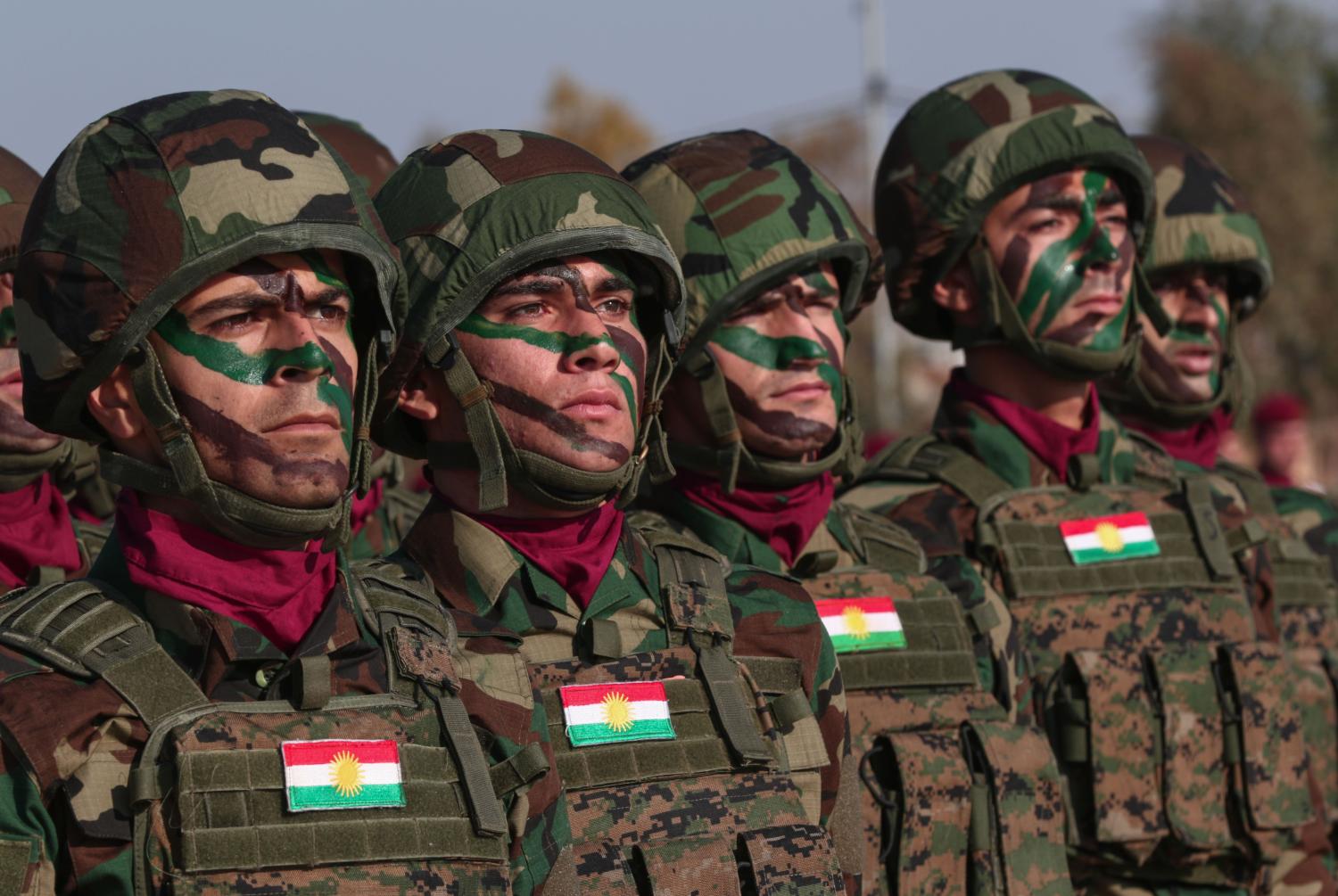
Today, with the force’s unification under the MoPA, that monumental vision has finally been realized. By integrating 150 separate units into cohesive Regional Guard Brigades, the Peshmerga have closed a fractured chapter of their past.
This historic achievement gained vital international backing throughout the process. The Peshmerga reform project was also supported by the UK, Italy, Germany, France, and the Netherlands, whose diplomats were present at the ceremony.
“A unified, professional, and non-partisan force protects all people in the Kurdistan Region and wider Iraq. The Netherlands is proud to have supported this crucial milestone,” the Netherlands Consulate General wrote on X.
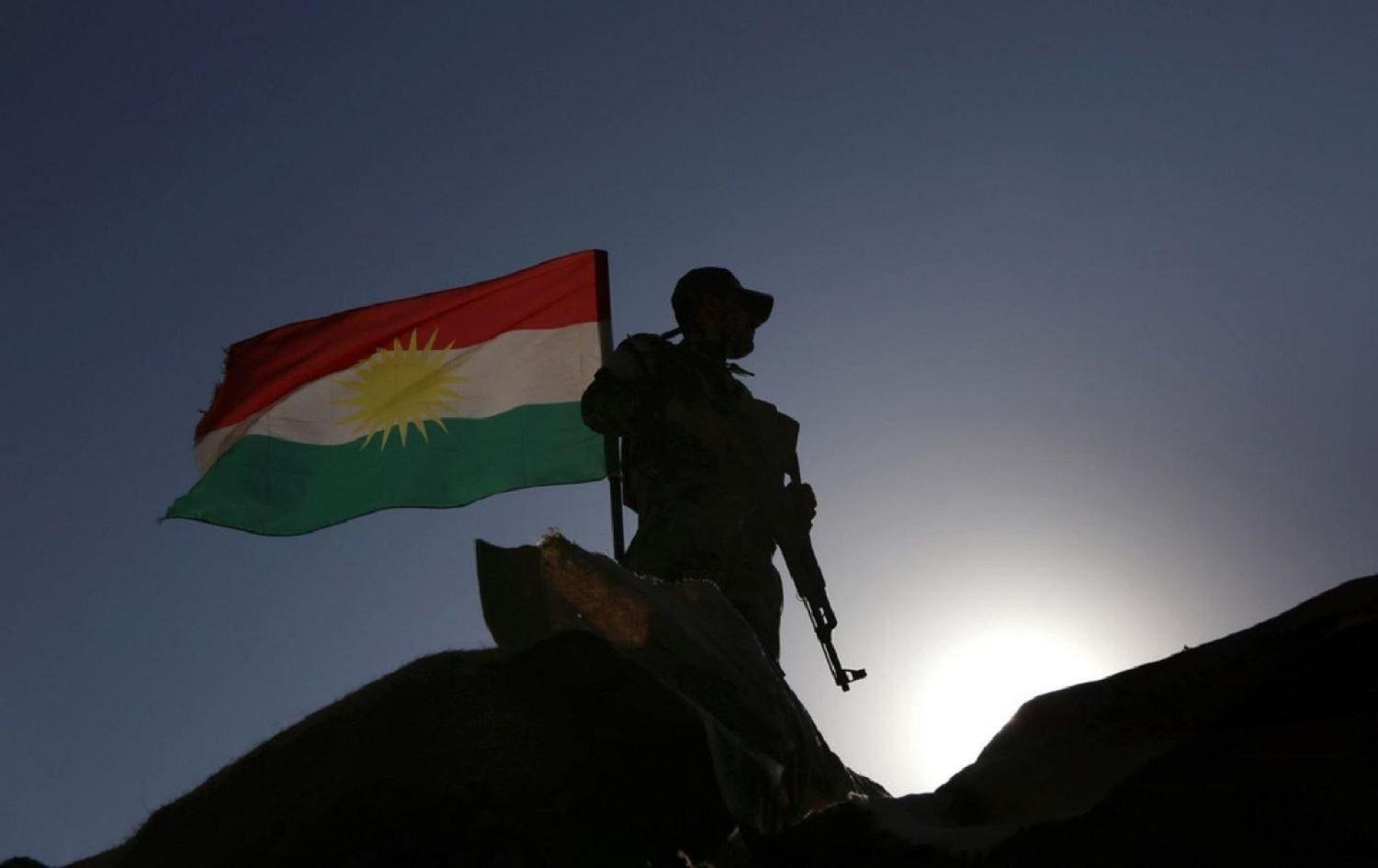
For the first time in history, the Peshmerga stood together under one national flag and a single command. Guided by strategic partnership with international allies, this modern, unified military force stands ready to defend the Kurdistan Region against any future threat, proving that the resilience forged in the mountains has finally formed an unbreakable shield for the region.
A Kurdish-American journalist overseeing the US Desk at Kurdistan Chronicle.