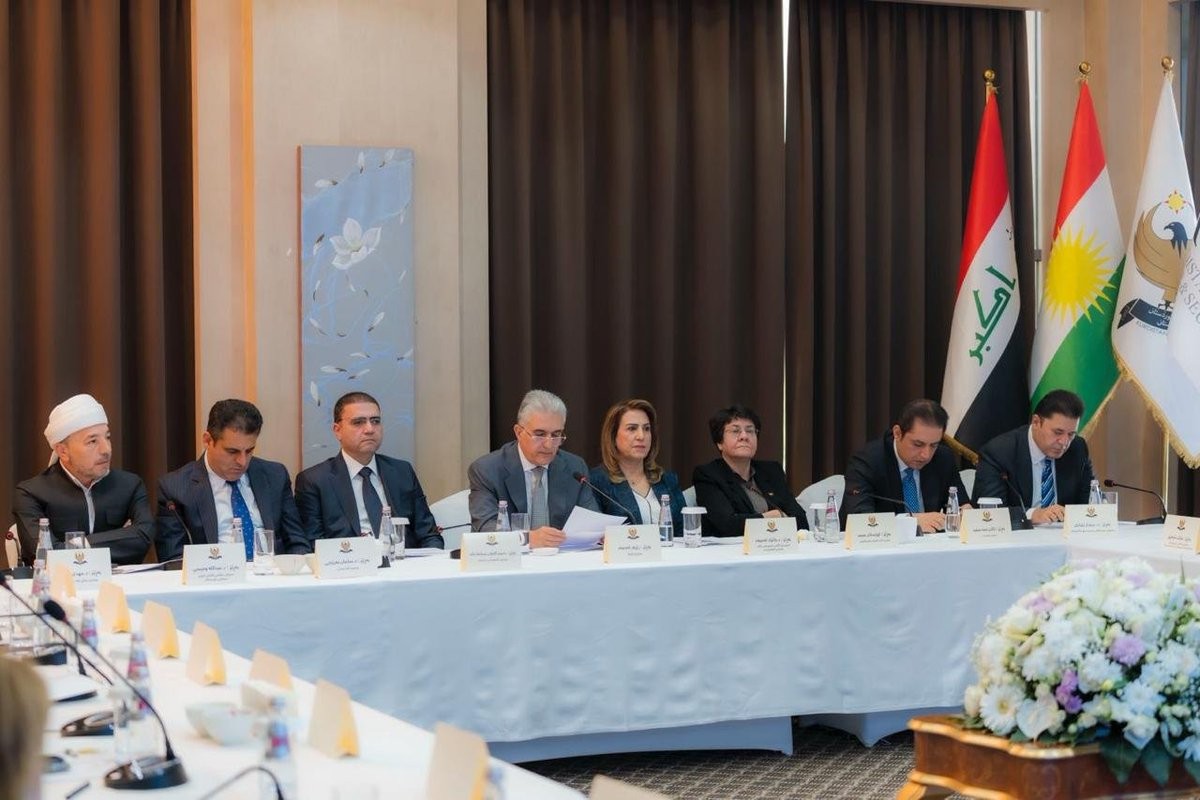
On Tuesday, a workshop was held at Divan Hotel in Erbil on Law No. 8 of 2011 on Combating Domestic Violence in the Kurdistan Region, including discussion of the gaps in the law’s implementation, legal loopholes, and coordination between the relevant ministries.
“Law No. 8 of 2011 is the Kurdistan Region’s main legal instrument for protecting people from violence within the family. No similar law exists elsewhere in Iraq,” Dr. Khanzad Ahmed, Secretary-General of the Kurdistan Regional Government (KRG) High Council for Women and Development, told Kurdistan Chronicle.
“More than a decade after the law’s adoption, the High Council for Women and Development, with support from the UN Population Fund (UNFPA), brought together judges, prosecutors, the Directorates for Combating Violence, and other partners. They looked at how the law works in practice, not only at what it says.”
She said three consultations took place in Erbil, Sulaymaniyah, and Duhok to identify gaps in the law’s wording, in procedure, and in implementation. “Participants described the law as a good foundation with gaps,” she added. “They pointed to open-ended definitions, an unclear family circle, ungraded penalties, and overlap with the Penal Code and the Personal Status Law.”
Dr. Khanzad Ahmed added that the judiciary, the ministries, and civil society are working toward the same practical results, so that the law is applied effectively and not left as a written text.
She added that key gaps include reconciliation committees with no dedicated budget, the risk of forced reconciliation, weak rules of evidence and confidentiality, and the lack of a shelter for victims of domestic violence.
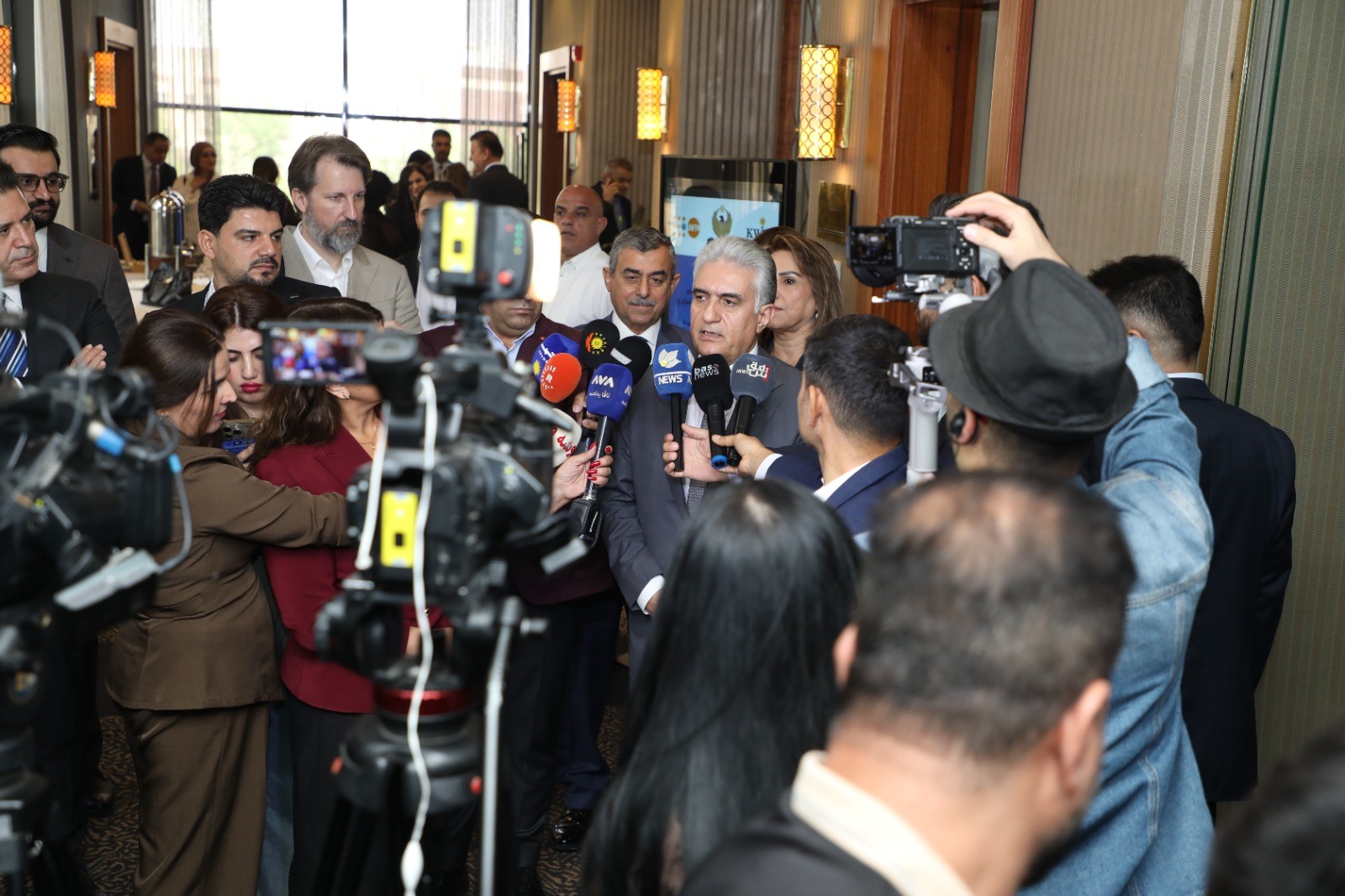
KRG Minister of Interior Reber Ahmed told reporters after the event that the law was first introduced in 2011. “This was considered a significant achievement for that time.
“However, when any law is implemented, there may be certain shortcomings or ambiguities in its provisions that judges in the courts need to address when making the appropriate decisions. At the same time, questions arise about procedures for transferring, detaining, and protecting victims from conflict areas, as well as the role played in implementation by the reconciliation committees established under the law,” he said.
Therefore, he underlined that the main objective of this workshop was to bring together all government authorities and relevant ministries, including Agriculture, Health, Education, and Interior, alongside the judicial authorities to identify gaps in the implementation of the law. The initiative is supported by the UNFPA.
UNFPA Senior Advisor Dr. Mahdi al-Alaq, who participated in the workshop on behalf of UNFPA Representative Dr. Hind Jalal, told Kurdistan Chronicle that the discussion was very serious and productive. “Most of the relevant ministries, ministers, and the judicial council attended this meeting. It was a good opportunity to have a good dialogue.
“We are keen to continue our support in order to reach reasonable results to combat violence against women, especially.”
Fenik Shafiq Hamadani, head of the KRG’s General Directorate of Combating Violence Against Women and Family, said that during the event most of the stakeholders for implementing the law against domestic violence were present.
She added that the workshop was for coordinating, cooperating, and identifying the gaps for the law to be better implemented.
“We know there are some gaps, for example how to support the staff from the Ministry of Education to take care of the students. If they know that there is a violation against a student, they can make a report and submit it to the relevant authorities,” she said.
The Kurdistan Region’s Parliament has yet to take action to make amendments to the law, as no new government has been formed since the October 2024 elections. “But once it is active, we can submit to make an amendment for this law because some parts of it need amendment,” Hamadani noted.
“I hope that in the future, women, NGOs, and other stakeholders committed to justice and gender equality will work together to better protect women from such issues.”
During the workshop, participants identified gaps in the domestic violence law, including the lack of a legal basis for closing domestic violence cases after reconciliation, unclear offence definitions and penalties, and insufficient coverage of economic and cyber violence.
“Participants called for an explicit power to remove the offender from the home, rather than moving the victim to a shelter,” Dr. Khanzad Ahmed added. They also asked for protection for reconciliation committee members and special rules of evidence, including for children’s testimony and electronic evidence.
“Waiting has a human cost. Victims can be pressured into reconciliation, and participants reported that mixed shelters cause psychological harm and make some victims reluctant to seek protection. Children’s protection provisions are minimal, with minors in some cases placed in prison. Participants also noted that there is no equivalent federal law, which leaves gaps for people from other parts of Iraq,” she stated.
Dr. Khanzad Ahmed said the amendment package is ready for parliament.
“Meanwhile, the High Council for Women and Development will continue working with the ministries on interim measures. Funding is also essential, because good laws and good recommendations still need budgets to be carried out,” she concluded.
A seasoned reporter and analyst who specializes in Kurdish affairs.