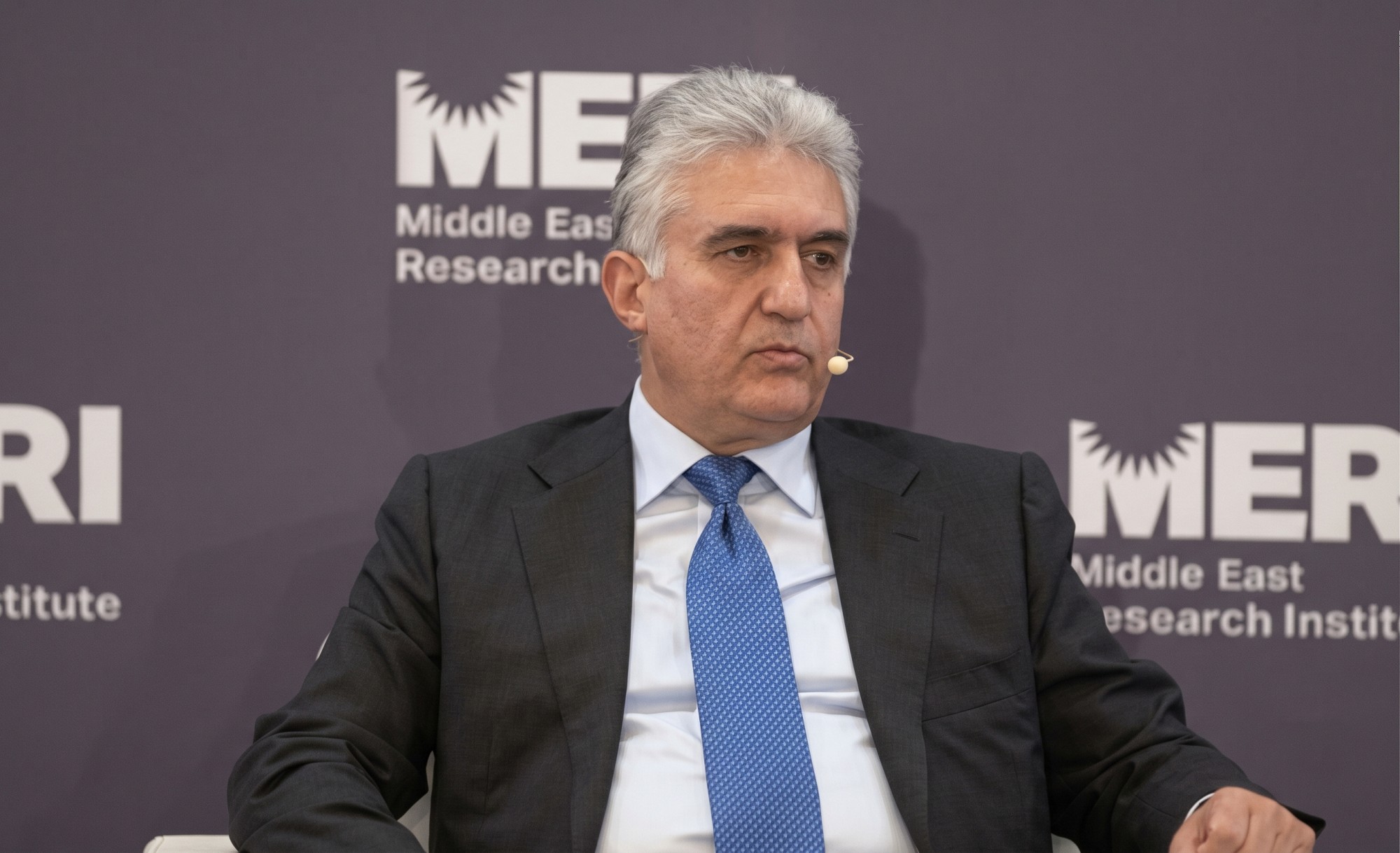
At the annual Middle East Research Institute Forum on Tuesday, Kurdistan Regional Government (KRG) Minister of Interior Reber Ahmed stated that ISIS remains a threat after the official withdrawal of the U.S.-led Coalition on September 30.
“Regarding ISIS, some may argue that its influence or threat is no longer what it once was. That is true in some respects. However, ISIS is stronger today than it was before 2014,” Ahmed stated.
“The threat therefore remains. Anyone who says ISIS has been eliminated is mistaken.
“The foundation of extremism is ideology, and extremist ideology remains present in Iraq. Conditions could become conducive to the return of extremists if governments fail to improve their performance, deliver services, and respect the differences among the country’s various communities,” he added.
Ahmed also underlined that in 2014, after the previous decision in 2011 to withdraw U.S. forces from Iraq, the federal government officially requested assistance from the international community to address the threats Iraq faced with the emergence of ISIS.
“The government asked coalition forces to be present on Iraqi soil to provide logistical support, air support, and intelligence assistance to the security institutions. This request was formally submitted by the Iraqi Ministry of Foreign Affairs to the United States,” he stated.
He underlined that Iraq should thank all coalition forces.
“They provided valuable expertise to Iraq’s security and military institutions and helped defend the country’s institutions.
“With the coalition’s assistance, particularly its air support, the Peshmerga, federal army, and other forces were able to defeat ISIS and break its strength. Without the air support provided by the United States and the international coalition, the situation we live in today would not have been possible.”
The KRG Interior Minister also added that Iraq’s 2024 request for the coalition to withdraw was more due to political considerations than security concerns.
“If you ask any security or military institution in the country, its answer may differ from that of the politicians who pushed for the international coalition’s departure at this particular time,” Ahmed said.
“The situation is certainly different from what it was in 2014. However, Iraq’s security and military institutions still need this support, particularly given the complex and varied security challenges they face.”
Ahmed also emphasized that Iraq’s security challenges are not limited to ISIS, but also include transnational crime, organized crime, corruption, and drugs.
Furthermore, he said that the withdrawal of coalition forces does not mean the end of relations with the countries that participated in the international coalition.
“Proposals were presented to the federal government to establish bilateral alliances or agreements with the United States and European countries that played a role in Iraq’s security affairs. Unfortunately, these proposals were not taken into consideration at the time,” he added.
“We continue to emphasize the importance of bilateral security agreements because security cannot be compartmentalized within Iraq’s borders. Regional and international security issues cannot be confined to Iraq, nor can Iraq remain detached from regional and international engagement.
“Iraq needs bilateral agreements, training, intelligence support, and weapons. These could be obtained more easily than by forcing the coalition to withdraw from Iraq. This withdrawal therefore places a significant responsibility on Iraq,” he concluded.
A seasoned reporter and analyst who specializes in Kurdish affairs.