During the elections held in Sweden on September 13, at least five politicians of Kurdish background appear to have secured seats in the Swedish Parliament, a sign of the strong political representation of the Kurdish community in the country. It is possible Kurds will gain two more seats, as the final results are not known yet.
The politicians included Lawen Redar, Talla Alkurdi, and Kadir Kasirga from the Social Democrats, Sara Gille from the Sweden Democrats, and Gurgin Bakircioglu from the Green Party.
“For me personally, this is a great honor. I grew up in the Swedish-Kurdish community and have spent much of my life as an activist trying to influence politicians on Kurdish issues. Now I appear set to enter Parliament myself,” Bakircioglu told Kurdistan Chronicle.
“That changes something fundamental: instead of only asking parliamentarians to put Kurdistan on the agenda, I will have the opportunity to help set that agenda from inside the Riksdag.”
The presence of Kurds in Swedish politics has not happened overnight, Shorsh Kadir Rahem, Kurdistan Regional Government Representative to Sweden, told Kurdistan Chronicle.
“Nalin Pekgul was an important early example of Kurdish representation in the Swedish Parliament,” he said. “Between 2008 and 2012, there were four or five Kurdish members of parliament, and during that period we established a parliamentary network that brought together Kurdish MPs, as well as Swedish parliamentarians who had a particular interest in Kurdish issues. Since then, Kurdish political participation has continued to develop.”
Another well-known Swedish Kurdish politician is Amineh Kakabaveh, a Kurd from Iran, who first served as a MP with the Left Party until 2009 and then an independent candidate until 2022. The Swedish government depended on her vote for its one-seat majority in Parliament and, as a result, she played a big role in Sweden’s bid to join NATO.
“We saw this again in the 2026 election, when a significant number of Kurdish candidates stood for election,” Rahem added.
“While the final results are still being formally confirmed, we can already say with confidence that at least six Kurdish candidates will take seats in the Swedish Parliament. There is also a possibility that a seventh Kurdish candidate could enter Parliament, depending on the final political situation and the formation of a government led by the Social Democrats. This represents an important level of Kurdish participation in Swedish democratic life,” he concluded.
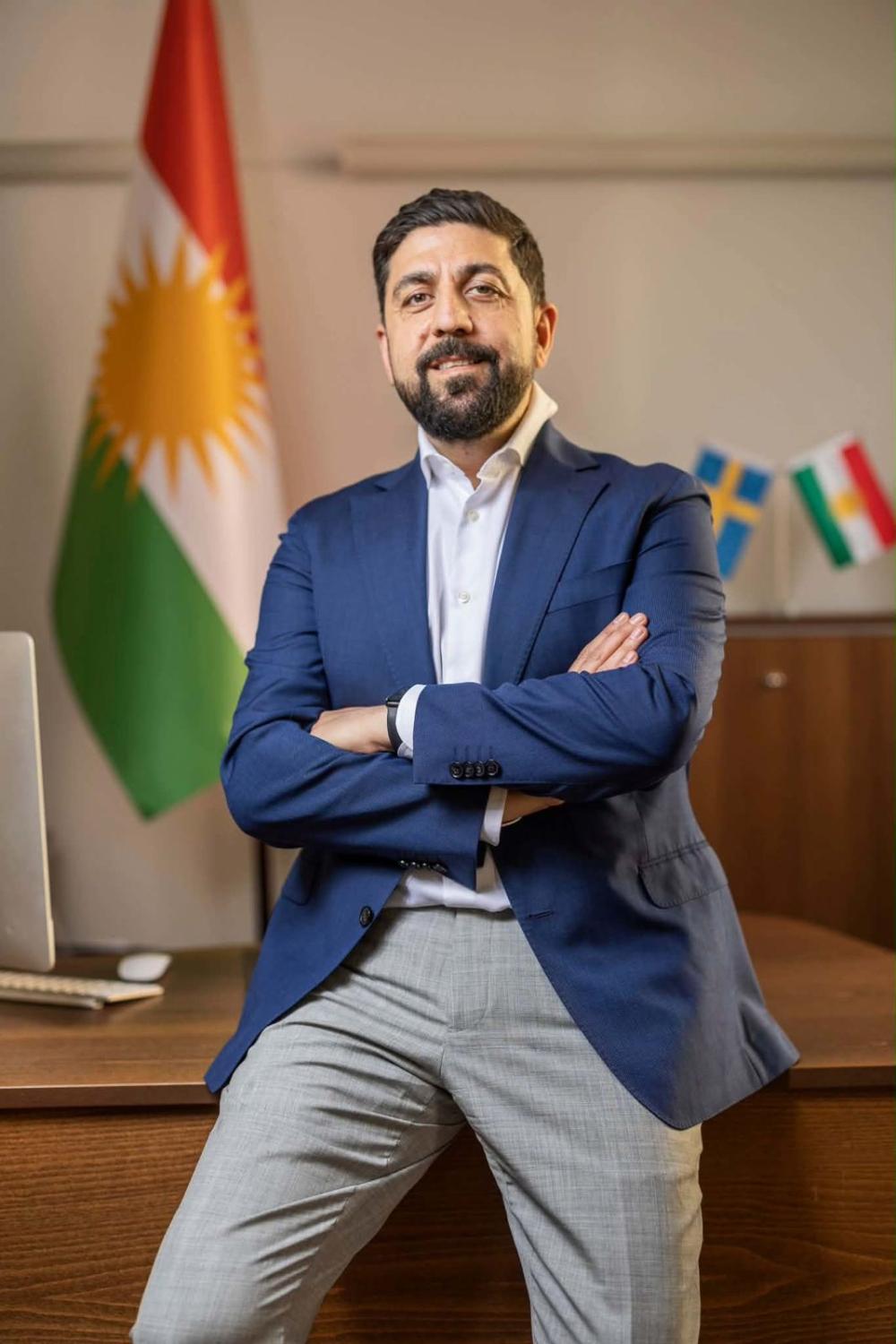
Rahem, who came to Sweden with his family in 1985, said that the small Kurdish community in Sweden quickly realized that they had to organize.
“We had an opportunity here that many of us had not had before, and that was the opportunity to participate, organize, and make our voices heard. We started building associations and organizations. We created networks, supported one another, and, gradually, became more involved in Swedish society. We also began reaching beyond the Kurdish community.
“We approached Swedish political parties, raised questions that mattered to us, and tried to explain our history and our situation. Over time, this gave the Kurdish community a stronger political voice in Sweden,” he said.
Rahem also said that the older generation still remembered differences between Kurdish parties back home, while the younger generation largely did not recognize those distinctions.
“I noticed that many young Kurds began looking at politics differently. They had inherited the history and identity of their parents but they did not necessarily want to inherit all of the conflicts that came with it. Some chose to become active in Swedish political movements, others joined political parties, and many simply began developing their own views based on the society in which they had grown up. That change is important.”
Rahim also said that the political engagement of the Kurdish community has changed since he arrived in Sweden. “In the past, we were often more organized as a collective. Today, political engagement is more individual. People still have a strong Kurdish identity but they increasingly find their own way into Swedish political life,” he said.
“The younger generations have grown up here. They have gone to Swedish schools, built careers, made friends and families, and experienced Swedish society as their everyday reality. Naturally, their political concerns are often shaped by what happens around them here in Sweden, such as education, healthcare, employment, security and the future of the communities where they live. But that does not mean that Kurdistan has become less important to them.”
Bakircioglu explained that many in the Kurdish community also follow politics in Türkiye. “I am looking ahead to the Turkish election. I want to explore the possibility of bringing together a Swedish parliamentary delegation to observe and follow the process.”
He also said he wants to establish a relationship with pro-Kurdish Peoples’ Equality and Democracy Party party in Türkiye. “For me, Kurdish, Armenian, and Christian in general, LGBTQIA+ rights, democracy, and peace should not become the property of one Swedish party,” he said. “We need parliamentarians from different parties who are prepared to cooperate when fundamental rights are at stake.”
Gurgin Bakircioglu said that he already sees strong possibilities for cross-party cooperation on Kurdish issues in Sweden. “Particularly with colleagues in the Social Democrats and the Left Party, through the Sweden-Kurdistan parliamentary network,” he said. “I do not yet have a complete picture of the Kurdish political representation further to the right.
“I would describe the Kurdish diaspora as one of Sweden’s most established and politically active diaspora communities,” Rahem concluded.“But I don’t think its importance should be measured only by the number of Kurdish candidates elected to parliament. Representation in parliament matters. It gives people an opportunity to raise issues and bring different perspectives into the national political debate. But influence is built in many other places as well, in municipalities, regions, political parties, media, local organizations, entrepreneurship, and sport.”
A seasoned reporter and analyst who specializes in Kurdish affairs.