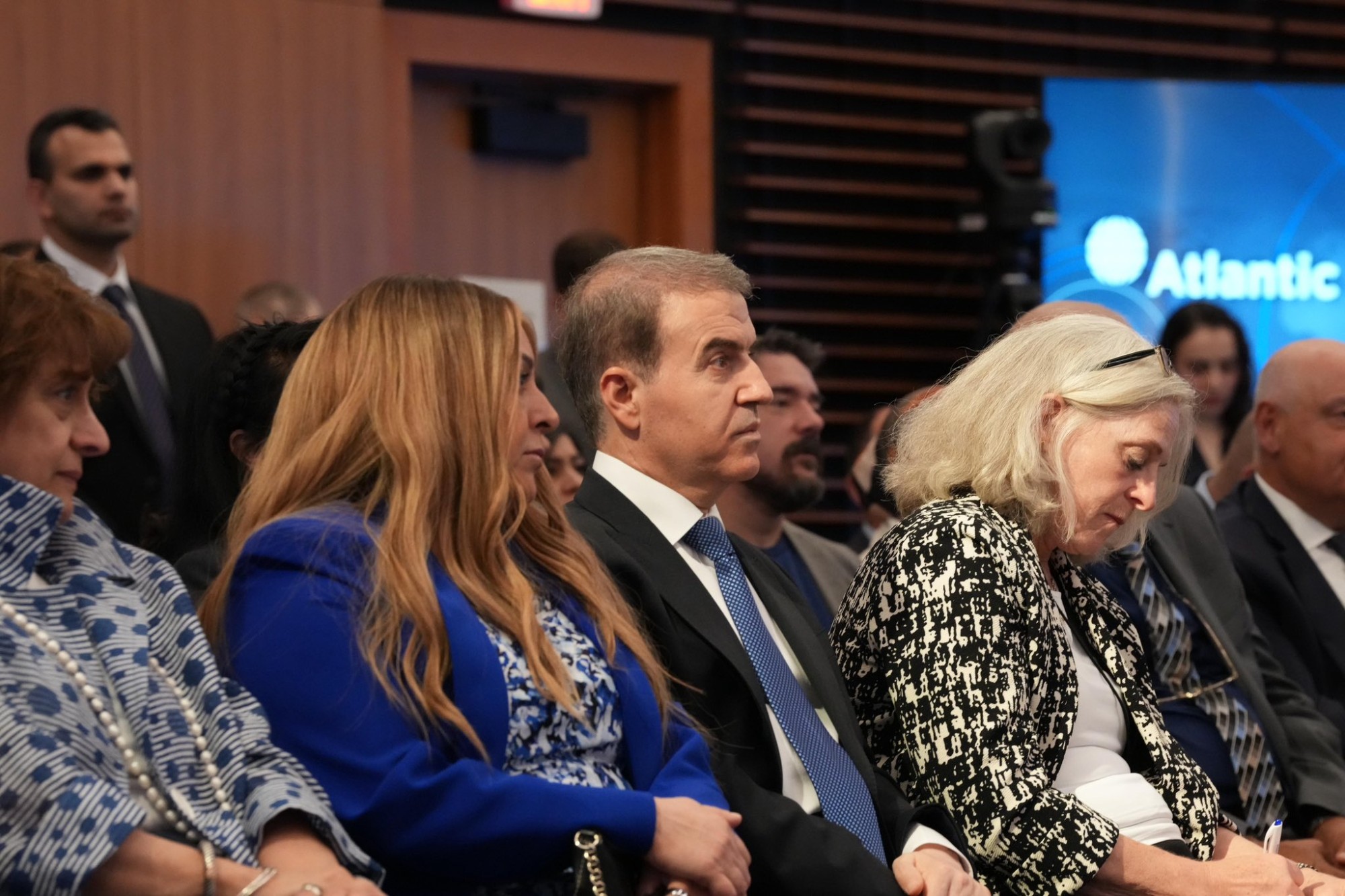
On May 13, at the Atlantic Council’s annual Iraq Dialogue in Washington D.C., senior Kurdish leaders underlined that there is still a centralist mindset in Baghdad, even though Iraq is a federal state according to the 2005 Constitution.
“The attitude of the Shi’a elite, even of some Sunnis [is that] they look at the country as a centralized entity. They don’t have much faith in federalism or the diffusion of power, wealth, and so on. Iraqi Kurdistan has suffered a great deal from successive Iraqi governments,” former Iraqi Minister of Foreign Affairs Hoshyar Zebari—currently a senior Kurdistan Democratic Party official and Special Advisor to President Masoud Barzani—said during the event.
He underlined that the 2005 Iraqi Constitution is a social contract that created a federal democratic parliamentary system to run the Iraqi government. Nevertheless, he added that Iraq has seen a peaceful transfer of power between many governments in the past two decades. “Nobody has been eliminated or killed.”
Furthermore, Zebari added that the Kurdistan Region has been the target of the largest number of missile and drone attacks from Iran during the February 28 war, after the UAE.
“They were targeting the embassies, the U.S. forces, who are most welcome in Kurdistan, [even if] they are not welcome in the rest of the country. Most of the remaining U.S. forces are now in Erbil, more or less. Both the embassy in Baghdad and the consulate were under a constant barrage. Not only that, the oil installations, in the south as far as Basra and in Kurdistan, and some American oil companies have also suffered a great deal. [Additionally,] hotels and Peshmerga bases have been hit.”
Hemin Hawrami, Former Deputy Speaker of the Kurdistan Region Parliament, also referred to the 2005 Iraqi Constitution as a social contract for Iraq. “We have three things today to organize the relationship between Kurdistan Region and Baghdad: the Constitution, political agreement, and the government program.
“So if you look at the Constitution from the federal perspective, you have 55 articles of the Constitution that have either not been implemented or not been legislated.
“If you look at the political agreement, just as recently as [Iraqi Prime Minister Mohammed Shia’ al-Sudani’s] government, we had 20 political agreements with him, and we had a government program of 67 points. Of 67 plus points that we had with this Prime Minister, only four points were implemented—so 5% of that agreement.
“So if you have a constitution that is not being abided by, if you have a political agreement that is not being implemented, if you have a government program that they are not adhering to, this is a sign of the crisis that we have.”
He also added that Kurdistan Region President Nechirvan Barzani recently visited Baghdad and signed a deal with the Shi’a majority Coordination Framework. “Sticking to the Constitution, working together, going back to the spirit of the Constitution, is the most important thing for us. Because all the Iraqi presidents, all the Iraqi former prime ministers, they all [made promises related to] the political agreement, and the government program for those things that matter for relations between Baghdad and Erbil, such as council legislating for the federal court and the hydrocarbon law.”
As a result, Hawrami said that Erbil feels that there is a “strong return to centralization in Baghdad at the expense of federalism in Iraq. That’s why we need frank discussions looking at the source of these issues between Kurdistan Region and Baghdad.”
Nevertheless, he confirmed that there is a perception in Baghdad that the Kurdistan Region has overstepped its constitutional rights. “We need discussion about where we have overstepped,” Hawrami said—as well as where Baghdad is not abiding by the Constitution.
Hawrami said that the Iraqi Constitution has not been implemented. “Baghdad is dealing with the Kurdistan Region from the centralized legal perspective of the Saddam era and we are dealing with Baghdad from the constitutional perspective, and there is a gap that needs to be bridged.”
He mentioned that the Kurdistan Region and Baghdad had the strongest relationship during the reign of former Iraqi Prime Minister Adil Abdul-Mahdi. “But it’s not about personality, it’s about the system and the ecosystem that this Prime Minister is operating, and we need to work on that operating system and ecosystem.
“We’re trying our best, because, in the end, what measures success is not the number of the promises you get, but the number of actual steps that have been made toward [improving the relationship between Erbil and Baghdad]. So, we are optimistic about that political agreement with the Coordination Framework. The prime minister designate knows about the details of that agreement, but let’s see how the new government is going to deal with the Kurdistan Region.”
A seasoned reporter and analyst who specializes in Kurdish affairs.