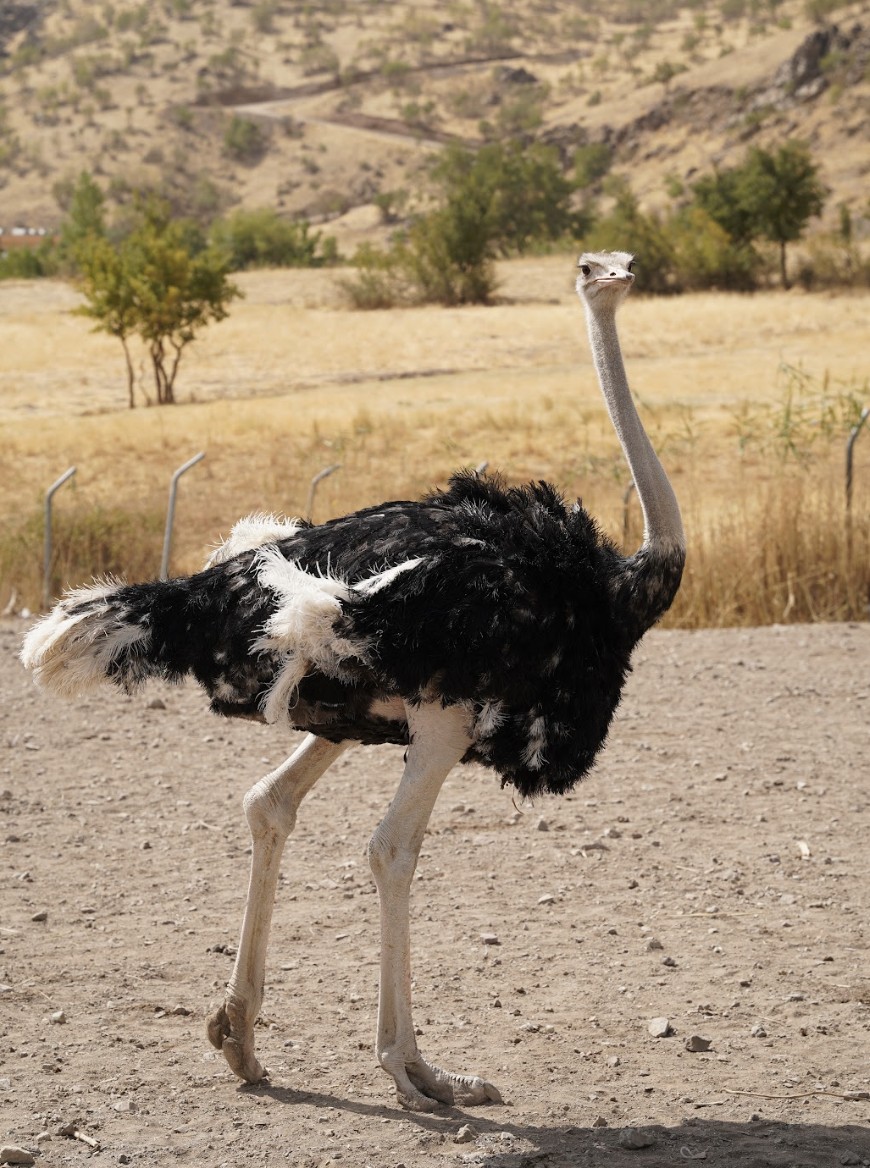
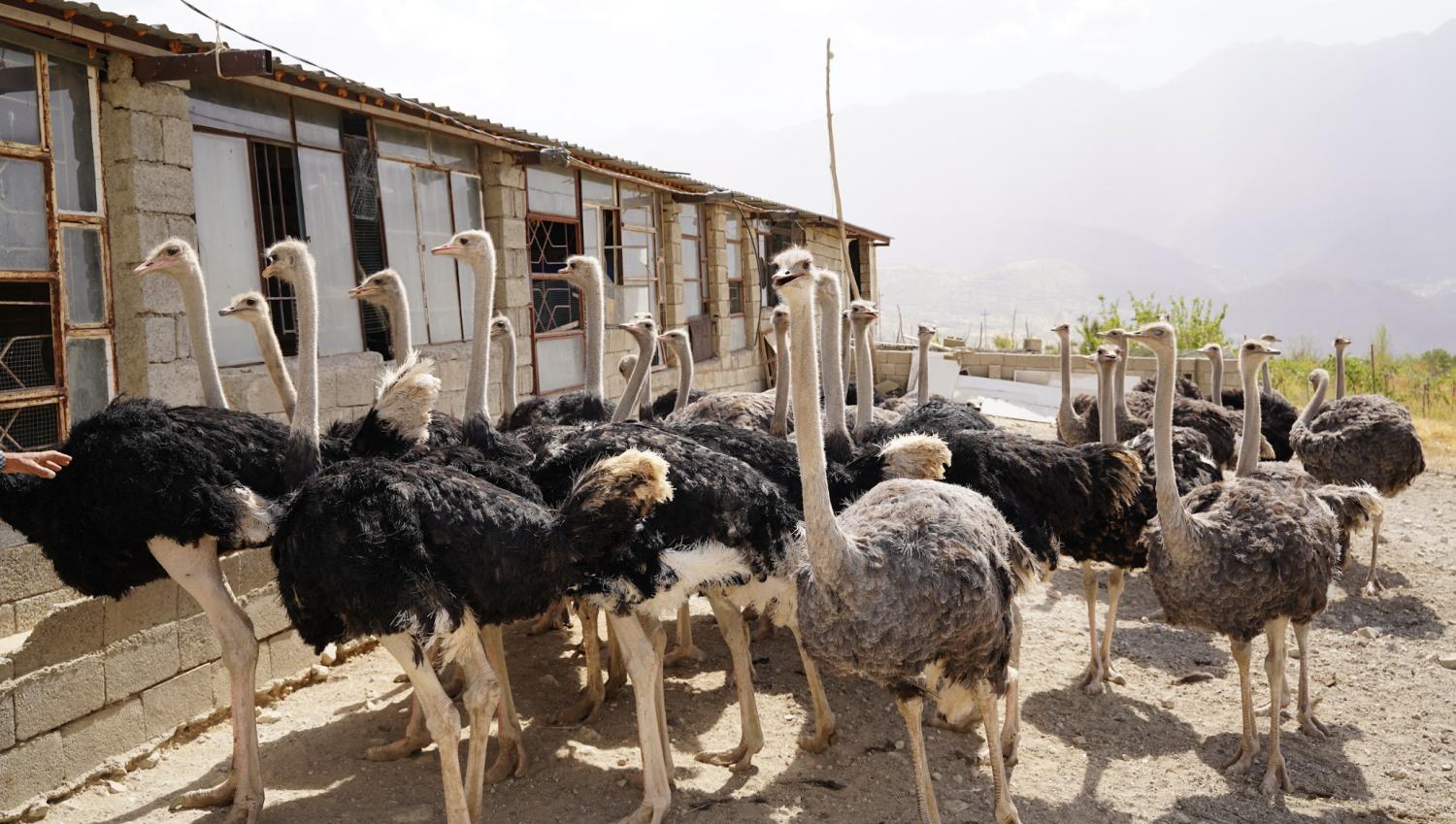
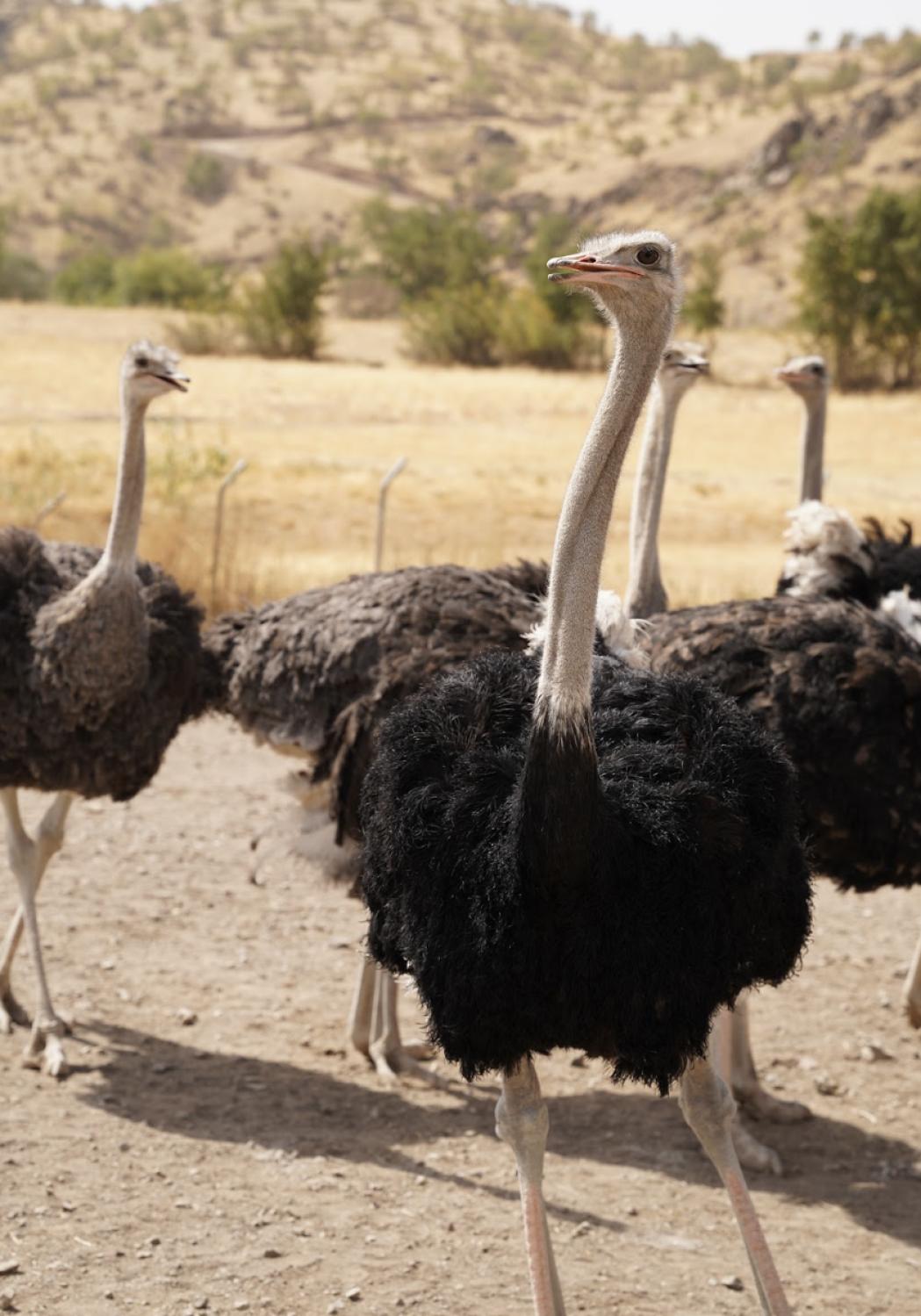
From the foot of Halgurd mountain and the quiet village of Warde in Choman district in the Kurdistan Region, a new sound breaks the winter stillness: not the familiar call of shepherds or flocks, or regular domesticated birds, but the curious hiss of ostriches. Beneath the pale sun of a cold day, a project has taken root: the farming of ostriches, birds once foreign to the Kurdistan Region.
These creatures were brought up from southern Iraq to this highland corner, where three families now rely on them for their livelihood. Their presence is both practical but also symbolic, proof that even in the most traditional corners of Kurdistan, opportunities and innovation can nest quietly and grow.
From curiosity to success story
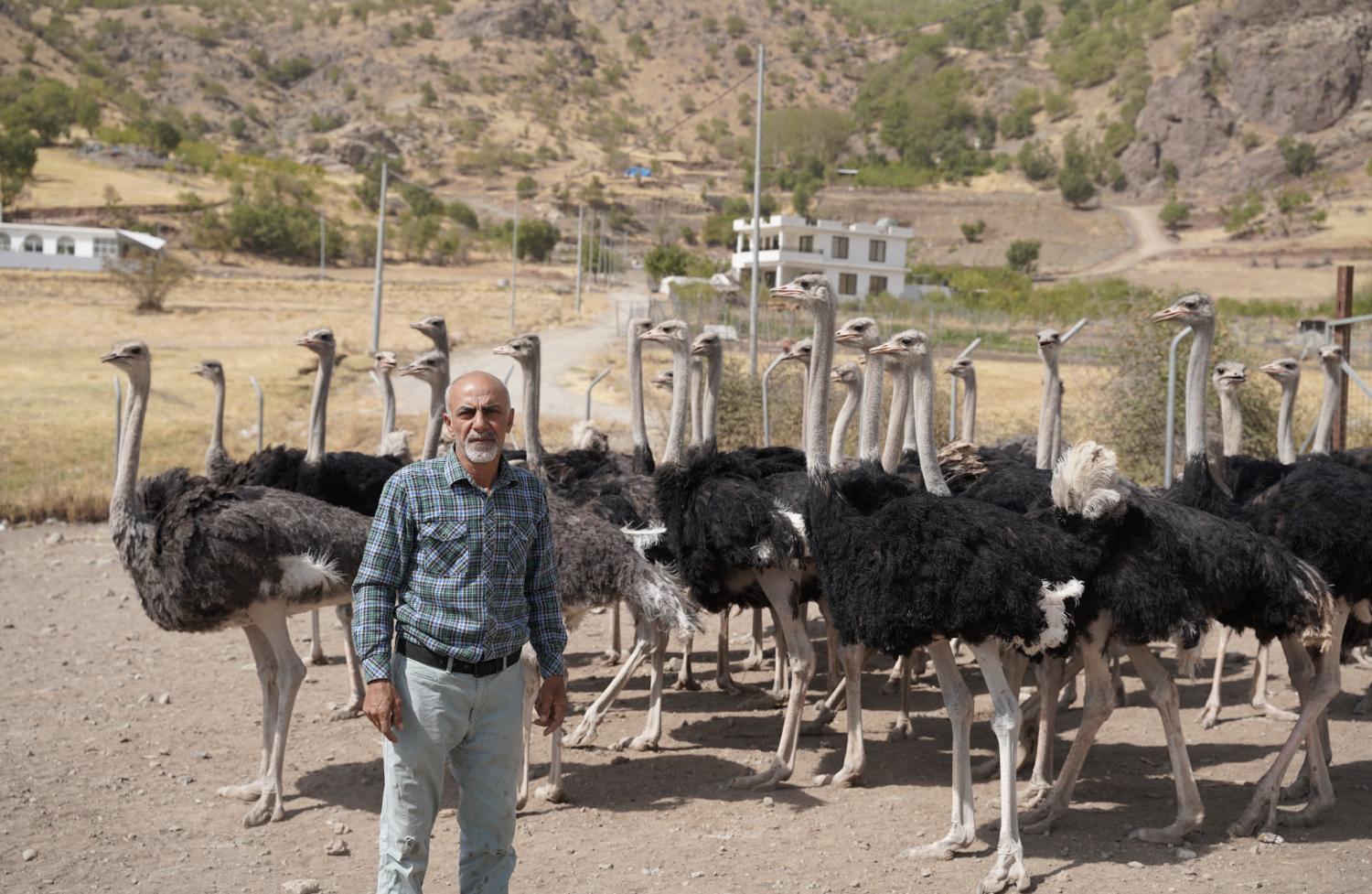
The farm’s founder, Kazim Ali Nabi, recalls how it all began. “I visited Kelar once and saw ostriches being raised. Their speed and strength caught my attention. I thought: why not try in our own land, in Choman?”
The idea seemed improbable. The climate in Choman is harsh and the winters unforgiving, but Kazim decided to take the risk. Two years ago, he purchased a hundred young ostriches and placed them on his farm, an enclosed ground that he named Kelgay Pelweri Naa‘ma, or ‘the ostrich farm.’ “I wanted to see if they could survive the cold, and thank God, they did. Now I have 45 left; the rest I sold for meat, all at good prices.”
For him, the venture was not only economic but experimental, a scientific trial in adapting exotic life to the Kurdish highlands.
Nature and necessity
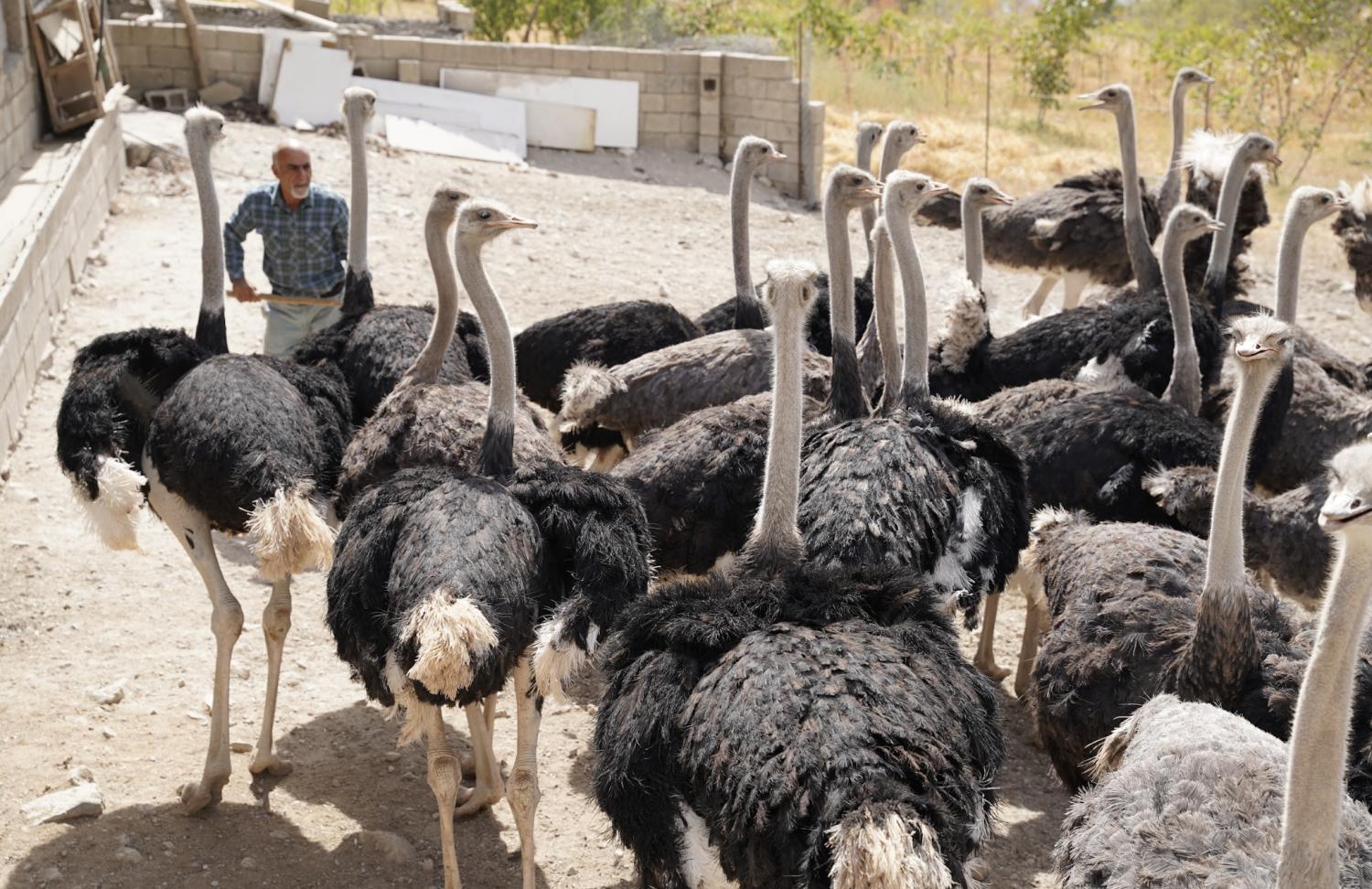
The ostriches are well-fed and carefully observed. Their diet is a mix of local grains such as wheat, barley, and corn, along with pasture grass and wild herbs. But there are risks, Kazim explains: “They can’t eat iron or nylon. It kills them.”
Space is essential. Ostriches need long stretches for running, nearly a kilometer each day, and so the farm must be no smaller than 0.3 hectares of land. In spring, summer, and autumn, they roam freely, while in winter a special shelter keeps them safe from snow and rain.
These avian newcomers have now blended into Choman’s own landscape, as swift shadows darting across fields and tall bodies standing like sentinels against the mountain wind.
A community of work and wonder
Though Kazim began the project alone, the whole village has already felt its presence. Neighbors come to watch the birds’ speed and unusual beauty and children press their faces against the fences, laughing at the strange, long-necked guests. Some elders shake their heads in wonder, others nod in approval. Choman has always been a land of shepherds and herders, and now even ostriches have found a home there.
For Kazim, this acceptance matters. “It shows that our people can adapt to new ideas. We are not limited to sheep and cows. If we can raise ostriches here, maybe next we can raise something else too.”
Eggs, meat, and medicine
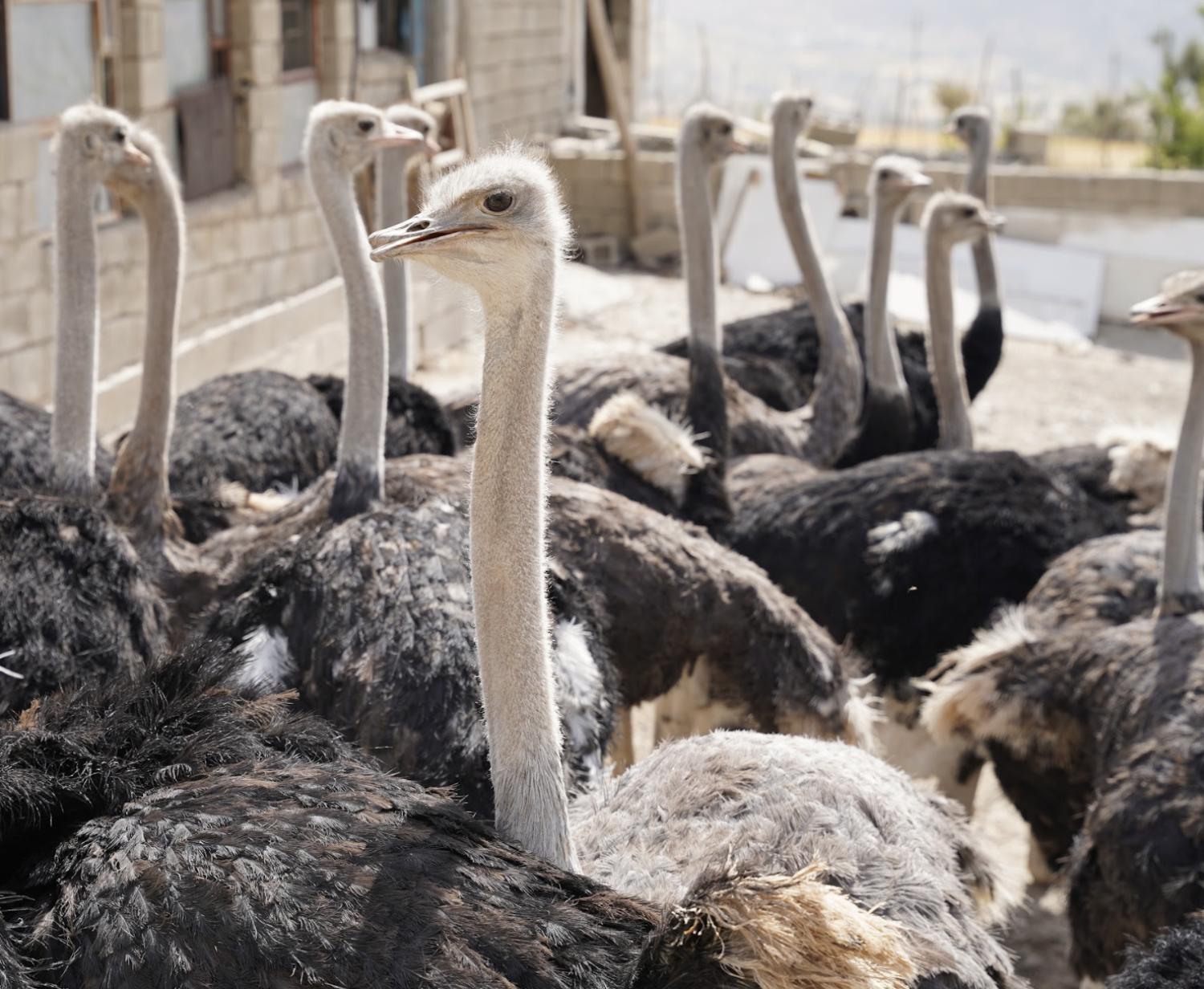
Each ostrich lays two to three eggs per week between February and July. The eggs themselves are treasures: each one can weigh up to 1.8 kilograms, and sells at the market for as much as 35,000 Iraqi dinars. Some are incubated to hatch new chicks, while others are sold as food or even for decorative purposes.
The meat, Kazim explains, is leaner and healthier than beef or lamb, rich in protein but low in fat. “We’ve sold our meat as far as Duhok, Najaf, and even Baghdad. Demand is high.”
Additionally, ostrich oil and fat are said to have healing properties for skin and joints. Kazim insists that anyone from Kurdistan who needs them can contact him directly. “For medical cases, we will give freely, as charity. This is something we do for God, not for money.”
Hopes for the future
For now, the farm is small and isolated, located nearly 180 kilometers north of Erbil, but Kazim sees no limits. “If the project grows, if more farms are built, then the main challenge will be securing steady markets. But demand is strong. We could easily sell more.”
His dream is to create a full cycle of ostrich farming: breeding, meat production, and even hatcheries for selling chicks to other farmers. “By 2026, God willing, we will not only sell ostrich meat, but also raise and sell ostrich chicks.”
The ostrich farm in Choman is more than a curious business venture. It is a story of courage, adaptation, and local initiative. In a region long marked by war and uncertainty, the sight of tall, strong birds running against the snowy backdrop of Halgurd is almost poetic, a reminder that life, in all its forms, can take root and flourish.
Kazim’s experiment reflects something deeper about Kurdistan itself: resilience, innovation, and the will to survive. Just as the ostriches have adjusted to cold winds, the people of these mountains continue to adapt, finding new ways to live, feed, and dream in the heart of a changing world.
is Kurdish journalist and university professor.