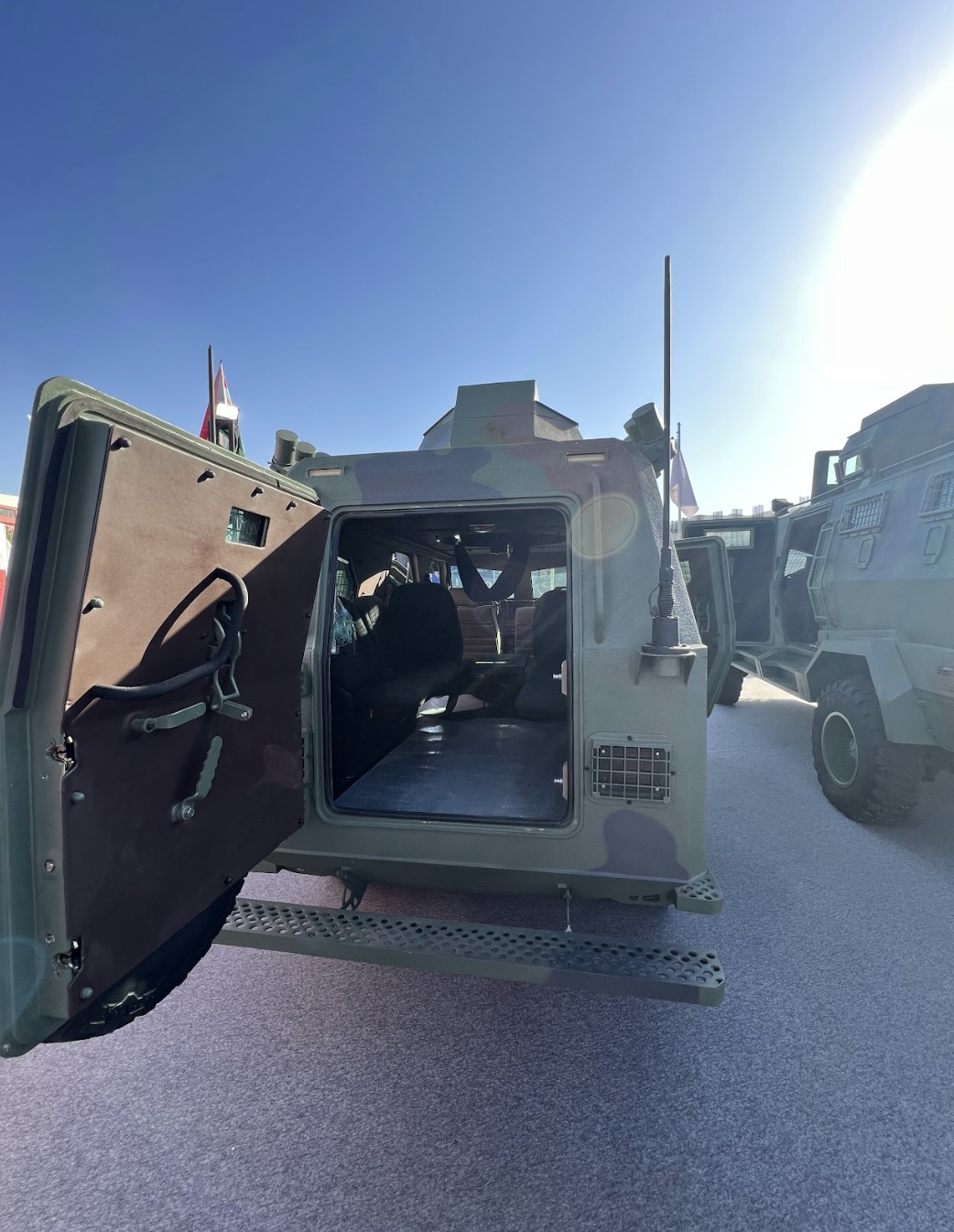
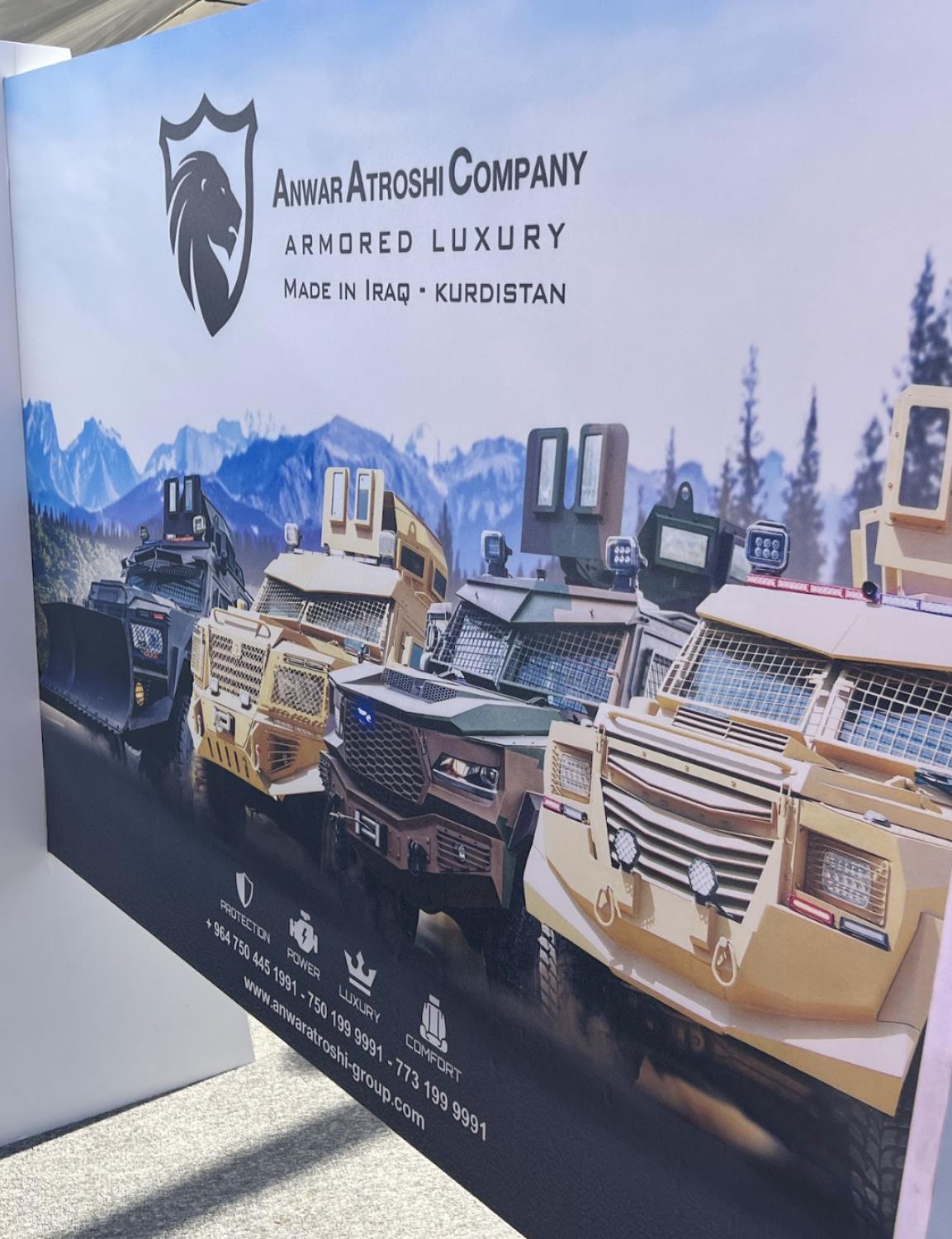
At an international exhibition in Zakho in September 2025, the Kurdistan Region unveiled its first domestically produced armored vehicle, a historic milestone in local defense manufacturing.
The event drew crowds of curious visitors, military officials, and government representatives, all eager to witness the culmination of local engineering. The centerpiece of the exhibition, a fully functional, locally manufactured armored vehicle stood as a symbol of self-reliance and innovation in a region long shaped by conflict.
Kurdistan Regional Government (KRG) Prime Minister Masrour Barzani personally inspected the vehicle, closely examining its armored layers, interior systems, and tactical features. His visit underscored the strategic importance the KRG places on developing indigenous defense capabilities.
Necessity breeds innovation
The vision behind the project emerged in 2014, during one of Kurdistan’s most challenging periods. With ISIS sweeping across northern Iraq, Peshmerga forces and local communities faced devastating losses that could have been reduced with better protective equipment. Seeing this, Anwar Atroshi, founder of Anwar Atroshi Company, decided to start locally producing armored vehicles.
“We realized that depending on external suppliers left us vulnerable,” Atroshi said. “We needed something we could trust, something built by our people, for our people.”
The need for local defense solutions intensified after the Kurdish independence referendum in 2017, when closed borders and airport restrictions made military self-sufficiency not just a strategic goal, but a necessity.
The armored vehicles are a hybrid of global and local engineering: while the chassis and platform are based on internationally recognized standards, the armored plate and internal systems are designed and manufactured in Kurdistan. The vehicles’ features, including bulletproof glass, reinforced chassis, and tactical weaponry, drew particular attention from civilians and officials alike.
Atroshi explained the multilayer armor system: “The first layer is six millimeters, the second eight, and the third 12. Inside, we have a camera system for external monitoring and a reinforced emergency compartment.”
Equipped with a 14-mm Dushka machine gun and two AT4 rockets, these vehicles are primarily defensive but can be deployed in offensive operations when needed. Atroshi was careful to note their limitations: “They are not designed to withstand air attacks entirely, nor are they intended to replace conventional Peshmerga defense.”

Building public confidence through local design
As the exhibition demonstrated, these efforts have strengthened not only military capacity, but also public trust. Visitors at the exhibition expressed admiration and reassurance at seeing homegrown defense solutions. Kurdish communities have long experienced insecurity, weathering decades of regional conflicts. The presence of domestically built armored vehicles is a tangible sign of self-reliance.
The company employs predominantly Kurdish engineers and technicians, investing heavily in training programs to ensure that production meets international safety and operational standards. “Our commitment to safety and professional practices drives innovation,” Atroshi emphasized. “Collaborating with international partners allows us to research, test, and produce vehicles that meet global benchmarks while being designed for local conditions.”
Five vehicle types have been produced so far, ranging from rapid attack units and troop transports to equipment carriers and bulletproof civilian cars. Anwar Said Salim, co-owner of the Anwar Atroshi Company, reaffirmed the firm’s dedication to innovation: “Our goal is not just to build vehicles, but to create sustainable defense solutions that evolve with Kurdish security needs.”
Government backing and strategic impact
Government backing has been pivotal. Atroshi recounted his discussions with Prime Minister Barzani: “Initially, some doubted our capacity to produce these vehicles locally. But Prime Minister Barzani recognized their potential and promised continued cooperation.”
Current production capacity stands at one vehicle every 45 days, with ten units ready for immediate delivery to Kurdish security forces and private clients.
The vehicles themselves reflect both tactical versatility and strategic foresight. In a region still affected by sectarian violence, terrorism, and political instability, these vehicles offer a critical layer of protection for both civilians and security forces.
In a region where security often depends on the intervention of external powers, the exhibition in Zakho demonstrated that Kurdistan can produce its own solutions, blending local talent with global expertise to safeguard its people.
is a distinguished senior journalist in the Kurdistan Region.